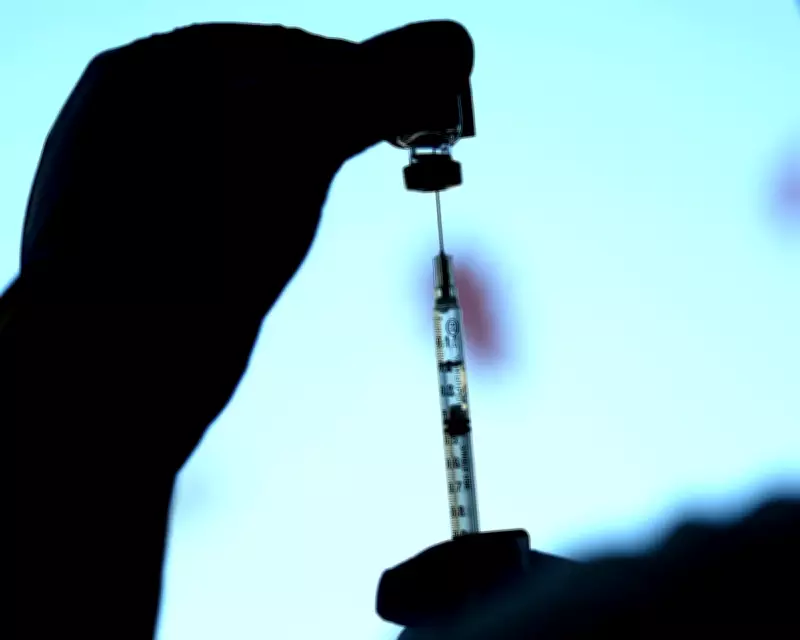
Polio Virus Detected in London Sewage Days Before Funding Cuts
Polio virus has been identified in London sewage for the second time this year, a discovery made just days before the UK government announced it was withdrawing financial support for global polio eradication efforts. This detection has sparked criticism from campaigners, who label the decision as "shortsighted and self-defeating," arguing it heightens risks to the UK public.
Understanding the Polio Threat
Polio is a highly infectious viral disease that primarily affects children under five years old. It can lead to paralysis by damaging nerves in the spine and brainstem, and in severe cases, it becomes life-threatening if respiratory muscles are compromised. In the UK, health officials routinely monitor wastewater from sewage plants across England, typically identifying a few cases annually. The latest detection, reported on 2 March by the Global Polio Eradication Initiative (GPEI), marks the tenth instance since 2024.
Professor Sir Andrew Pollard, director of the Oxford Vaccine Group at the University of Oxford, expressed concern: "The repeated finding of poliovirus in London sewage samples signals an ongoing transmission risk in the city. This is particularly alarming in areas with low vaccination rates, posing a serious health danger as polio infections can be devastating." He urged parents to ensure their children are up-to-date with polio vaccinations.

Global Context and Funding Cuts
Mass vaccination campaigns have largely eradicated polio worldwide, but wild strains persist in Afghanistan and Pakistan. The type detected in London is a circulating vaccine-derived poliovirus, which emerges when the weakened virus from oral vaccines mutates in communities with insufficient immunization coverage, potentially causing paralysis. In 2025, there were 225 reported cases globally.
The UK government recently eliminated funding for the GPEI as part of over £6 billion in aid reductions aimed at boosting defence spending. Historically, the UK has been the second-largest government donor to the initiative after the United States. Even prior to this announcement, the GPEI faced significant budget shortfalls, with its 2026 funding projected to be 30% lower than planned, necessitating cuts to surveillance and outbreak response programs.
Adrian Lovett, UK executive director at the anti-poverty group One, criticized the move: "The COVID-19 pandemic demonstrated that viruses transcend borders. Our defence against public health crises relies on global cooperation, and weakening international aid not only neglects moral obligations but also endangers the UK population by increasing vulnerability to outbreaks."
Expert Insights and Vaccination Trends
Dr. Kathleen O'Reilly, an associate professor of epidemiology at the London School of Hygiene and Tropical Medicine, noted that it is premature to determine if the sewage detection stems from a traveller returning from a polio-affected region or indicates local spread. She emphasized that a positive sewage sample does not equate to a paralytic case, but added that similar reports have risen in European countries like Germany.
Polio immunization coverage in the UK has seen a slight decline in recent years. The percentage of one-year-old children receiving all three recommended doses dropped from 95% between 2012 and 2015 to 92% in 2022-23. Dr. Vanessa Saliba, a consultant epidemiologist at the UK Health Security Agency (UKHSA), reassured that while one-off detections are not unusual and show no evidence of local transmission, parents should verify their children's vaccination status through their GP practices.
In the United States, experts are increasingly worried that anti-vaccine sentiment could trigger a resurgence of polio, underscoring the global importance of sustained immunization efforts and funding.