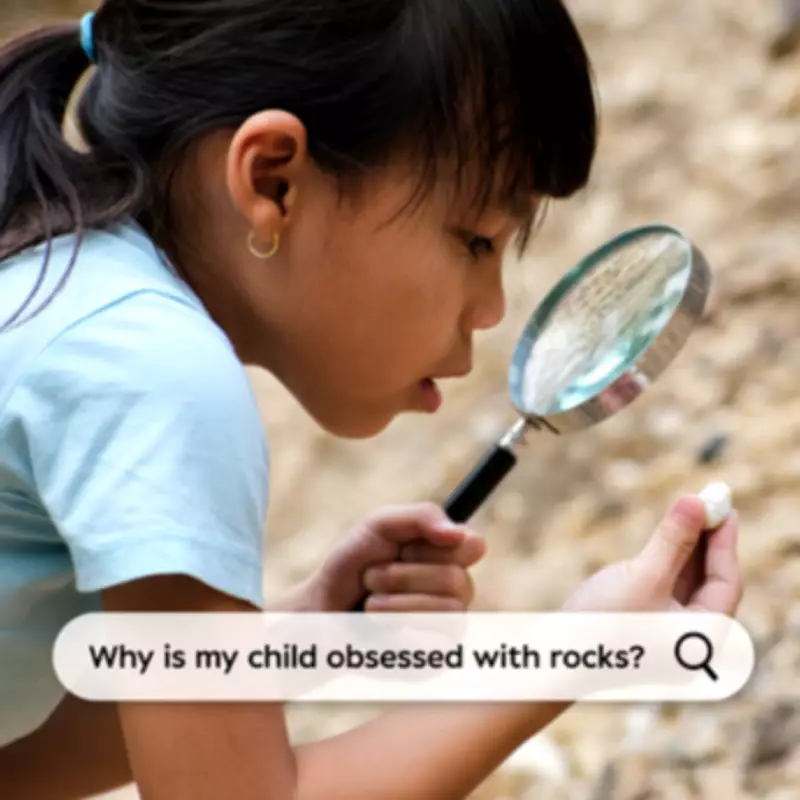
A fascinating new study has uncovered the peculiar questions parents are typing into search engines as they attempt to decode their children's often baffling behaviours. Research commissioned by Specsavers, involving 1,000 parents of children aged 5-7, found that a staggering 88% rely on traditional search engines like Google to better understand their kids.
The Quirky Queries Parents Are Asking Online
Analysis of search engine data has revealed some truly bizarre questions that parents have been asking about their offspring. Among the most unusual queries were 'how common is it for children to get stuck in a washing machine?' and 'why do kids like sitting in a box?'
Other common searches included 'why do kids draw dogs all the same?' and 'do kids naturally hate vegetables?' - the latter being typed into search bars 38 times per month on average. The perennial travel question 'why do kids say 'are we nearly there yet?'' was entered 32 times monthly.

Understanding Children's Fascinations
The research revealed that 90% of parents frequently question why their children are drawn to what they consider 'mundane' items. Rocks, cardboard boxes, puddles, and leaves topped the list of ordinary objects that captivate young minds.
Child psychologist Dr Elizabeth Kilbey, who collaborated with Specsavers on the study, commented: "Children are curious and imaginative, and this plays a vital role in how they learn, explore and build confidence. Because so much of that discovery is visual, clear vision is crucial to their development."
Health Concerns and Online Searching Habits
When it comes to physical health concerns, parents regularly search for information about rashes or skin conditions (49%), high temperatures (44%), and developmental milestones (38%). However, only 17% have ever sought guidance on their child's vision or eye health.
The study found that 35% of parents prefer using online tools for such queries compared to just 17% who turn to people in their lives. The main reasons for this preference include getting immediate answers (47%), having a range of information to compare (41%), and the speed of online research (33%).
The Overlooked Aspect of Children's Health
Worryingly, the research revealed significant gaps in parental awareness about eye health. Fifteen percent of those polled have never taken their child for an eye test, while 11% haven't done so within the last two years.
Dr Nigel Best, an optometrist from Specsavers, explained: "This research proves how easy it is to overlook a child's eye health unless obvious symptoms appear. Regular eye tests can identify issues early - often before a child realises anything is wrong."
He added: "What many parents may not realise is that many sight conditions, such as myopia in kids, can be managed or corrected if they're detected before the age of eight, while vision is still developing."
Why Parents Turn to Search Engines
The study uncovered several psychological factors driving parents toward online searches. Eighteen percent admitted they search online because they worry about being judged for their questions, while 21% believe they can get more objective answers from strangers.
Among parents who haven't searched about eye health, 10% think their child is too young for it to be a concern, and 11% assumed their school would flag any issues. Additionally, 13% are unaware of common childhood eyesight problems like short-sightedness or lazy eye (amblyopia).
Twenty Bizarre Search Terms Revealed
The research compiled a list of twenty particularly quirky search terms asked by parents, including:
- Why are kids saying '6 7'?
- Do kids naturally hate vegetables?
- Why do kids like sitting in a box?
- How common is it for children to get stuck in a washing machine?
- Why do kids draw dogs all the same?
- Why do kids act like cats?
- Do kids poke each other's bum?
- Why do kids cheer during fire alarms?
- Why do kids eat sponges?
- Why are kids mewing?
Dr Kilbey concluded: "Being able to see and focus underpins learning. When vision is affected, it can influence a child's attention, engagement and behaviour. That's why parents should prioritise eye health as an important part of their child's overall wellbeing."