
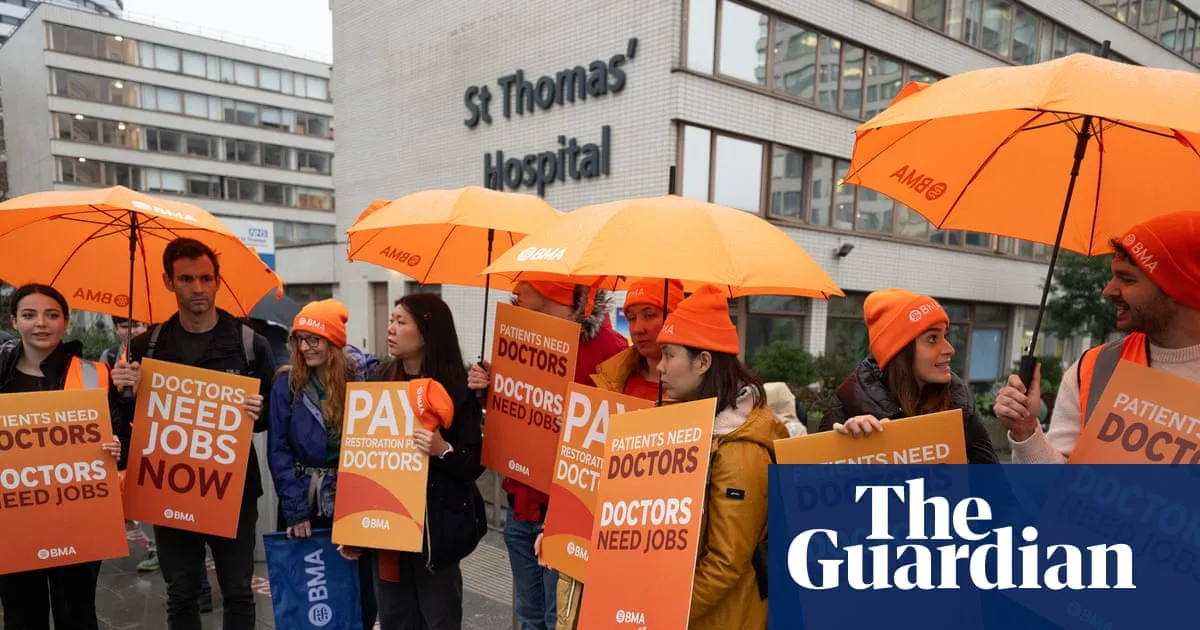
NHS leaders have called on Health Secretary Wes Streeting and the British Medical Association (BMA) to agree to independent mediation to resolve the long-running dispute with resident doctors, who are set to begin a five-day strike on Wednesday.
The NHS Confederation, representing hospital bosses, said an arbitrator could bridge the gap between the government and the BMA's resident doctors committee, ending the 33-month dispute. Thousands of resident doctors in England will walk out from 7am on Wednesday until 7am on Monday 22 December, in their 14th strike since 2023.
Last-ditch talks between Streeting and the BMA on Tuesday were described as “constructive” but failed to reach an agreement over pay and jobs. Sir Jim Mackey, head of NHS England, condemned the strike as “cruel” and “calculated”, warning it would cause mayhem during one of the busiest weeks of the year.
Matthew Taylor, chief executive of the NHS Confederation, said the standoff was making patients “collateral damage”. He added: “Some common ground is urgently needed, which independent mediation could support. We could see industrial action becoming the defining feature of the NHS in 2026, which no one wants.”
Resident doctors are demanding a 26% pay rise over three years and more training places, while the government says the claim is unaffordable. Dr Jack Fletcher, chair of the BMA’s resident doctors committee, warned that strikes could continue into 2026 unless ministers provide a credible plan for pay and jobs. The BMA plans to reballot its 55,000 members before their strike mandate expires on 6 January.
The Department of Health and Social Care did not directly respond to the mediation call, but a spokesperson said every effort had been made to avert the strike.




