
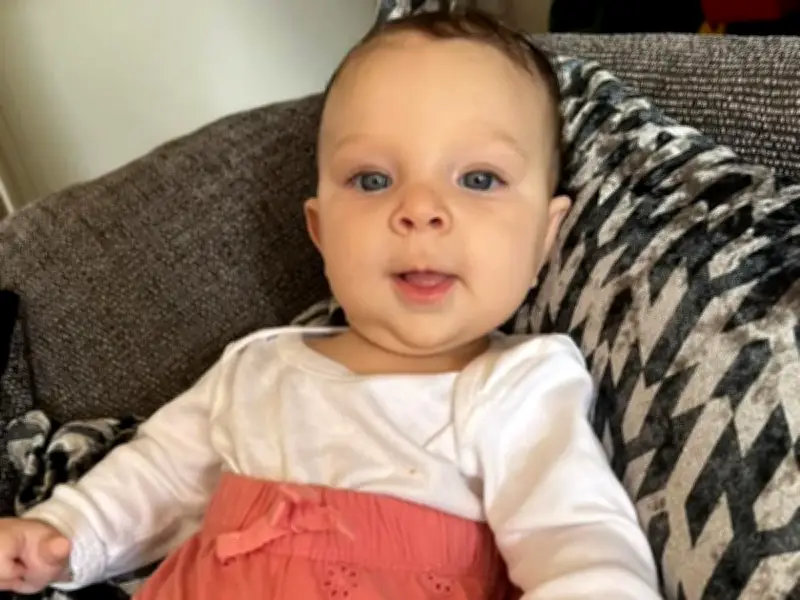
A four-month-old baby died from sepsis after doctors failed to notice signs of the infection following stoma surgery at Sheffield Children's Hospital. The trust later admitted that Kyra Ali Aslam would likely have survived if she had received appropriate care.
Kyra was fitted with a stoma shortly after her birth. One day later, her mother, Lariece Greaves, 30, told doctors that her daughter was 'not behaving' like she was prior to the operation. While doctors said it was likely to do with the anaesthetic Kyra needed for her surgery, it turned out that her stoma was leaking. Developing sepsis, she later died during surgery to fix the leak.
Mother's warning to other parents
Greaves, who has three other children, Qayyim, 12, Keyaan, 6, and four-month-old Zanayah, has now offered a warning to parents to be aware of sepsis symptoms. Speaking to SWNS, she said: "Kyra was the most beautiful little girl with the biggest smile. Losing her at the age we did and in the circumstances we did is something I will carry with me forever.
"When Kyra died, our world fell apart. As a family we've had to learn to live with that loss, while also trying to understand whether more could have been done to save her.
"I owed it to Kyra to keep asking questions and fighting for answers. The trust finally admitting failings is bittersweet. While they provide the answers Kyra deserved, and that she was badly let down, I still don't get to watch Kyra grow up and celebrate milestones in life."
She continued: "Nothing will ever bring Kyra, but I hope sharing her story encourages people to learn more about sepsis and recognise the warning signs. If greater awareness helps another family avoid going through what we've experienced, then Kyra's death might not have been totally in vain."
Timeline of events
Kyra's surgery took place on August 11, 2022. According to the NHS, a stoma is an opening created surgically on the abdomen to allow waste (stool or urine) to leave the body when the normal route is not possible. Waste is collected in a stoma bag attached to the skin.
The baby began vomiting just after midnight on August 12. Nursing staff raised concerns with medical staff over her condition, fearing she may have sepsis. With her condition continuing to deteriorate, she was taken to surgery the following day. Sadly, Kyra died at 3.40pm on August 13, shortly after arriving in theatre.
Following a separate inquest into Kyra's death, a coroner issued a prevention of future deaths report. In the report dated December 2023, the coroner called on the hospital to outline what measures it would take to improve care.
The report noted that Greaves was told the stoma reversal would be 'much more straightforward' than the operation to create it. It added that 'insufficient weight was placed' on her fears when she raised concerns about Kyra's condition post-surgery. Medical staff said a leaking bowel would be a rare complication when nurses told them they feared Kyra may have sepsis. The report added that they believed Kyra's bowel just wasn't working properly.
Trust admits failings
After Greaves instructed lawyers from Irwin Mitchell to bring a civil case against the trust, the trust initially admitted in the civil case that it failed to adequately obtain consent for Kyra's stoma reversal and failed to recognise Kyra had features of sepsis, and a breach of duty. The trust also noted there 'was a failure to recognise and act upon suspected signs of sepsis and that there were missed opportunities to recognise and treat' Kyra's suspected leaking bowel from just after midnight on August 12.
On the balance of probability, with 'appropriate care' Kyra's condition would have been stable enough so that surgery to repair her leaking bowel would have been successful and she would not have died, according to the trust.
Dr Jeff Perring, executive medical director at Sheffield Children's NHS Foundation Trust, said the hospital is 'sorry for the loss of Kyra' and recognises the 'profound impact this has had on her family'. He said: "Over recent years we have focused on sepsis awareness, and we are continuing to make improvements, such as refining clinical guidance, championing new training and education across our organisation to help us recognise sepsis early and to treat it quickly and effectively.
"To support this work, we have also appointed our first Sepsis Lead Nurse. Our thoughts remain with Kyra's family, and while nothing can change their loss, we are committed to ensuring the learning from Kyra's care leads to meaningful improvements for other children and families."




