
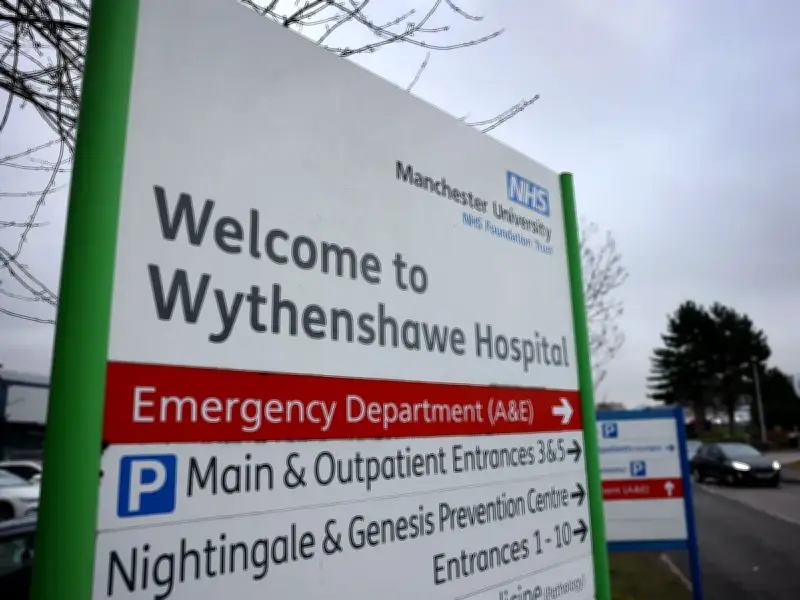
A coroner has issued a Prevention of Future Deaths report to Manchester University NHS Foundation Trust (MFT) after a patient died following a fall, criticising a "lack of candour" in evidence given at the inquest.
William Brian Keary, 78, from Manchester, fell in a bathroom while being treated at Wythenshawe Hospital in August last year. He died at St Ann's Hospice in Stockport on September 17, 2025, after being discharged there from Wythenshawe. An inquest found he died as a consequence of dedifferentiated metastatic prostate cancer.
Coroner warns over abandoned falls system
Following the inquest, Greater Manchester South area coroner Chris Morris issued the report to MFT, the largest NHS acute trust in the UK, which runs hospitals including North Manchester General Hospital, Manchester Royal Infirmary, and Trafford General.
The report draws a parallel to a previous Prevention of Future Deaths report issued after the death of William McKibbin, who died in 2018 from complications of a traumatic brain injury sustained in a fall at Trafford General Hospital.
In September 2020, the coroner had warned the trust about the need to properly investigate falls. In its response, the trust said it had implemented a mandatory "First Responder" document to be completed after every inpatient fall. However, following Mr Keary's inquest, the coroner said evidence from the current Director of Nursing at Wythenshawe Hospital indicated the document "appears to have fallen out of use at the Trust."
Concerns over candour and transparency
The coroner said he was concerned this created an "ongoing risk of future deaths", because of the importance of gathering the best available evidence about how falls happen. "In view of the importance to patient safety of gathering the best available evidence as to the causes of falls and the precise circumstances in which they occur, I am concerned this creates an ongoing risk of future deaths," Mr Morris wrote in the report.
The coroner also criticised the trust over a "lack of candour" in evidence given at Mr Keary's inquest. Mr Keary had fallen in a bathroom while a patient on the OPAL Assessment Unit at Wythenshawe Hospital on August 21, 2025. The coroner criticised the evidence given by the co-ward manager of the unit at the first hearing of the inquest in December 2025, saying he was concerned she "was not candid as to her understanding of the circumstances in which Mr Keary came to fall".
Mr Morris added: "Given the importance to the prevention of future deaths inherent in fostering a culture of openness and transparency in complex NHS organisations with a view to adverse incidents being quickly and fully understood, a lack of candour from those in management and/or leadership positions is a matter of particular concern."
Trust response and new measures
In response, the trust expressed its "sincere condolences" to Mr Keary's family and stated it takes the coroner's concerns "very seriously". The trust said a paper post-fall record was completed at the time and scanned into its electronic system, but admitted it failed to record that Mr Keary was being escorted to the toilet. This omission "did not support the inclusion of accurate and comprehensive information" being provided to the inquest, it added.
The trust also noted it has since replaced the paper "First Responder" form with an electronic post-falls action record to improve the documentation, review, and disclosure of post-fall evidence. Addressing the candour concerns, the trust clarified that the ward manager originally relied on Mr Keary's own account that he walked unaided. As a result, "evidence was given based on what at the time was understood to be circumstances surrounding the fall," it said.
The trust acknowledged this should have been cross-checked against wider evidence sooner, such as staff records and clinical documents. MFT said: "The reliance placed on Mr Keary's account contributed to the investigation and evidence review not being sufficiently thorough, as it was later clarified that Mr Keary had walked to the bathroom assisted by a member of staff."
The trust added that the ward manager has "reflected significantly" on the importance of ensuring evidence is supported by available records and accounts. "The Trust does not have concerns regarding the Ward Manager's candour or professional integrity, and appropriate communications have taken place with the relevant regulatory body," it added.
To prevent future incidents, the trust has introduced mandatory "hot debriefs" following falls. It also provides falls awareness training to all clinical staff, which it says currently sits at 93 per cent compliance across the trust, with a target of 95 per cent by November 2026.




