
The NHS is set to trial a new device that could help millions of people in the UK with sleep apnoea, a condition that affects around eight million individuals. The chronic disorder causes breathing to repeatedly stop and start during sleep due to airway blockage, leading to severe tiredness, poor concentration, and increased risks of heart disease, stroke, and type 2 diabetes.
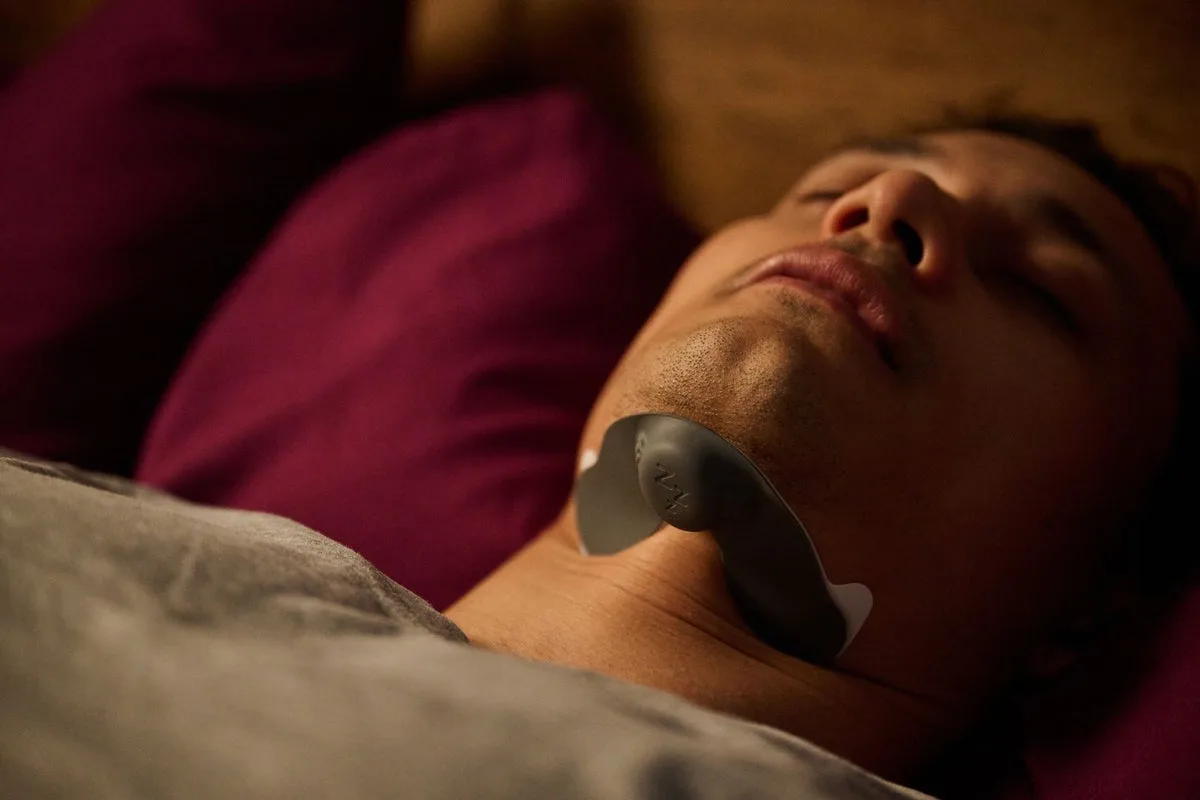
Current gold-standard treatment, continuous positive airway pressure (CPAP) machines, are often abandoned by more than half of patients within a year due to discomfort. The new device, called the Zeus Sleep device, is worn discreetly under the chin and uses gentle electrical stimulation to prevent airway collapse by keeping tongue and throat muscles from relaxing. It requires no face mask, mouthpiece, or invasive procedure.
The trial will be conducted by experts at Guy’s and St Thomas’ NHS Foundation Trust and King’s College London. Professor Joerg Steier, a respiratory and sleep medicine expert at King’s College London, explained that the device is about 7cm wide, looks like a boomerang-shaped patch, and sits underneath the lower jaw and tongue. Unlike permanent implantable devices that cost around £20,000 and require surgery, the Zeus device is far cheaper, currently sold to reduce snoring for £250.
The study has been awarded £1.48 million in public funding from the National Institute for Health and Care Research. Researchers aim to recruit about 200 patients across seven NHS areas, with the study expected to start this summer and data collected by 2028. Earlier NHS-led studies showed promising results, with 84% of users reporting better sleep, 78% feeling more alert during the day, and 85% continuing long-term use.
Professor Steier noted that while the device is not as effective as CPAP for severe cases, it is suitable for the majority of moderate and mild conditions. He emphasised that rising obesity rates are increasing sleep apnoea prevalence, as excess fat deposits around the neck narrow the upper airway.




