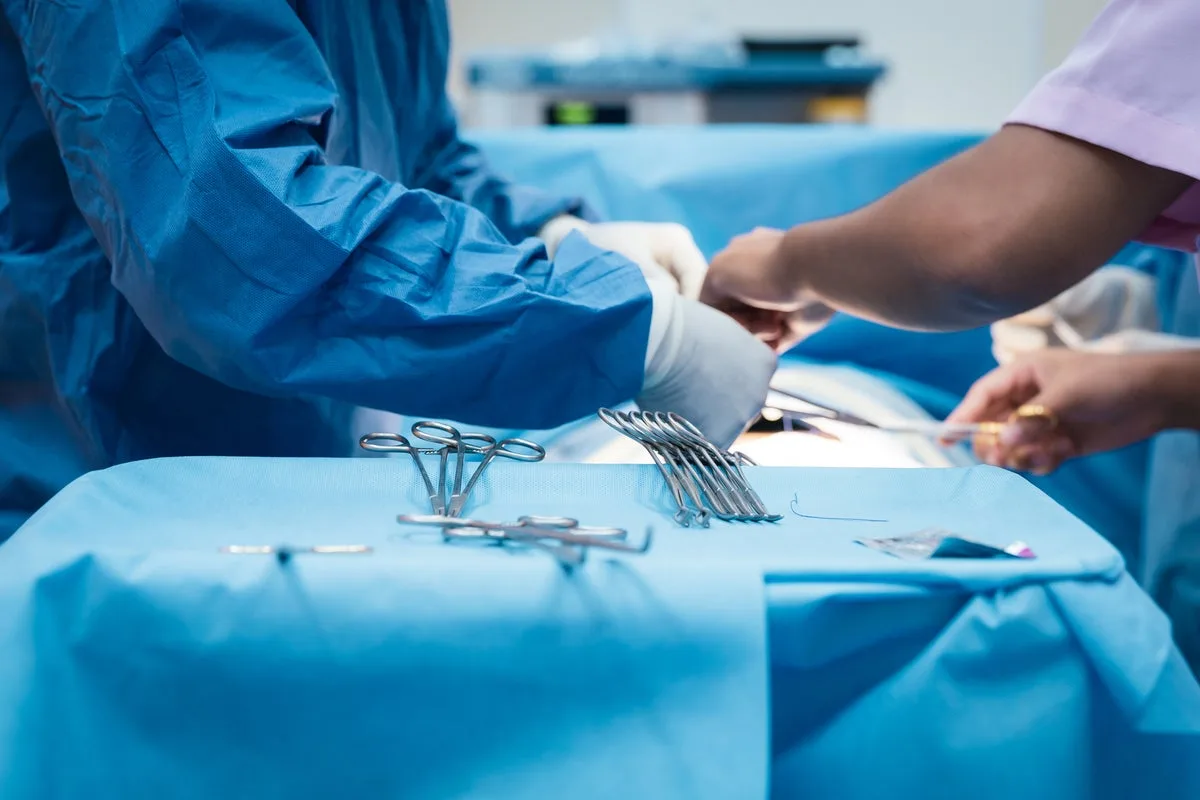
NHS Surgical Errors: 661 Wrong-Site Operations Over Five Years Revealed
NHS Surgeons Made 661 Wrong-Site Operation Errors

NHS Surgeons Performed 661 Wrong-Site Operations Over Five Years

Newly released data has revealed that NHS surgeons have made hundreds of serious errors over the last five years, including operating on the wrong patient and removing both ovaries instead of one. The figures show English hospitals performed 661 cases of surgery on the incorrect patient or body part between 2020 and 2025, marking a substantial 46 percent increase over that timeframe.

Campaigners have issued urgent warnings that patient safety must become a higher priority amid what they describe as a "very concerning" escalation in preventable incidents. The data indicates that serious harm was caused to patients in 7 percent of these wrong-site surgery cases.

What Constitutes Wrong-Site Surgery?

"Wrong-site surgery" refers to medical errors where invasive procedures are performed on the wrong patient, incorrect body part, or wrong site on the body. Many of these incidents are classified as "never events" by the NHS, meaning they are considered entirely preventable with proper protocols and safeguards in place.

Wide Pickt banner — collaborative shopping lists app for Telegram, phone mockup with grocery list

The statistics, obtained by Medical Negligence Assist through Freedom of Information requests, reveal a troubling upward trend. While 69 incidents were recorded in 2020, this number climbed to 101 by 2025. However, the true figure is likely even higher, as only 72 of the 117 contacted NHS Trusts responded to the requests, with some declining to provide exact numbers to protect patient confidentiality.

Serious Harm Cases and Notable Incidents

Among the most severe cases was the mistaken removal of both ovaries from a patient at Great Western Hospitals NHS Foundation Trust in October 2024. This error was recorded as causing "severe harm," which can trigger immediate surgical menopause in premenopausal patients, along with infertility and estrogen level complications.

At least five incidents involved operating on the wrong patient across different trusts, including procedures such as bronchoscopies and biopsies. Other documented errors include injections administered to the wrong eye, removal of the incorrect thyroid gland lobe, and incisions made on the wrong finger.

In total, 46 cases resulted in serious harm to patients, 236 caused moderate harm (such as wrong tooth extractions or incorrect scar removals), and 292 led to low harm (including erroneous biopsies or anesthesia applications).

Trusts with Highest Incident Rates

Newcastle-upon-Tyne Hospitals NHS Foundation Trust emerged as the worst offender overall, recording 44 cases over the five-year period. Other trusts with significant numbers included Manchester University NHS Foundation Trust with 22 cases, University Hospitals of Morecambe Bay NHS Foundation Trust with 23 cases (two involving serious harm), and North West Anglia NHS Foundation Trust with 20 cases (13 involving serious harm).

Twenty-seven trusts recorded ten or more wrong-site surgeries during the timeframe, highlighting the widespread nature of the problem across the NHS system.

Campaigners and Officials Respond

Paul Whiteing, chief executive of Action against Medical Accidents (AvMA), expressed deep concern about the continuing increase in never events. "Behind every one of these events is a patient who will suffer harm, sometimes serious and life-changing and possibly life-threatening," he stated. "It is vital that the NHS continues to invest in patient safety and gives it the priority it needs. Good care must be safe care. And if it is not then trust in the NHS will be lost."

Gareth Lloyd, head of department at Medical Negligence Assist, warned that "the increase in the numbers demonstrates that these 'never events' are becoming common, and is something that everyone should be concerned about as the consequences can range from the catastrophic to unnecessary scarring to avoidable pain and discomfort."

An NHS spokesperson acknowledged that "while these kinds of incidents are very rare, they are completely unacceptable" and emphasized that "the NHS has robust procedures in place to ensure they are fully investigated, with effective action taken to improve care for future patients." The spokesperson added that the NHS recognizes "there is more to do" and is supporting frontline teams to strengthen patient safety through better incident recording and response systems.

Pickt after-article banner — collaborative shopping lists app with family illustration

Causes and Preventative Measures

Analysis of the incidents revealed multiple contributing factors to wrong-site surgeries. While human error played a significant role, other causes included failure to follow established procedures and safety checklists, communication breakdowns, organizational issues, and environmental factors such as poor lighting, temperature problems, and inadequate equipment.

Dr. Lucia Pareja-Cebrian, joint medical director at Newcastle Hospitals, highlighted their approach: "We have a culture and approach where we actively encourage all staff to openly report incidents, apologise to those patients and families involved and investigate thoroughly, to ensure we learn what needs to change to prevent any future occurrence."

A spokesperson for Great Western Hospitals NHS Foundation Trust expressed regret for the pain and long-term impact caused by their surgical errors, stating: "We strive to provide high-quality, safe care to every patient, however unfortunately, on these occasions, clinical practice fell short of the standard we expect. We are committed to learning from any mistakes that are made to ensure they don't happen again."

The data underscores ongoing challenges in maintaining surgical safety standards within the NHS, with campaigners calling for renewed focus on prevention protocols and systemic improvements to protect patients from avoidable harm during medical procedures.




