NHS Strike Costs Soar Past £3 Billion as Junior Doctors Launch Fresh Walkout
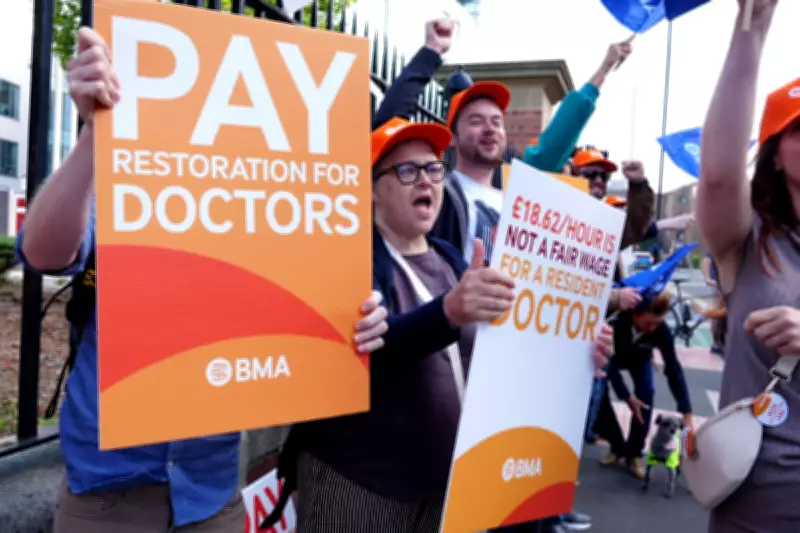
Resident doctors in England have commenced their 15th strike since 2023, with the cumulative financial impact of the industrial action now estimated to have exceeded £3 billion. The latest six-day walkout began at 7am on April 7, adding an immediate £300 million to the mounting bill, according to Health Secretary Wes Streeting.
Government Criticises "Enormous Waste" as Dispute Escalates
Wes Streeting has sharply criticised the British Medical Association (BMA), arguing that the £3 billion spent on covering strike action could have been used to construct "a few" hospitals or accelerate reductions in NHS waiting lists. Speaking to LBC's Nick Ferrari, Streeting emphasised the opportunity cost, stating: "We could have run far more appointments and procedures with that money to cut waiting lists faster. Those would probably be the things that I would have chosen to prioritise."
The Health Secretary further contended that the public would think he had "lost the plot" if he proceeded with offering 1,000 additional training places for resident doctors after they rejected the Government's proposed deal on pay and conditions. He told Sky News: "Can you imagine what you and your viewers would be saying to me this morning if the BMA rejected this deal, went out on strike, cost the NHS £300 million, and the Government said: 'we're still going to give them the benefits of the deal'. You would think I had lost the plot."

Rejected Deal and Training Places Controversy
The dispute centres on a Government offer that was rejected by the BMA's resident doctors committee. The proposal included:
- A 4.9% increase in average basic pay, which Streeting claims would have left resident doctors 35.2% better off than four years ago.
- An offer of 1,000 extra training places, which has since been withdrawn.
Streeting explained the withdrawal, stating: "I didn't remove those training places, the BMA did when they rejected the deal – they seem to think they can have all of the benefits of the deal at the same time as rejecting it. The jobs are still there, but what the training places do is provide higher pay and career progression for those doctors, that's what the BMA have rejected."
He added that NHS leaders have not demanded additional training places, saying: "Quite the opposite."
BMA Response and Accusations of "Goalpost Shifting"
Dr Jack Fletcher, chairman of the BMA resident doctors committee, countered that the strikes were "entirely avoidable." He accused the Government of quietly watering down the deal at the last minute, reducing the financial offer and spreading it over too many years to be worthwhile. Fletcher stated: "We offered the Government several opportunities to undo their last-minute goalpost shift, and they refused."
On the training places, Fletcher expressed dismay: "One thousand places, gone, overnight, one thousand opportunities for doctors who have studied hard, dedicated their lives to the NHS, destroyed. It's this government that is holding patients hostage and using our next generation of consultants and surgeons as bargaining chips."
Parallel Strikes and Pay Hypocrisy Claims
In a related development, hundreds of BMA staff are also on strike in a separate pay dispute, with a 48-hour walkout starting on Monday. Streeting highlighted this, telling BBC Breakfast: "Here's the real kicker, having rejected this deal because the pay offer apparently wasn't good enough at 4.9%, the BMA are offering their own staff 2.75% on affordability grounds. Why does the BMA think they can get away with telling their own staff they only get 2.75% because that's all they can afford, whilst rejecting a 4.9% offer because that's all the Government can afford."
He accused the BMA of being unwilling to "put their hands in their own pockets" while expecting taxpayers to fund higher increases.

Broader Industrial Action Looming
The dispute shows no signs of abating, with senior medics also preparing for potential industrial action. Consultants and specialists, associate specialists and speciality (SAS) doctors will be balloted from May 11 to July 6 after ministers announced a 3.5% pay award. This could lead to simultaneous strikes across multiple levels of the medical profession, further straining NHS resources.
Despite the ongoing disruption, NHS officials have urged patients to attend appointments as normal, acknowledging that the strike will be "difficult" but manageable. Streeting concluded: "We will be able to sustain and withstand strike action on an ongoing basis, if that's the way the BMA take things. But that comes in enormous waste of time, money and potential. You know, the NHS is finally moving in the right direction. It is on the road to recovery."