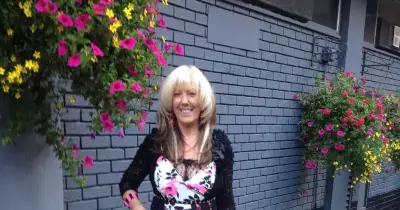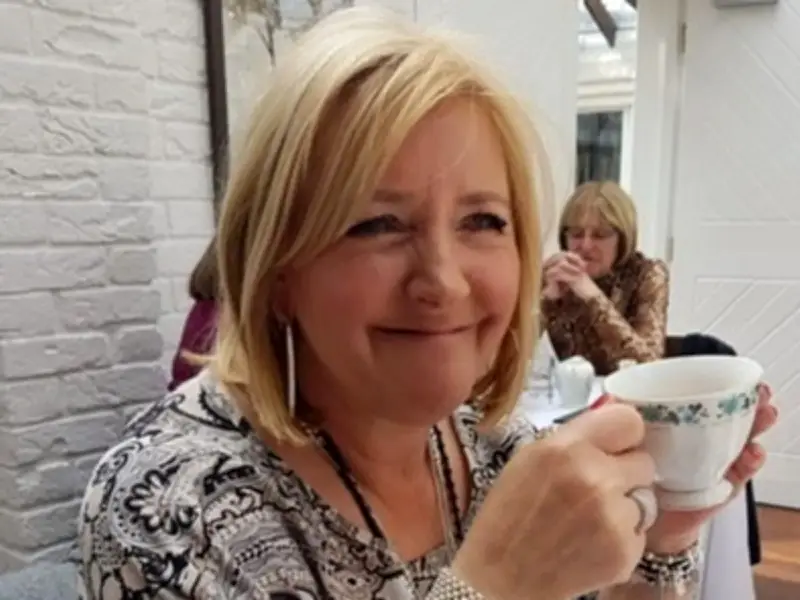
Vicky Mcloughlin, 66, from Tamworth, was diagnosed with stage three bowel cancer in November 2024 after her daughter Chloe, 33, noticed she “wasn't herself” when she had been struggling to go to the toilet for two weeks. Despite two hospitals refusing to operate, her family says her quality of life is already severely affected.
Diagnosis and complications
When Vicky started suffering from bleeding, she had an endoscopy that initially did not pick up on anything. Chloe took her mum to A&E, where they scanned her and felt a mass in her cervical area. A biopsy later confirmed it was cancer, and they were told the tumour had started in her bowels and progressed to her cervical area.
When the tumour spread, it created a hole in her bowel and cervical area, meaning she needed a stoma bag and a tube inserted in her kidneys to drain urine. This also resulted in regular infections and a build-up of fluid that needed to be drained. Because of this, Vicky was denied chemotherapy due to infections and had two lots of radiotherapy instead.

Refusal of surgery
Chloe pleaded with doctors at Solihull Hospital and St Mark's Hospital in London to operate and remove the tumour, but both refused, saying the operation came with too much risk, could result in Vicky losing her leg and leave her with a worse quality of life. In a letter sent to Vicky, doctors said they had “significant concerns” about how she would cope with the surgery.
The letter added that the “combination of her overall fitness and the magnitude of the disease with the likelihood of a positive resection margin means that we think progressing to an attempted major pelvic resection would not be in her best interests.” But Vicky's family disagree with the decision, saying her quality of life is already severely affected as she has to go to hospital every two weeks.
Family's response and ongoing struggles
Chloe, who owns a dog walking business from Tamworth, said: “It was a lot to process when she was diagnosed. We never would have thought where we are now and be in the situation we are now. The only way to cure her is through surgery. A hospital in London, and one in Solihull both refused.”
“They said it was too major and she could lose her leg and they said with her age they don't know if she'd survive the surgery. They said she'd have a better quality of life without the surgery - but to me that's not the case. It's constant - every other week she's back in hospital. It does nothing - it's just torture. It's a living nightmare. I don't know what else to do.”
The hysteroscopy didn't initially notice the tumour because of how large it was. Chloe added: “They were just going past it as it looked like part of her.”
Thankfully for Vicky, the tumour has so far been contained to the bladder, bowel and cervical area and it hasn't spread anywhere else yet. But the infections that Vicky gets can cause her to develop sepsis. Vicky has had sepsis five times in the last two years. Vicky's condition means that she cannot have any more treatment.
Chloe said: “When the tumour broke through it caused a hole in the bowels and cervical area. So infections were caused. She had multiple drains to drain out the fluid collection. She's had four in the last two years. She had to have surgery for a stoma bag too. But the collection of fluid with the last drain didn't drain out as it was too thick. They eventually managed to remove it as it was putting pressure on her kidneys.”
“The urine was going back towards her kidneys, so she had surgery for two tubes to go into her back through her kidneys and they drain out her urine. So now she doesn't go to the toilet at all. She was in such a strong position but now I don't know how she's alive today. She has sepsis all the time.”
A spokesperson for University Hospitals Birmingham said: “We have great sympathy for Mrs Mcloughlin and her family at what is clearly a difficult and distressing time. Decisions about radical cancer surgery are very complex and are never taken lightly.”
“Any advice given is based on a careful assessment of the potential benefits and risks, and are coordinated by a multi-disciplinary team, with the clinical team's overriding priority being what is safest, and in the patient’s best interests.”

A London North West University Healthcare trust spokesperson said: “The trust can’t comment on individual patients’ circumstances.”