

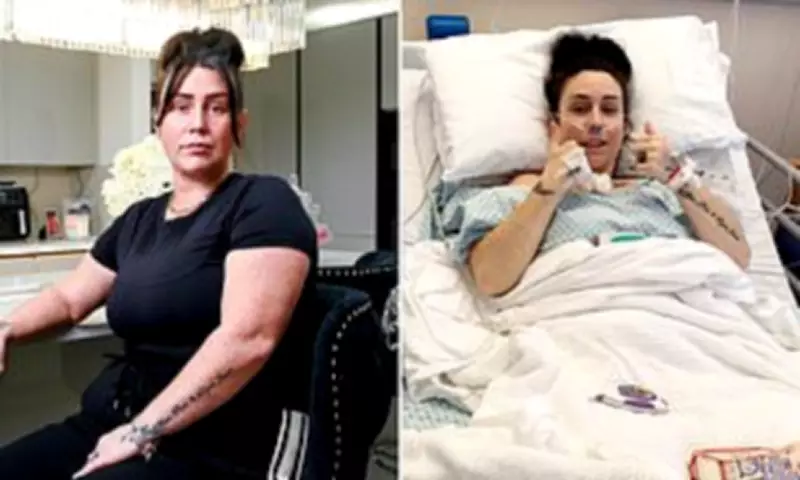
Mother's Decade-Long Struggle for Cancer Diagnosis Ends in Terminal News
Melissa Fellows endured a harrowing ten-year battle to convince medical professionals that a painful lump on her stomach was more than just a cosmetic concern. The mother-of-three from Hull, East Yorkshire, first noticed the abnormality in 2009 but was repeatedly assured by doctors that it was merely a harmless lipoma—a benign fatty growth.
A Growing Concern Ignored
"I had a tiny lump inside the left-hand side of my stomach which you could only notice when I laid down," Ms Fellows recalled. "I went to the GP to say I had a positive pregnancy test and to check the lump. The GP checked it and told me it wasn't attached to anything and they are quite common. He said they were cosmetic and I had nothing to worry about."
Despite the lump growing progressively larger and causing increasing discomfort over the years, medical professionals continued to dismiss her concerns. During subsequent pregnancies, doctors, nurses, and midwives all reinforced the lipoma diagnosis. By 2017, the pain had become "horrendous" and the growth was expanding at an alarming rate.

The Physical and Psychological Toll
"I had to wear baggy clothes to cover it up, but by the end that didn't work and people would stare," she described. "I became very self-conscious about it and stayed at home. Every medic told me it was cosmetic and harmless and I believed them."
The psychological impact was severe. "My mental health really suffered," Ms Fellows admitted. "I was always quite slim and weighed about 10 stones, but this lump was like carrying around a fully grown toddler on my hip. I just knew this wasn't normal and something was really wrong."
Devastating Diagnosis After Years of Neglect
It wasn't until 2019—a full decade after her initial complaint—that Ms Fellows received proper medical investigation. After the pain became unbearable, she was finally referred to a consultant plastic surgeon who ordered comprehensive scans and a biopsy.
The results confirmed her worst fears: she had liposarcoma, a rare cancer that develops in fat cells. Typically affecting people aged 40 to 60, this cancer presents with vague symptoms often confused with everyday complaints like indigestion, stress, and fatigue—factors that frequently lead to delayed diagnosis.
Surgical Intervention and Terminal Prognosis
In June 2019, surgeons removed a massive 30cm by 30cm tumour, described as "one of the largest" they had ever encountered. The growth weighed approximately three stone—equivalent to carrying a toddler on her hip.
"When I finally got the diagnosis it was strangely something of a relief, as I was finally believed," Ms Fellows said. "But by then I was told it had spread."
Despite undergoing gruelling chemotherapy and seven additional operations to remove further tumours, she received the heartbreaking news that the cancer was terminal. The spread had progressed too far for curative treatment.
Legal Action and Systemic Failure
Ms Fellows and her husband Adam, 37, pursued legal action against the NHS, resulting in a six-figure settlement from Hull University Teaching Hospitals NHS Trust this year. The trust admitted that proper treatment when she first complained about the lump could have cured her cancer.
Interim CEO Lyn Simpson stated: "Firstly, I want to extend my sincere apologies to Mrs Fellows. We deeply regret that she did not receive the timely care she deserved. Since this incident occurred, we have put measures in place to prevent any repeat of such errors, including improved training."
Advocacy for Change: Melissa's Law
Now facing a terminal prognosis, Ms Fellows is campaigning for "Melissa's Law"—legislation that would require GPs to refer patients for scans when they present with abnormal lumps on any part of their bodies.
"I'm now living with a time bomb and having to approach every day as if it could be my last," she said. "With three children, it is heartbreaking. My message to others would be not to allow any doctors to dismiss lumps, especially if they continue to grow like mine did."
She highlighted dangerous misconceptions: "I was told with mine that it was ok because it was moving, and that meant it had not attached to anything and therefore it wouldn't be cancerous. That proved to be a nonsense."

The Human Cost of Delayed Diagnosis
"If I'd have been sent for a CT scan or a biopsy at any stage from 2009 onwards I wouldn't be in this awful position I find myself now," Ms Fellows lamented. "I just feel so sad and so badly failed by the dozens of doctors and nurses who examined me. If I had been tested earlier the chances are I would be cured by now but instead I'm terminally ill."
Her story underscores broader concerns about sarcoma diagnosis in the UK. Sarcoma UK reports approximately 5,900 sarcoma diagnoses annually, with about 16 people diagnosed each day. Around 88% of these cancers occur in soft tissue, with the remainder in bone.
As she faces an uncertain future, Ms Fellows reflects: "I don't know if this will be my last Mother's Day. I've got three children and it breaks my heart not knowing how much time I've got left to see them grow."





