

Measles Resurgence Threatens Communities as Vaccination Rates Plummet
Public health experts are sounding the alarm as vaccination rates continue their concerning decline across multiple regions, putting communities at risk of preventable disease outbreaks. The situation has become particularly urgent in areas where herd immunity thresholds are no longer being met, creating vulnerable pockets where diseases like measles can spread rapidly.
London Confirms Major Measles Outbreak Affecting Young Children
Health authorities have confirmed a significant measles outbreak in London primarily affecting children under ten years old. This development comes as similar concerns mount in the United States, where data reveals troubling vaccination gaps in school populations.
According to information obtained through The Washington Post in January 2026, one in three kindergarten students in Allegheny County, Pennsylvania, attended classrooms with vaccination coverage too low to prevent measles outbreaks during the 2023-24 school year. Herd immunity in this region is already slipping below the critical 95% threshold needed to stop transmission.

Private Versus Public School Vaccination Disparities
Research conducted by University of Pittsburgh public health experts Kar-Hai Chu and Maggie Slavin reveals significant disparities between school types. Private and parochial schools in Allegheny County consistently fall below herd immunity thresholds, while public schools generally maintain adequate coverage.
"The disparity between vaccination coverage in private and parochial schools versus public schools stems from higher rates of exemptions for moral and religious beliefs in non-public institutions," explained the researchers. Between the 2023-24 and 2024-25 school years, public schools displayed an overall decline in vaccination coverage, while private and parochial schools showed some improvement but with greater variation across individual institutions.
Regardless of school type, health officials emphasize that children should receive complete and updated vaccinations to protect both themselves and their communities. Even small dips in vaccination rates can lead to significant disease spread, creating public health emergencies that were previously thought to be controlled.
The Proven Value of Combination Vaccines
Combination vaccines represent one of public health's most successful interventions, with single injections protecting against multiple preventable diseases since their introduction in the 1940s. Common examples include:
- DTaP for diphtheria, tetanus, and pertussis
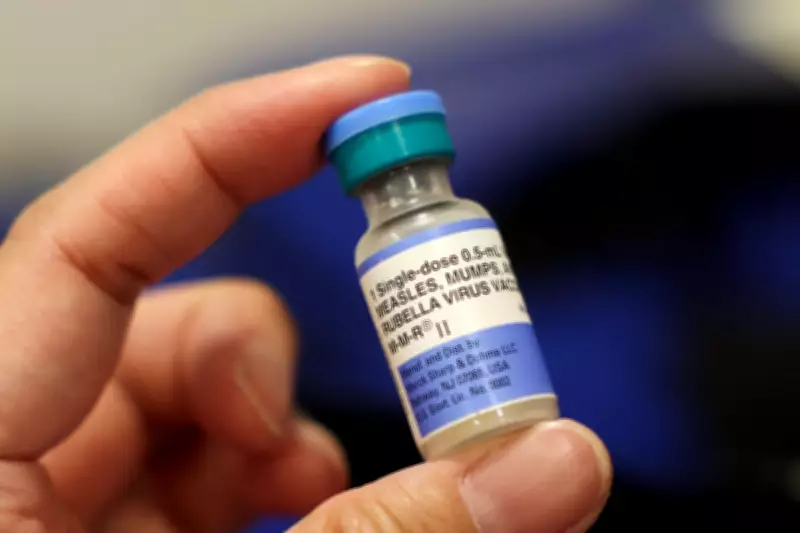
- MMR for measles, mumps, and rubella
The MMR vaccine, licensed since 1971, helped eliminate measles from the United States by 2000 and reduced cases by 80% within a decade of its introduction. Despite this proven track record, some government officials have called to split these vaccines based on unsubstantiated claims linking them to autism and concerns about administering multiple vaccinations simultaneously.
Political Interference in Vaccination Policy
The evidence-based process that has guided vaccination recommendations since 1964 faces unprecedented challenges. The Advisory Committee on Immunization Practices, comprised of volunteer medical and public health experts appointed by the Secretary of Health and Human Services, has traditionally provided scientifically sound vaccination guidance.
However, in June 2025, HHS Secretary Robert F. Kennedy Jr., who has promoted anti-vaccination misinformation, took the extraordinary step of firing all seventeen committee members and appointing twelve new members with questionable qualifications and potential conflicts of interest. This action represents a fundamental disruption to the evidence-based process that has protected public health for over six decades.
In response, the Pennsylvania Department of Health and Governor Josh Shapiro have reaffirmed their commitment to evidence-based vaccination guidelines from leading national medical associations, including the American Academy of Pediatrics, American Academy of Family Physicians, and American College of Obstetricians and Gynecologists.

Measles Spreads as Misinformation Takes Hold
The real-world consequences of vaccine misinformation are now visible across the United States. Measles cases reached 2,255 confirmed infections in 2025, nearly double the 2019 peak of 1,274 cases. While Allegheny County has avoided confirmed measles cases in 2026, Lancaster County reported infections on February 3rd involving unvaccinated individuals.
Unvaccinated people face a staggering 140 times higher risk of contracting measles compared to vaccinated individuals. Over 90% of 2025 measles cases in the United States occurred in people who were either unvaccinated or had unknown vaccination status.
"When government officials become sources of misinformation, the threat multiplies exponentially," warn public health experts. The World Health Organization has identified vaccine hesitancy as one of the most significant threats to global health.
Protecting Evidence-Based Vaccination Policies
The American Academy of Pediatrics emphasizes that state-level policies may offer greater responsiveness to local needs while maintaining evidence-based standards. Several states have implemented innovative approaches:
- Louisiana has successfully framed vaccination as a community protection measure
- South Dakota advocates emphasize the economic benefits of immunization to business owners
- Oregon created a financing model allowing providers to access vaccines with no upfront costs
Health professionals recommend supporting organizations that prioritize scientific evidence, demanding transparency in policymaking, and understanding the distinction between legitimate scientific debate and coordinated misinformation. The 2026 American Academy of Pediatrics guidelines have been endorsed by twelve healthcare organizations representing over one million pediatric medical professionals, providing a trustworthy foundation for vaccination policy.
As measles outbreaks continue to emerge and vaccination rates decline, public health experts stress that protecting evidence-based vaccination policies has never been more critical for community health and safety.





