

US Measles Outbreak Spreads: Unvaccinated Babies at Risk as Herd Immunity Fades
With measles outbreaks now affecting numerous states across America, infants too young for vaccination have become alarmingly vulnerable. Dropping immunization rates have significantly weakened the protective barrier of herd immunity nationwide, leaving babies exposed to a highly contagious and potentially deadly virus.
Families Face Growing Anxiety Amid Outbreak Expansion
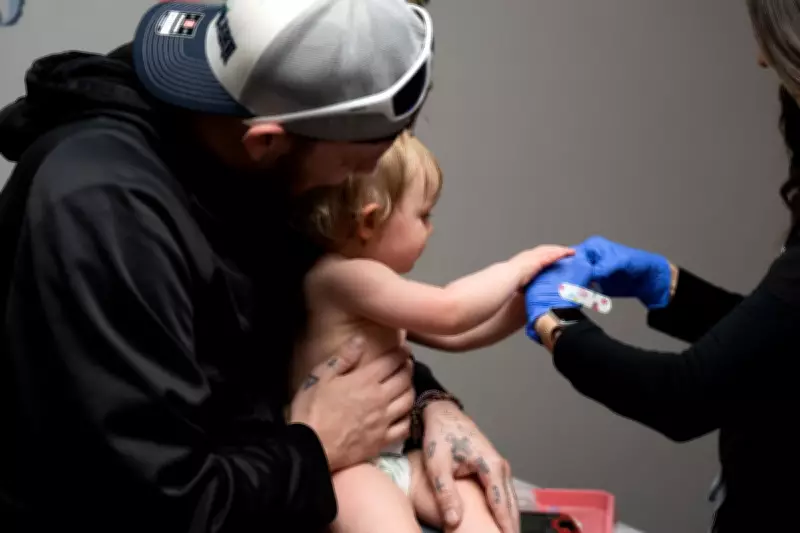
John Otwell expressed deep concern as the measles threat began impacting routine activities like grocery shopping. "We go to the Costco that was kind of a hotbed," he revealed after state health department warnings about public exposures at the store. "A lot of people just don't get it; they think it's just a cold. It's not."
By his son Arthur's nine-month checkup, the South Carolina outbreak had escalated into the nation's worst measles crisis in over thirty-five years, surpassing last year's outbreak in Texas. This development meant Arthur could receive his first MMR vaccine dose earlier than the standard twelve to fifteen months. However, the family's new baby, due in June, won't be eligible for vaccination until at least six months old—a prospect causing anxiety for parents of infants wherever measles spreads.

Medical Vulnerabilities and Herd Immunity Breakdown
Babies lacking vaccination protection face particularly severe risks during measles outbreaks. The disease can devastate their developing bodies, causing such severe illness that infants stop eating and drinking. Complications may include pneumonia, dangerous brain swelling, and in some tragic cases, death.
These youngest patients depend entirely on herd immunity—the community protection that requires at least ninety-five percent vaccination coverage to prevent measles transmission. However, declining immunization rates have eroded this crucial safeguard both in South Carolina and across the United States. In Spartanburg County, the outbreak's epicenter, fewer than ninety percent of students have received required vaccines.
"Babies become sitting ducks," warned Dr. Deborah Greenhouse, a Columbia pediatrician. "The burden is on all of us to protect all of us."
Political Debates Intensify as Public Health Concerns Mount
Increasingly, some policymakers and officials frame vaccination as primarily an issue of individual freedom and parental rights rather than a collective public health responsibility. At the federal level, Health Secretary Robert F. Kennedy Jr., a longtime anti-vaccine advocate, has pursued significant changes to vaccine policy while overseeing substantial public health funding reductions.
Although a temporary federal court ruling has slowed this momentum, numerous bills have been introduced in multiple states, including South Carolina, that could further decrease vaccination rates. South Carolina's measles outbreak, totaling approximately one thousand cases, has shown some slowing, but measles continues spreading across many states, with seventeen outbreaks this year and forty-eight last year.
The United States now faces the potential loss of its status as a country that has eliminated measles, a designation that requires maintaining disease elimination for at least three consecutive years.
Healthcare Providers Adapt to Protect Vulnerable Infants
Dr. Jessica Early, a pediatrician in Greer, never anticipated confronting measles in her practice but grew deeply concerned for both her patients and her own baby when the virus emerged in her community. She and fellow doctors began offering approved infant MMR doses as early as six months old, while also administering the second MMR dose—typically given between ages four and six—earlier than standard protocols.
Frustratingly for medical professionals, nobody knows precisely how many South Carolina infants have contracted measles or required hospitalization. State officials have disclosed only that two hundred fifty-three of the nine hundred ninety-seven cases involved children aged four and younger, declining to provide more detailed breakdowns citing confidentiality concerns.
Officials also lack exact data on infant hospitalizations because, similar to other states, South Carolina hospitals aren't mandated to report measles-related admissions.

Childcare Facilities Navigate Uncertainty and Parental Anxiety
Across the state, doctors fielded numerous questions about whether parents should bring infants to medical waiting rooms or childcare facilities. Thomas Compton, regional director of Miss Tammy's Little Learning Center—a childcare network operating throughout the outbreak region—reported that eighteen parents withdrew children from his facilities despite no confirmed measles cases.
Some families abandoned deposits just days before their children were scheduled to start, forcing the company to lay off a teacher. Although licensed daycares must require vaccines under state law, families can easily obtain religious exemptions. Approximately one-fifth of Miss Tammy's three hundred children have vaccine waivers.
When measles surged, Compton noted that state officials provided minimal guidance. His staff intensified surface cleaning protocols similar to COVID-19 procedures, tracked local measles cases through social media, and relied on internet searches for disease information.
"A lot of parents were really stressed out," Compton acknowledged. "Anytime that we had a little sickness going on or something, they were like, 'Do you think it's the measles?'"
Legislative Proposals Threaten Further Vaccination Reductions
Last year, an Associated Press investigation revealed that Trump administration officials had directed activists to promote anti-science legislation in statehouses nationwide. As of late October, around three hundred fifty anti-vaccine bills had been introduced across the country, including at least eight in South Carolina.
This year, a state legislative proposal would prohibit requiring vaccines for children under two years old. "In other words, it would get rid of those requirements in the daycares," explained pediatrician Greenhouse. "And for people like me, that is a gut punch that is terrifying."
During subcommittee discussions, Republican State Senator Carlisle Kennedy stated his bill aims to protect parental rights. His own baby, born in August with nonfunctioning kidneys, received vaccines on a personalized schedule coordinated with doctors. "We didn't want to put vaccines in his body before his body was able to survive them," he explained.
Opponents emphasized that herd immunity protects children in precisely such situations. The Senate subcommittee advanced the legislation, and Greenhouse fears it has gained concerning momentum. "In the climate that we are currently living in, I think any bill potentially could have legs," she observed. "It is our job to do our absolute best to make sure that those legs don't go anywhere."
Vaccine Skepticism Grows Amid Conflicting Information
Regardless of whether the bill becomes law, doctors warn that such legislation fuels vaccine skepticism and confusion. While the American Academy of Pediatrics continues recommending all standard childhood vaccines, some parents tell Greenhouse they've heard the government advocates for fewer immunizations.
"They don't actually know who they can trust," she noted. Dr. Martha Edwards, president of South Carolina's American Academy of Pediatrics chapter, highlighted that the state, like others, has simplified obtaining nonmedical vaccine exemptions. In the outbreak's epicenter, religious exemptions have more than doubled since 2020, with four percent of school-age students statewide having such exemptions in the 2025-26 academic year.
"Parental choice is a big buzzword in a lot of the Southern states," Edwards remarked. However, she emphasized that the choice not to vaccinate impacts other parents' rights to keep their children safe from preventable diseases.
National Protection Declines as Measles Transmission Increases
Medical professionals anticipate conditions will deteriorate further. During the first three months of 2026, the United States recorded one thousand six hundred seventy-one measles cases—representing seventy-three percent of the total from 2025, which was already the worst year for the virus in over three decades.
National MMR vaccination rates have dropped to ninety-two point five percent among kindergarteners in the 2024-25 school year, down from ninety-five point two percent in 2019-20. These national figures mask much lower rates in specific communities, with one Spartanburg County school reporting only twenty-one percent of children receiving all required vaccines.
Doctors worry it's merely a matter of time before various vaccine-preventable diseases threaten lives as they did a century ago. "The whole concept of immunization is one of the best things that has ever happened to medicine," Greenhouse reflected. "To see that we are actually going backwards is just confounding."
Helen Kaiser, living in the outbreak area, vaccinated her twin two-year-old boys early to protect both them and their community. "I would never forgive myself," she expressed, "if I knew that my son had gotten another baby very sick and it was something I could have prevented."





