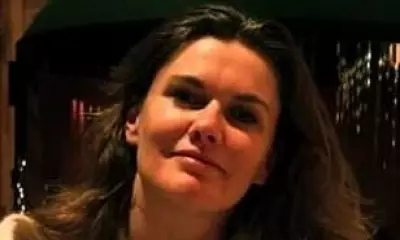
Labour MP Reveals Personal Anorexia Struggle Following Leg Amputation
Labour MP Marie Tidball has courageously opened up about her teenage battle with anorexia, aiming to illuminate the often-overlooked experiences of disabled women grappling with eating disorders. The Member of Parliament for Penistone and Stocksbridge, who is also a prominent disability campaigner, developed the life-threatening condition at age fourteen after undergoing a leg amputation.
From Physical Trauma to Psychological Struggle
The eating disorder persisted for four devastating years, leading to severe physical consequences including hair loss and the cessation of her menstrual cycle. Speaking during a House of Commons debate to mark International Women's Day, Tidball revealed how her frustration with her physical form transformed into a dangerous obsession.
"My frustration about my physical form turned into obsession," she told fellow parliamentarians. "The obsession fed me, where food did not. It gave me power."

The Psychological Impact of Disability
Tidball described feeling that surgeons "amputated a part of me" when they removed her leg, leading to profound feelings of disgust toward her own body. "I see my body and I feel disgust, repulsion," she confessed. "I fear that my amputation took away my femininity, my ability to be yearned for, my womanhood pauperised, trapped in a body that does not reflect my mind or myself."
She characterized anorexia as an addiction that "crept upon me", driven by a desperate wish that "nobody would notice my disability and I would simply disappear." The eating disorder paradoxically offered her a sense of control she had previously lacked. "For the first time in my life, the eating disorder gave me control over my body the way it looked, the way it felt," she explained.
The Devouring Nature of the Illness
The illness eventually consumed her entirely, she revealed. "Anorexia was about the relationship between a despised body and a disciplined mind. Eventually, that mind was consumed too." However, a crucial turning point emerged when her period stopped completely.
"My desire to be a mother gave me a reason to get better, signalled a future, and made me know choice, once again," Tidball shared, highlighting this maternal aspiration as a pivotal motivation for recovery.
Long Road to Recovery and Broader Implications
The MP disclosed that she wrote those powerful passages two decades ago, during her early twenties while recovering from major leg surgery. Although her physical condition improved during university years, she didn't establish a healthy relationship with food until her mid-twenties.
Tidball emphasized that she has since heard from numerous other disabled women whose experiences with eating disorders are similarly "linked to their own body image and identity." She pointed to persistent societal taboos surrounding "social attitudes towards sex, relationships and disability" that continue to cause significant harm.
"The stigma means that disabled women are still going through this anguish, damaging their mental health, causing them to self harm and eroding their self esteem," she warned parliamentarians.
Support Resources Available
For anyone struggling with similar issues, eating disorder charity Beat operates a helpline available 365 days per year on 0808 801 0677. Additionally, the National Centre for Eating Disorders (NCFED) provides comprehensive information, resources, and counselling services for individuals suffering from eating disorders and their support networks. They can be reached at 0845 838 2040 or through their website at eating-disorders.org.uk.