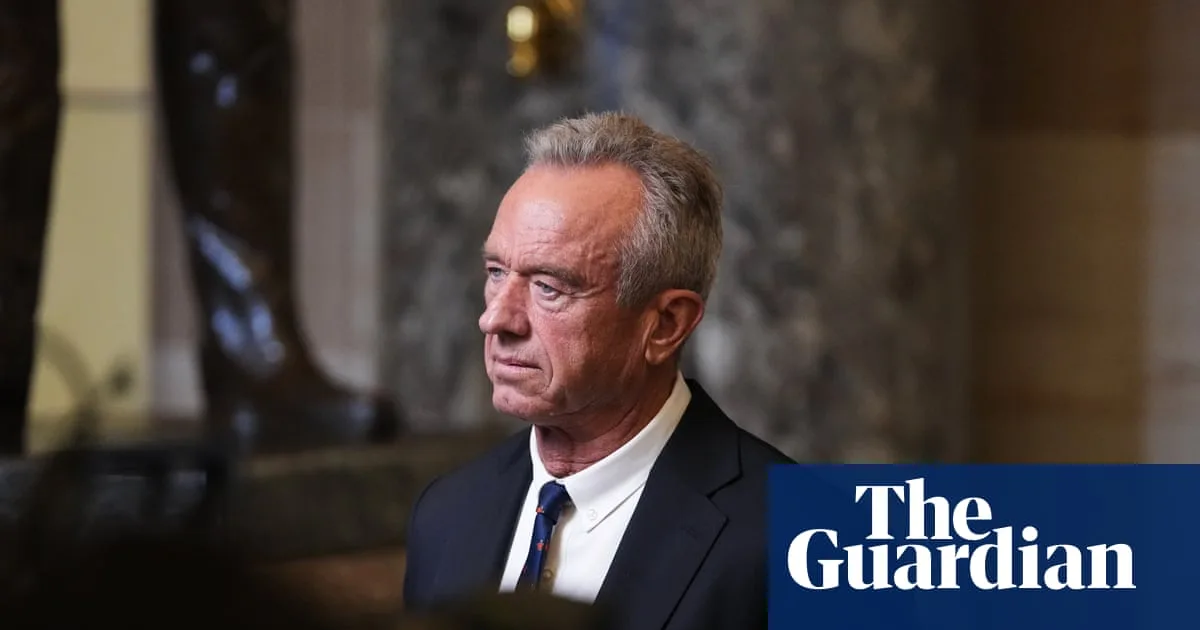
Federal Judge Blocks RFK Jr's Proposed Changes to Childhood Vaccine Schedule and Advisory Panel
A federal judge has issued a temporary block on Health and Human Services Secretary Robert F. Kennedy Jr.'s proposed alterations to the childhood vaccine schedule and his restructuring of a crucial vaccine advisory panel. This ruling represents a significant legal setback for the controversial health secretary, who has faced criticism for his vaccine-skeptic stance.
Judge's Ruling Deems Changes "Arbitrary and Capricious"
U.S. District Judge Brian E. Murphy in Boston ruled on Monday that Kennedy's proposed modifications were "arbitrary and capricious" because they abandoned the agency's established practice of seeking recommendations from the Advisory Committee for Immunization Practices (ACIP) before making changes to immunization schedules. Judge Murphy, who was nominated by former President Joe Biden, found that the department failed to provide sufficient explanation for this departure from longstanding protocol.
The judge also determined that Kennedy's restructuring of the ACIP likely violated federal law. As a result, Murphy halted all of the secretary's ACIP appointments and invalidated all decisions made by the reconstituted committee.
Background of the Controversial Vaccine Policy Changes
In January, federal health officials announced that the department would be reducing the number of vaccines recommended for all children. Under the new proposed schedule, the Centers for Disease Control and Prevention would recommend that children only receive vaccinations against:
- Influenza (flu)
- Rotavirus
- Hepatitis A
- Hepatitis B
- Meningitis
- RSV (Respiratory Syncytial Virus)
These vaccines would only be administered if children were considered "high risk" or after consultation with a healthcare provider, representing a substantial departure from previous universal recommendations.
Kennedy's Overhaul of the Advisory Committee
Last June, Kennedy, a well-known vaccine skeptic, removed all seventeen members of the ACIP and replaced them with several individuals who have been openly critical of vaccines. The ACIP plays a vital role in evaluating vaccine safety, efficacy, and clinical necessity for the CDC.
In his ruling, Judge Murphy noted that "of the fifteen members currently on ACIP, even under the most generous reading, only six appear to have any meaningful experience in vaccines—the very focus of ACIP." This observation highlighted concerns about the qualifications of the newly appointed panel members.
Legal Challenge and Reactions
The ruling came in response to an amended lawsuit initially filed in July by the American Academy of Pediatrics and other health organizations. The original legal challenge was based on Kennedy's decision to end the recommendation of COVID-19 vaccines for most healthy children and pregnant women.
Richard H. Hughes IV, an attorney representing the American Academy of Pediatrics, expressed satisfaction with the outcome, stating, "We are thrilled with this outcome, which is a great victory not only for vaccine, science and public health, but for the rule of law. It is an important step toward restoring evidence-based vaccine policy."
Andrew Nixon, a spokesman for the Health and Human Services agency, responded defiantly, saying, "HHS looks forward to this judge's decision being overturned just like his other attempts to keep the Trump administration from governing."
Immediate Consequences and Next Steps
As an immediate consequence of the ruling, an HHS official confirmed that ACIP meetings scheduled for Wednesday and Thursday have been postponed. The temporary block maintains the status quo while legal proceedings continue, preserving the previous vaccine recommendations and committee structure until further judicial review.
This legal development represents a pivotal moment in the ongoing debate between public health authorities and vaccine-skeptic voices within the government, with significant implications for childhood immunization policies across the United States.