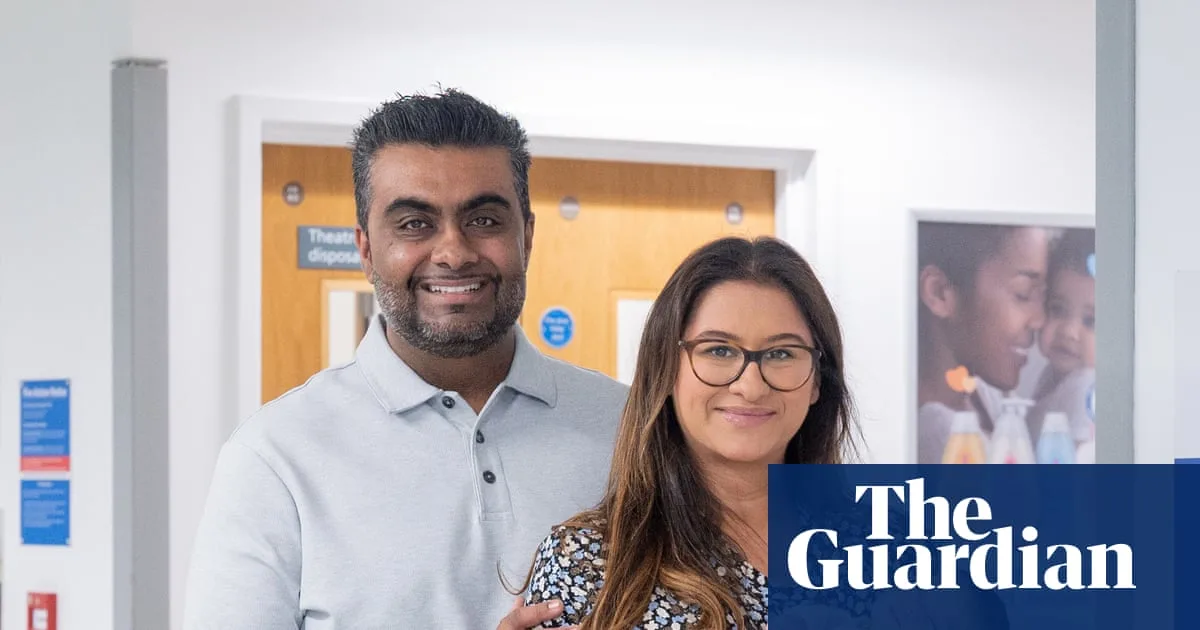
A woman who survived a rare but potentially fatal childbirth complication after five hospitals failed to diagnose it is launching a campaign urging the NHS to improve detection. Amisha Adhia, 36, was repeatedly told she did not have placenta accreta spectrum (PAS), a condition where the placenta grows too deeply into the uterine wall, before a consultant obstetrician correctly identified it.
PAS can cause catastrophic bleeding or require emergency hysterectomy if undiagnosed before labour. The NHS estimates it affects between one in 300 and one in 2,000 pregnancies, with risks higher for women who have had caesarean sections or IVF. Doctors warn that rising C-section rates—now 45% of births in England—are increasing the number of women at risk.
Adhia, who gave birth to her daughter Ishaani last September under Dr Chineze Otigbah at Queen's Hospital in Romford, lost almost a litre of blood but suffered no serious complications. She said she was 'reassured into danger' and felt unheard. Her husband Nik has joined her in setting up the Action for Accreta campaign, backed by eight baby and maternal health groups including Birthrights and the Birth Trauma Association.

There are no official NHS figures on PAS prevalence or complications, as the data is not recorded. Studies from the US and Israel suggest it may affect as many as one in 111 pregnant women. The couple have urged the Amos inquiry into maternity care, ordered by Health Secretary Wes Streeting, to recommend better NHS detection.
Dr Otigbah said she was 'deeply concerned that women are falling through the gaps' as the NHS has not kept pace with rising risk factors. The Royal College of Obstetricians and Gynaecologists warns that rates of PAS and placenta praevia are rising due to higher C-section rates, maternal age, and assisted reproduction.