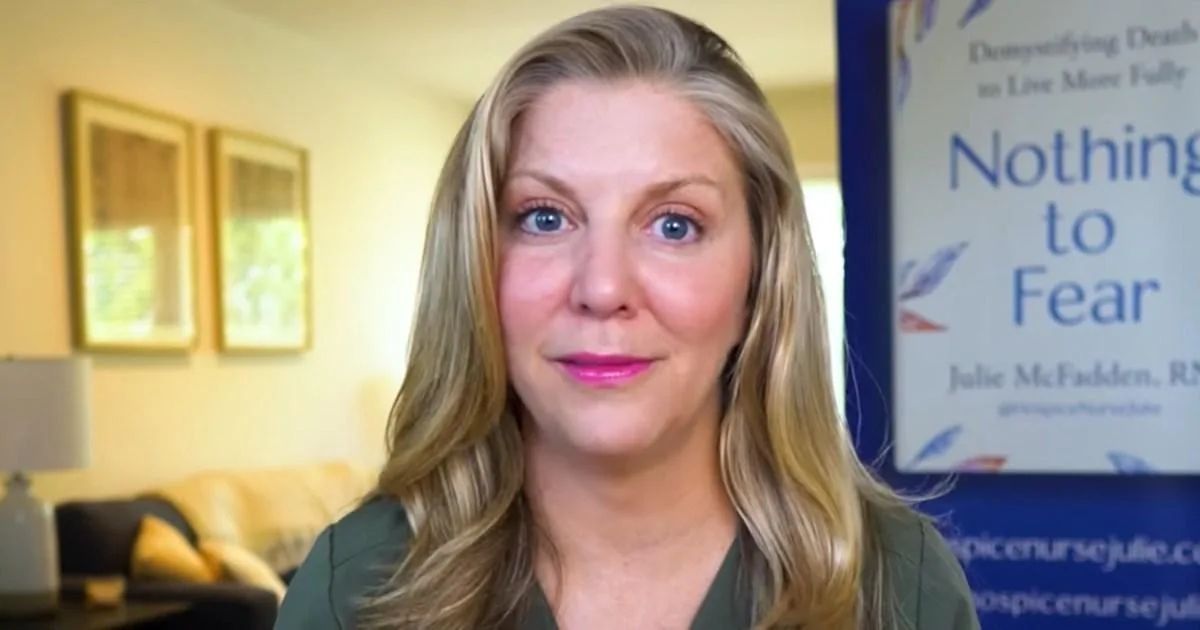
Julie McFadden, a registered nurse who previously worked in intensive care, has shared her expertise on what happens to the human body after death. Now a hospice nurse, she aims to reduce fear of death by demystifying the process in her latest video, which has been viewed nearly 600,000 times.
Immediately after death, the body completely relaxes, leading to possible urination, bowel movements, or fluid discharge from the nose, eyes, or ears. McFadden explains that this is normal and to be expected. The body's temperature then drops, eventually matching the room temperature, though the rate varies between individuals.
Blood pools downwards, causing the lower parts of the body to appear purple or darker if left undisturbed. Rigor mortis, the stiffening of muscles, typically begins within one to two hours after death, worsening before easing over the next 24 to 36 hours. McFadden notes that the body becomes very heavy, making it difficult to move without assistance.

Decomposition occurs in four stages: hypostasis (blood pooling), algar mortis (cooling), autolysis (self-digestion by enzymes), and putrefaction (gas release and discolouration). Putrefaction starts between four to 10 days after death, with black putrefaction occurring between 10 to 20 days.