
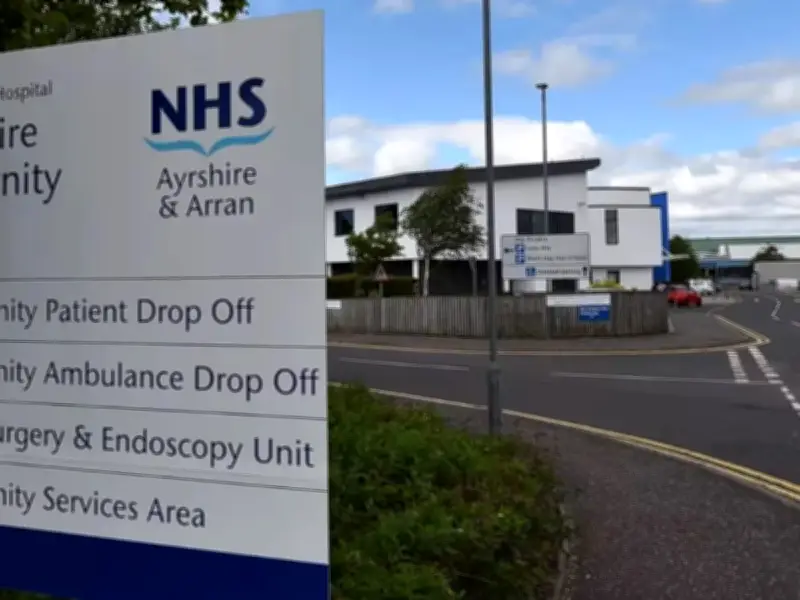
Scotland's Health Secretary Angela Constance was taken through the pressures facing Ayrshire's emergency services during a 'focused' visit that centred on ambulance turnaround times, struggling A&E performance and delays moving patients through the wider health and care system.
Visit focused on whole-system flow
NHS Ayrshire & Arran chair Lesley Bowie told the health board that discussions with the Cabinet Secretary concentrated on ambulance performance, Emergency Departments and "whole-system flow".
The visit came as figures show just over half of patients were being seen within the four-hour A&E target in June, while fewer than half of ambulance handovers were being completed within an hour.
Performance figures show pressures
NHS Ayrshire & Arran's latest performance report shows 52.5 per cent of patients were admitted, transferred or discharged from Emergency Departments within four hours during June, down from around 58 per cent the previous month and well below the national standard of 95 per cent.
An average of 32 patients a day waited more than 12 hours, while patients spent an average of five hours and 58 minutes in Emergency Departments.
Ambulance turnaround also deteriorated, with just 47 per cent of handovers completed within 60 minutes, compared with 52.2 per cent in May and 59.8 per cent in June last year. The board's current trajectory is for at least 72 per cent of ambulance turnarounds to be completed within an hour, while the national aim is 100 per cent.
Delays linked to wider system
But the health board's own assessment makes clear that delays at the hospital doors cannot be separated from what happens elsewhere in the health and social care system. Its performance report specifically links ambulance delays to problems moving patients through hospitals.
It says overcrowding at both Ayr and Crosshouse Hospitals between Sundays and Tuesdays is being caused in part by a lack of weekend discharges and difficulties securing Health and Social Care Partnership packages of care. Pressure on hospital beds, delays discharging patients who are medically ready to leave due to difficulties securing care packages, care-home placements or other community support has been blamed for creating bottlenecks that impact wards and extend back to Emergency Departments and ultimately to ambulances waiting outside.
Ms Bowie said the Cabinet Secretary's visit was deliberately focused on that wider picture. She said: "It was a short and very focused visit."
Representatives from the Scottish Ambulance Service joined the discussions before the Cabinet Secretary was taken through the Emergency Department. She was then taken to a hospital ward where she was able to speak to patients who no longer required hospital treatment but were waiting for their final place of care. That could mean returning home with appropriate support or moving into a care home.
Ms Bowie said: "We took her up to one of the wards where some patients were not receiving treatment, but were waiting to go to a final place for care, whether that be care at home or a care home. That was a worthwhile visit. She left obviously challenging us, but also with a better understanding of the whole."
Bed occupancy and delayed discharges
The scale of the pressure further through the system is also set out in the performance report. At the end of June, 92.9 percent of funded acute hospital beds were occupied, while emergency inpatients were staying in hospital for an average of nine days against a planned trajectory of less than six.
There were also 199 patients who had been in hospital for more than 14 days despite not formally being classed as delayed discharges, more than double the board's trajectory of 95. The report said those patients were occupying acute beds which could otherwise be used to move people out of Emergency Departments and assessment areas.
Meanwhile, at the most recent delayed-discharge census in May, 298 Ayrshire patients were unable to leave hospital when ready, up from 291 the previous month. Those delays accounted for 8,864 occupied bed days during May alone, up from 7,874 in April. The board said this was further reducing available beds and adding to pressure across the urgent and unscheduled care system.
Recent signs of improvement
At Monday's meeting, however, officials reported more recent signs of improvement in Emergency Department performance. Members were told four-hour performance had risen from around 54 per cent during July to 57.8 per cent by the end of the month, while the number of 12-hour waits was also said to have fallen.
Officials said performance had deteriorated since May, particularly at Crosshouse, with the introduction of a new system also affecting performance. The board said it had underestimated the additional business processes associated with the change.
A daily senior operational and clinical meeting has now been introduced at 9am, with the period between 9am and 10am described as a "golden hour" for planning patient movements and reducing congestion at the hospital front doors. The board's wider improvement programme includes closer planning between Emergency Departments and bed-management teams, continuous movement of admitted patients through hospitals and measures aimed at increasing weekend discharges.




