Health Secretary Wes Streeting has issued a stark warning that the United Kingdom would 'break' under the financial strain of meeting striking doctors' pay demands, which he estimates would ultimately cost taxpayers a staggering £30 billion each year. This dramatic statement comes as resident doctors return to work following a six-day walkout that has already cost the National Health Service approximately £300 million in lost activity and overtime payments to covering consultants.
The Escalating Financial Burden of Pay Restoration
While resident doctors are formally seeking an additional £3 billion annually to restore their pay to 2008 levels under retail price index measures of inflation, Streeting argues the true burden would be ten times higher. He contends that if the government capitulated to these demands, other NHS staff would inevitably expect similar treatment, creating an unsustainable fiscal scenario.
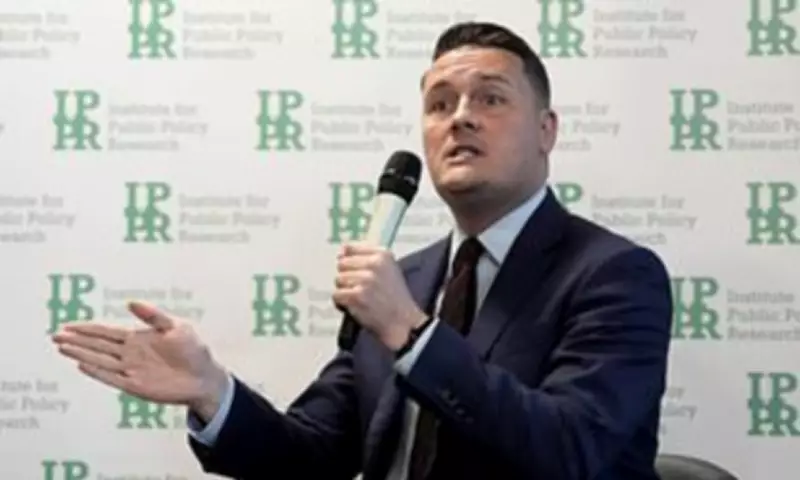
Speaking at an Institute for Public Policy Research event, Streeting emphasized: 'I've got a responsibility to all one and a half million people who work in the NHS, and the same number all over again who work in social care, many of whom are never paid as much as the lowest-paid doctor.'

Strike Action's Cumulative Impact
The current dispute represents the latest chapter in a prolonged industrial action campaign that has seen resident doctors take to picket lines on more than 60 occasions across 15 separate strike rounds over the past three years. Despite receiving a 28.9 percent pay increase during this period, doctors are now pursuing an additional 26 percent rise.
The British Medical Association has accused the government of reneging on an offer made last month that would have resolved the long-running dispute. That rejected deal would have brought total pay increases over three years to 35 percent while creating thousands of new specialty training positions to advance members' careers.
A Nation at Cross Purposes
Streeting offered a nautical metaphor to describe the current impasse: 'I feel like we've turned the ship, the boat's going in the right direction, except some of the crew are trying to row in one direction while the rest of us are going in the other. You can't make progress that way.'
He acknowledged that while the NHS has shown improvement despite the strikes, performance would have been significantly better without the industrial action. The £300 million lost during the recent six-day walkout represents funds that could have been invested elsewhere in staff and services.
The Broader Public Service Context
The Health Secretary stressed that while the NHS remains Labour's top public service priority, it is not the country's only essential service. He highlighted the comparative scale of the potential cost: 'Just by doing that one thing, full pay restoration for NHS staff ... we've just spent, just like that, more money than we spend on the entirety of the criminal justice system.'
Streeting called for perspective and compromise, stating: 'We all have a stake in this. We all have to pull together as a country, and if everyone was demanding the same as resident doctors, and if everyone was behaving the same way as resident doctors, we would be breaking this country.'
Rejected Deal and Alternative Approaches
The rejected agreement would have seen some doctors earning over £100,000 annually, with first-year post-medical school doctors starting on an average salary of £52,000. Meanwhile, senior health officials have reportedly discussed potentially banning doctors from striking altogether to resolve the pay dispute.
While the Department of Health and Care maintains the government is not currently considering this move, Streeting has acknowledged it remains 'an option' on the table. Conservative leader Kemi Badenoch has publicly called for medics to face the same strike restrictions as police and military personnel.

Structural Changes to NHS Workforce
Sir Jim Mackey, chief executive of NHS England, described the latest strike as 'deliberately timed to cause havoc,' noting hospitals found it 'challenging' to fill rotas following the Easter weekend. He has pledged to overhaul frontline healthcare to reduce dependence on what he termed 'unreliable' resident doctors, with other healthcare workers potentially taking on some of their roles.
This ongoing conflict continues to highlight the tension between fair compensation for medical professionals and the broader economic realities facing the nation's public services.