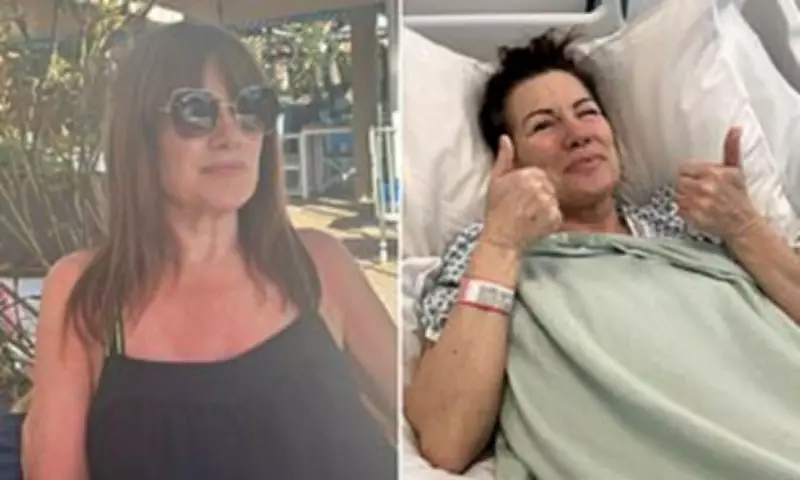
A grandmother who claims doctors repeatedly advised her to take laxatives for her constipation was left devastated when she later discovered she actually had pancreatic cancer. Sarah Williams, a 53-year-old learning support teacher from South Benfleet in Essex, had been struggling with bowel movements in January 2025 when she sought medical advice from her GP.
Repeated GP Visits and Laxative Advice
Ms Williams said she had repeatedly contacted her GP because she instinctively knew something wasn't right with her health. However, she alleges that on a consistent basis, medical professionals told her to visit the pharmacy and obtain laxatives whenever she mentioned her constipation symptoms. "As soon as I told them I was constipated, they would tell me to go to the chemist and get some laxatives," she recalled.
The Turning Point: Yellow Eyes and Emergency Response
The situation took a dramatic turn the following month while Ms Williams was caring for her grandchildren. A concerned friend noticed that her eyes had turned yellow, prompting immediate panic. Ms Williams called the NHS 111 service and was subsequently rushed to Southend University Hospital for urgent medical attention.

At the hospital, she underwent comprehensive blood tests and a CT scan. The following day, she received the devastating diagnosis of pancreatic cancer. "We were all shocked, my husband and I burst into tears, and he phoned our children to tell them the news," Ms Williams remembers vividly. "I knew something was wrong with me, but I never expected to be told you have cancer. Our whole family were devastated."
The Challenge of Pancreatic Cancer Diagnosis
Pancreatic cancer presents particular diagnostic challenges because it typically causes few noticeable symptoms in its early stages. The NHS's official guidance lists both diarrhoea and constipation, along with yellowing of the eyes or skin (jaundice), as potential symptoms of pancreatic cancer. Medical authorities emphasize that "having the symptoms does not definitely mean you have pancreatic cancer, but it's important to get checked by a GP."
This silent killer is often diagnosed at a late stage when treatment options become less successful. Statistics reveal that just one in four patients survives more than a year after diagnosis. The pancreas itself is a pear-shaped gland located behind the stomach, responsible for producing digestive hormones and converting sugar into energy. Due to its position and relatively small size, doctors frequently cannot detect pancreatic tumours during routine physical examinations, creating another significant barrier to early intervention.
Treatment Journey and Complications
Following her diagnosis, Ms Williams was presented with three treatment options: no treatment at all, chemotherapy, or surgery. She chose to undergo the Whipple procedure, a major surgical operation to remove the tumour along with twenty surrounding lymph nodes at the Royal London Hospital.
Although the initial surgery appeared successful, Ms Williams experienced severe agony when her stitches unexpectedly split open, necessitating another operation. After nine days of hospital monitoring, she was discharged. Tragically, within hours of returning home to her own bed, she woke up screaming in pain and was rushed back to Southend Hospital.
Doctors discovered she had developed two dangerous blood clots in her lungs along with sepsis. "For five days, all they could do was help with the pain, before transferring me back to Royal London Hospital," she explained. Ms Williams spent four weeks recovering at that facility before finally returning home at the end of April 2025.
Chemotherapy Challenges and Further Complications
She was subsequently referred to St Bartholomew's Hospital in London for twelve rounds of chemotherapy, beginning treatment on June 6, 2025. However, after just six weeks, a scan revealed that her white and red blood cell counts were insufficient to continue the treatment safely.
The day before her 53rd birthday on November 29, 2025, Ms Williams found herself in excruciating pain once again and returned to hospital. "I was in so much pain, I wasn't eating, I kept being sick," she described. A CT scan revealed a substantial 10cm abscess in her liver, which medical staff successfully drained.

Ms Williams spent the pre-Christmas period in a hospital bed yet again before being released on December 22 with intravenous antibiotics to be administered over four weeks. In January 2026, a PET scan showed concerning inflammation in her liver, but she claims the NHS suggested waiting until April to investigate further.
Private Treatment and Community Support
Worried by this delay, Ms Williams sought a private second opinion. Additional CT scans and blood tests revealed that cancer had spread to her lungs, liver, and pancreatic bed. She is now funding chemotherapy treatments privately amid lengthy NHS waiting lists for such care.
"My sister, Nikki, launched a GoFundMe so we can pay for chemotherapy privately," Ms Williams explained. "The amount of support and messages I have got is overwhelming. So many people, people we used to work with, old school friends, have contributed; it is overwhelming. We want to extend our gratitude to everyone who has donated to help me."
Understanding Pancreatic Cancer Risks
While advancing age remains one of the most significant risk factors for pancreatic cancer—with almost half of cases diagnosed in people over 75—experts have warned that incidence rates are rising in younger age groups, particularly among women. This increase appears to be driven primarily by pancreatic ductal adenocarcinoma, the most common and aggressive form of the disease.
Some medical researchers suggest this trend may reflect improved detection of smaller, earlier-stage tumours. However, others point to rising rates of obesity, diabetes, and smoking as potential contributing factors. Approximately one in five pancreatic cancers are directly caused by smoking, with cigarettes, cigars, pipes, and chewing tobacco all elevating risk.
Research into whether snus—nicotine pouches that have gained popularity among young men—increases pancreatic cancer risk continues. A 2007 Swedish study published in The Lancet reported that snus users had roughly double the risk compared to non-tobacco users, while a 2005 Norwegian study found a 67 percent increase among current users.
Additional Risk Factors
Cancer Research UK estimates that roughly one in ten pancreatic cancers are caused by being overweight or obese. Obesity also raises the risk of type 2 diabetes, and pancreatic cancer occurs more frequently in people with this condition. Other obesity-related problems, including gallstones, are similarly associated with higher pancreatic cancer risk.
In approximately five to ten percent of cases, pancreatic cancer demonstrates familial patterns. The risk increases significantly if one or more first-degree relatives have been diagnosed with the disease, particularly if a close relative was diagnosed at a young age. This familial connection sometimes links to inherited faults in BRCA1 and BRCA2 genes, which also elevate risks for breast, ovarian, and prostate cancers.
Other genetic conditions that increase pancreatic cancer risk include Peutz–Jeghers syndrome, familial atypical multiple mole melanoma syndrome (FAMMM), and Lynch syndrome. Meanwhile, research continues into potential connections between weight loss injections and pancreatic cancer risk, though no definitive link has been established.
Dietary factors may also play a role, with some evidence suggesting that consuming substantial amounts of red and processed meat could raise pancreatic cancer risk by approximately 12 to 38 percent. Experts believe this effect may be partly attributable to high-temperature cooking methods that produce potentially harmful chemicals when meat becomes charred.