
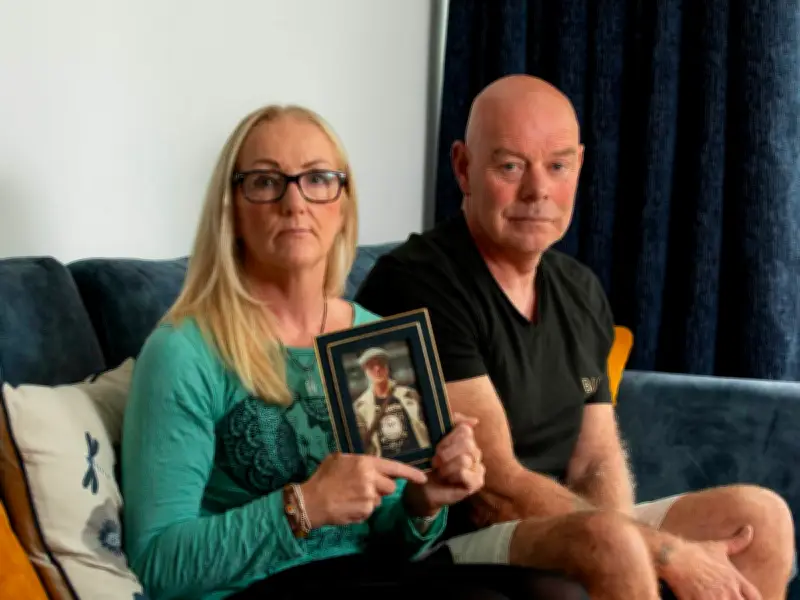
Two families whose loved ones died after ambulances took hours to arrive have united to demand an end to deaths while waiting for treatment. Julie Parker, from Kilmarnock, died after waiting almost four hours for help last month – six months after Brian Hurton, from East Kilbride, died alone on his bathroom floor after twice being told an ambulance was not being dispatched. Julie’s brother William and Brian’s sister Allison today demand assurances that no other family will face the heartache they have.
Families to meet health secretary
Both are expected to meet Scotland’s Health Secretary Angela Constance - who has insisted the Scottish Government is working to tackle the country’s waiting times crisis with a new “national plan”. But the siblings said they will not rest until they see evidence real change is being delivered.
Allison said: “They promise change but nothing happens. We were promised change. But seeing Julie’s story was the reason we spoke out. Julie could have survived. Everything about what happened to Brian was wrong. He was telling them he was losing breath and giving them his last dying words and they didn’t listen. Waiting times are ridiculous and we need to really look at the training call handlers are being given. We need to change the system because it’s not working. Who else is this happening to who aren’t speaking up?”
Brian Hurton's case
The Record revealed earlier this month how Brian’s loved ones learned shocking details about his death last November. They learned the truth after demanding to hear two 999 calls Brian, 55, made, in which he was refused paramedics despite saying he was struggling to breathe. By the time help finally arrived – three-and-a-half hours after his first call – he was dead. When a clinician tried to call Brian more than an hour after his first 999 call, it went unanswered. When they still couldn’t reach him the call was coded “unable to access” – but an ambulance was still not sent for two more hours.
An investigation by Scottish Ambulance Service (SAS) chiefs found Brian’s case was incorrectly logged and help should have been sent straight away. Constance said it “should not have happened”. Brian had called for help twice in 10 minutes while suffering a life-threatening heart emergency. But both were labelled “teal” – meaning further assessment is required. A probe found his first call should have triggered a “purple” response, which would have sent an ambulance right away. Records show SAS call demand was “below predicted levels” that night but there were “lengthy delays and extended hospital turnaround times”, which affect ambulance availability.
Allison said: “If someone says I’m struggling to breathe and feel like I’m going to collapse, that should never go to the bottom of the stack. It raises the question over what kind of training are call handlers getting? Is it just a tick-box exercise regardless of what is said on the call? This can’t happen again. The system needs to change. When I sit down with the health minister I want evidence of what is being done to change this. With what happened to Brian, we knew he probably couldn’t have survived it, but in Julie’s case there could have been a totally different outcome for her.”
Julie Parker's case
Julie, 55, died following a cardiac arrest on her way to hospital after collapsing at her flat on June 22. Police were called when she failed to answer the door, and called paramedics after forcing it open and finding her collapsed. But it was almost four hours before she was taken to Crosshouse Hospital, where the SAS faced six-hour turnaround times.
William said: “The NHS is not working. There is no point sticking a plaster on the NHS any more. Throwing in a few million pounds here and a wee tweak there isn’t going to solve it. It needs revamped and brought into the 21st century to work and reach its targets. We need to urge the public who have had problems to come forward. It’s time for the government to be held to account for its failings.”
Other cases and official response
Julie and Brian’s cases are not isolated. The family of Dylan Jones, who died after waiting two hours for an ambulance and 13 more for A&E care while suffering agonising internal bleeding, called for a probe into his death in January. In Julie’s case, the SAS said staff were under “significant pressure” faced with lengthy hospital turnaround times, including delays of more than six hours. A spokesman said: “These delays prevent our crews from getting back out on the road to treat other patients.” In Brian’s case, the SAS said it had adopted the review’s recommendations and was committed to improvement.
Constance said Julie’s death was a “profoundly concerning set of circumstances” and patient safety is the government’s “top priority”. On Brian’s case, she said she is bringing forward a “new national plan for hospital flow”, bringing together the SAS and health boards “to build on the important work already being done to shorten waits for patients, reduce people going to hospital unnecessarily and ease A&E pressures”.




