Proposed changes to the Disabled Students’ Allowance (DSA) could strip specialist software funding from most students, prompting fears that disabled students will be unable to complete their degrees. The Department for Education (DfE) has consulted on cutting support for specialist software except in “exceptional circumstances”, arguing that free, mass-market tools now exist. But campaigners and students say the plans ignore the reality of studying with a disability.
Students rely on tailored assistive technology
Sam Wood, a 19-year-old third-year criminology student at Edge Hill University in Liverpool, is visually impaired. He uses several software packages funded by DSA to access lectures and course content. “I use lots of different software which is really crucial for me being able to access my lectures and degree content in the same way as my peers,” he says. “One of the types of software I use reads academic literature for me, another is mind-mapping, which breaks down text and helps plan essays… I would not be able to keep up in lectures without the software.”
In 2023-24, more than 88,000 students benefited from DSA at a cost of £203 million. Sam, who is Edge Hill’s disabled students officer, says without the software his dream of a Masters in criminology could be over. “I would like to do a Masters but DSA would be crucial to doing that,” he says. He also finds the mixed messages around AI confusing. “As students we are told not to use AI, but now you have other people telling you that you have to,” Sam says. “It is all messy and unclear. Navigating university as a disabled student is already challenging.”

Safety net has not approved a single student
The DfE says that under the new proposals, those with “exceptional circumstances” will still receive funded software through DSA. However, the British Assistive Technology Association (BATA) says Freedom of Information responses reveal the “safety net” mechanism has not approved a single student since being introduced. Nicole Michael, Vice Chair of BATA, says: “These newly uncovered FOI responses raise serious concerns about proposed changes to disabled student support that lack robust technical or clinical evidence. Generic, off-the-shelf software simply cannot replace the tailored assistive technology many students rely on to complete their degrees.”
She adds: “Furthermore, placing reliance on an 'exceptional circumstances' process that has not approved a single applicant in 16 months creates unnecessary uncertainty and risks leaving universities to plug the gaps. We hope the Prime Minister and Education Secretary will take this opportunity to pause these proposals and work with sector experts to ensure disabled students continue to receive the dedicated support they need.”
Students describe software as a lifeline
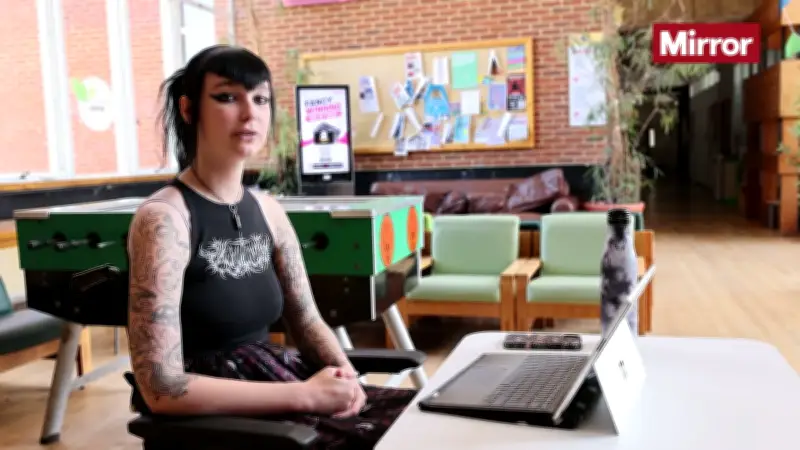
Lydia Petch, 26, a third-year criminology with psychology student at Sussex University, is neurodivergent and has physical and cognitive disabilities that mean she uses a wheelchair and a cane. She spends a lot of time in hospital, and says software allows her to produce notes at the same level while away from lectures. “This is very important to me, I don’t want to miss content, as it makes assessments so much harder,” she says. “Navigating the intense workload of my degree alongside deep neuro-diversity and severe anxiety is already a constant, exhausting battle. The Disabled Students' Allowance funds a specialised software that makes this degree possible.”
Lydia uses Text to Speech software to take notes and summarise them, Helper to map out and plan essays, and Brain in Hand to structure her day. “These tools are not luxuries – they are the only reason I can keep up in lectures, finish my essential reading and write comprehensive coursework,” she says. “I would like to pursue a postgraduate degree, but if I don’t have the support in place, will it be possible for me? I’m having to reevaluate my whole future and my whole life plan.” She is “fiercely against AI”, saying it has a negative impact on disabled people and the environment. “Suggesting the use of AI to disabled people who are aware of these risks is insulting.”

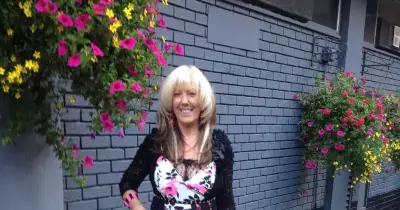
Clair Welsh, 50, an Open University student in Blackpool studying for a History degree, describes her DSA software package as “absolutely fantastic”. It helps her break down tasks, record lectures, and change background and text colours, which has helped her explore her autism. “I just wouldn’t have gone to university if I didn't have the DSA support,” she says. She works as an early years practitioner in a nursery to help fund her degree but couldn’t afford the assistive tech herself. “This is a huge funding cut,” she says. “What I don’t understand is why they want to deprive people of the chance to follow their own path? Everyone should be able to access university education whatever their disability.”
DfE says no decisions made yet
A Department for Education spokesperson said: “We have consulted on changes to the Disabled Students’ Allowance as many supported tools are now freely available, but funded software will remain available where free alternatives do not meet students’ needs. No decisions have been made on the DSA. We are currently reviewing consultation responses and will provide an update in due course. More widely, we’re making sure someone’s background isn’t a barrier to attending university which is why we’re reintroducing maintenance grants from September 2028, and increasing maximum loans for living costs from next month.”
Lydia warns that the cuts will be devastating for disabled students. “Higher education just won’t be accessible to disabled people anymore,” she says. “Disabled people already feel excluded from so many areas of life. I would like to see more disabled people in higher education spaces but if this happens, we are going to see less of that.”