Doctor's Border Crisis: Treating Migrant Injuries at US-Mexico Wall
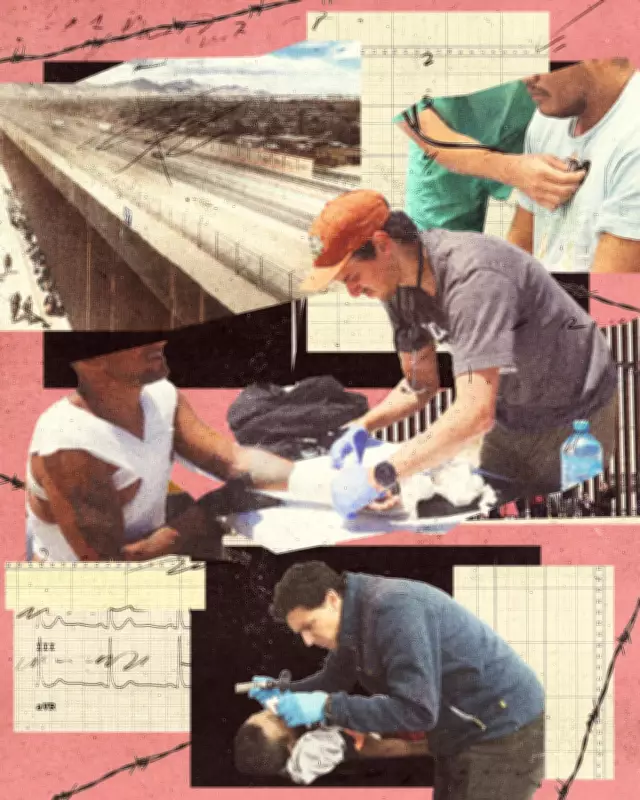
In late spring 2024, Dr Brian Elmore operated from a mobile clinic in Ciudad Juárez, just south of the US-Mexico border wall, providing urgent medical care to migrants. One patient, a Venezuelan man, suffered a fractured arm and a detached left chest from his sternum and clavicle. He reported that Mexican immigration officials broke his arm upon arrival, while rubber bullets fired by Texas national guardsmen caused his chest injuries. The man had fashioned a makeshift splint, but his chest required surgery. When an ambulance arrived, a criminal group controlling the riverine area blocked his departure, with Texas guardsmen observing from the US side. "It was heartbreaking," Elmore said of the scene.
A Public Health Emergency Unfolds
Two years earlier, Elmore began his medical residency in El Paso, Texas, at the region's only level 1 trauma center. Located in the Chihuahuan desert with the Rio Grande marking the border, El Paso was historically known as the Ellis Island of the south-west. Today, migrants from Latin America and beyond continue to arrive, many needing immediate medical aid. Elmore witnessed a stark disparity: "At the hospital I was working at, anybody could get any emergency care they needed. A few blocks away, in Juárez, there was a huge population of displaced migrants and refugees with limited or no access to care." This contrast struck him as unnecessary and cruel, leading him to co-found the Hope Border Institute in fall 2022 to address medical needs in Juárez.
By then, trauma doctors had labeled the surge in severe injuries a public health crisis. Migrants suffered falls from the border wall, resulting in fractured legs, severed spines, and brain damage. Drownings in Rio Grande canals, deep lacerations from razor wire, and cases of dehydration and heat exhaustion in the desert were common. From early 2023 to August 2024, El Paso became the deadliest section of the world's most lethal land migration route. Medical research linked enforcement barriers to injuries and deaths, with doctors highlighting the US border deterrence policy, first deployed under President Bill Clinton's Operation Hold the Line, designed to funnel migrants into inhospitable environments.

Political Decisions and Escalating Violence
When Donald Trump took office in 2017, he promised to expand the border wall, among other escalatory measures. More recently, his administration declared a national emergency, deploying federal troops without congressional approval. The One Big Beautiful Bill Act, passed in July 2024, invested $170 billion in immigration enforcement, including $46.5 billion to complete the wall. Roughly $30 billion over four years supercharged Immigration and Customs Enforcement (ICE) efforts to arrest and deport immigrants nationwide, leading to violent clashes and at least eight deaths by 2026. Ironically, migrant arrivals had declined before Trump's return, with his strict policies causing an even sharper drop and fewer border-related injuries.
As Elmore's residency ended in late summer 2025, he reflected on his experiences, believing a physician's duty extends beyond the exam room to address social and political pathologies causing illness. In his free time, he cared for migrants in Juárez and wrote about the humanitarian crisis. By summer's end, El Paso felt under occupation, with Black Hawk helicopters and Stryker combat vehicles present, though attention had shifted from the border.
Personal Journey and Advocacy
Elmore's curiosity about the world was sparked by his father's stories of combat in Iraq. In 2012, backpacking in Kurdish north, a conversation with a Syrian refugee asking, "What are you going to do about it?" stayed with him. After joining the Peace Corps in Sierra Leone in 2014, he was evacuated during an Ebola outbreak, feeling helpless and realizing medicine could address social inequities. Back in the US in 2018, he enrolled at the University of South Carolina school of medicine, founding the MUSC asylum clinic to provide forensic exams for asylum seekers.

On the border, Elmore treated migrants like a young man with broken bones after a chase by US Border Patrol. He learned patients' stories, contacting families and noting personal items like rosaries and photos. Inspired by Paul Farmer's social justice work, Elmore focused on upstream conditions driving patients to the emergency room. "These are conscious political decisions to make the border as violent as possible," he said. "If our goal as physicians is to prevent suffering, then we have to address the cause of the suffering."
The Wall's Design and Consequences
Evidence suggests injuries and deaths serve as deterrence, possibly intentional. In 2019, then-Border Patrol chief Rodney Scott shared 30ft wall prototypes, noting psychological research found that height increases fall risk. Lily Serrano, an advocate, recalled his excited tone. Border Patrol denied intentionally designing barriers to cause falls, stating the wall aims to secure the border. However, illegal crossings increased after its construction, burdening trauma centers with severe injuries. From 2020 to 2022, wall injuries in San Diego created a backlog, costing hospitals $72 million, while University Medical Center in El Paso spent $22.2 million from 2021 to 2023.
In July 2023, neurosurgeon Alexander Tenorio testified before Congress, sharing research on traumatic injuries and migration drivers. He and trauma surgeon Jay Doucet advocated for more hospital resources and halting taller wall construction, but found the issue "radioactive" among officials. Patients like Juan, a twentysomething Mexican man, suffered life-altering injuries from falls, with his leg barely improving after two years, affecting his ability to work.
Going Beyond Medical Care
Despite evidence of hazards, few solutions exist. Elmore began writing in June 2023 to humanize the crisis, publishing pieces in the Atlantic and Texas Observer. "It may be naive, but I believe if I can get the average American into that room with me to see the cost of our policies, I think I can change their mind," he said. For Texas Governor Greg Abbott, such stories justified harsher enforcement, leading to Operation Lone Star and scrutiny of hospital spending on migrants. Under Trump, border agents sometimes whisked away patients prematurely, silencing doctors.
Elmore faced pressure, working hospital shifts and Juárez clinics, with Willie Nelson's "Living in the Promiseland" as his soundtrack. The emotional toll was heavy, "like a perverse Groundhog Day." By mid-2025, migrant crossings and injuries had plummeted, but Elmore continued mentoring medical students in Juárez, hoping they would advocate for patients. On his last shift, he treated a border wall patient with a fractured ankle, likely facing deportation despite hardships.
In Juárez, migrants toil in factories or plan border crossings, coping with psychological trauma. As Elmore left for a fellowship in Virginia, a train crossed the Rio Grande into the promised land, symbolizing ongoing struggles. This story highlights the intersection of healthcare, policy, and human suffering at the border.