

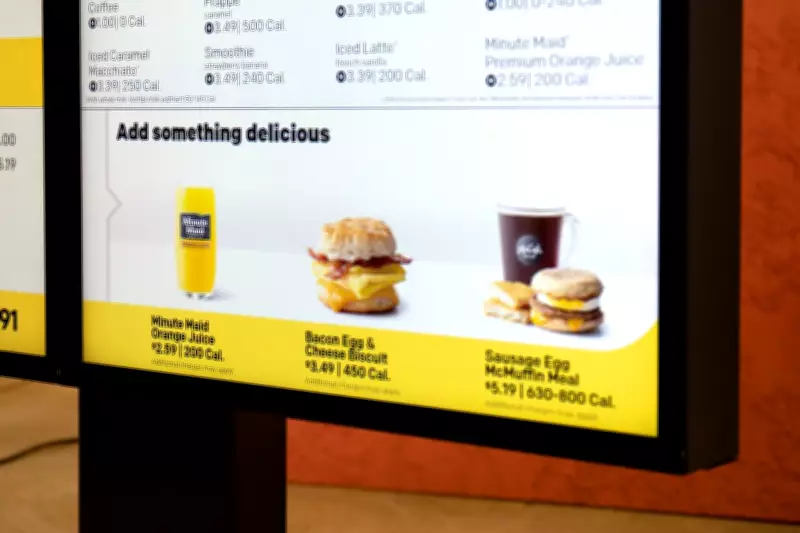
Calorie Labels on Menus Provide Relief for Binge Eating Disorder Sufferers
A groundbreaking study has found that displaying calorie information on restaurant menus can be beneficial for people struggling with binge eating disorders, offering them reassurance and reducing anxiety during dining out experiences. The research, conducted by academics from University College London and King's College London, surveyed over 1,000 individuals in England who have experienced disordered eating patterns.
Mixed Reactions to Mandatory Calorie Labelling
The study, published in BMJ Public Health, reveals a complex picture of how calorie labels affect different eating disorder groups. While half of participants reported that calorie labels worsened their eating disorder symptoms, a significant quarter viewed them positively, with another quarter maintaining neutral attitudes towards the policy.
Dr Nora Trompeter from UCL Great Ormond Street Institute of Child Health explained: "People with eating disorders have a variety of views about calorie labels, but people with binge eating disorder are more likely to find them helpful."

Binge Eating Disorder Patients Find Labels Reassuring
Participants who regularly engage in binge eating behaviors—characterized by consuming large quantities of food in short periods—reported feeling more in control when presented with calorie-labelled menus. One participant shared: "For the first time since developing my eating disorder, I am able to go out and eat at restaurants without fear and anxiety."
This sense of control appears to provide psychological comfort for those whose eating disorders involve loss of control around food, contrasting sharply with the experiences of individuals suffering from restrictive disorders.
Restrictive Eating Disorders Negatively Impacted
Individuals with conditions like anorexia nervosa—one of the deadliest forms of mental illness where sufferers maintain dangerously low body weights—were far more likely to report negative impacts from calorie labelling. The study suggests that while the policy may help some, it potentially harms others within the eating disorder community.
Calls for Optional Labelling Approaches
Eating disorder charities and nutrition experts are advocating for more flexible approaches to calorie labelling. Umairah Malik from eating disorder charity Beat emphasized: "Restaurants could have a calorie-labelled menu which people could request, rather than it being the norm. Public health campaigns need to consider people's mental health as well as their physical health."
Researchers suggest that optional calorie labels, such as those accessible via QR codes, could minimize negative impacts while still providing information for those who find it helpful.
Nutrition Experts Question Broader Effectiveness
While acknowledging potential benefits for some individuals, nutrition professionals caution against viewing calorie labelling as a comprehensive solution. Rob Hobson, a nutritionist, noted that labels may provide momentary control but don't address underlying behavioral drivers. Similarly, weight loss specialist Kim Pearson stressed that weight management involves multiple factors beyond calorie counting alone.
The government is scheduled to publish a review of England's calorie labelling policy effectiveness by April 2027, which will likely consider these nuanced findings about mental health impacts alongside physical health objectives.






