

Call The Midwife's Heartbreaking Lithopedion Storyline Reveals Rare Medical Phenomenon
Last week's episode of the beloved television drama Call The Midwife featured a deeply emotional and heartbreaking storyline that brought attention to an exceedingly rare pregnancy complication known as lithopedion. This condition, often referred to as a 'stone baby', involves a calcified foetus that can remain inside a woman's body for many years, sometimes decades. The episode, set in the 1970s, depicted a woman who had long struggled with infertility visiting a doctor due to persistent pain and incontinence issues.
The Surgical Discovery of a Decades-Old Foetus
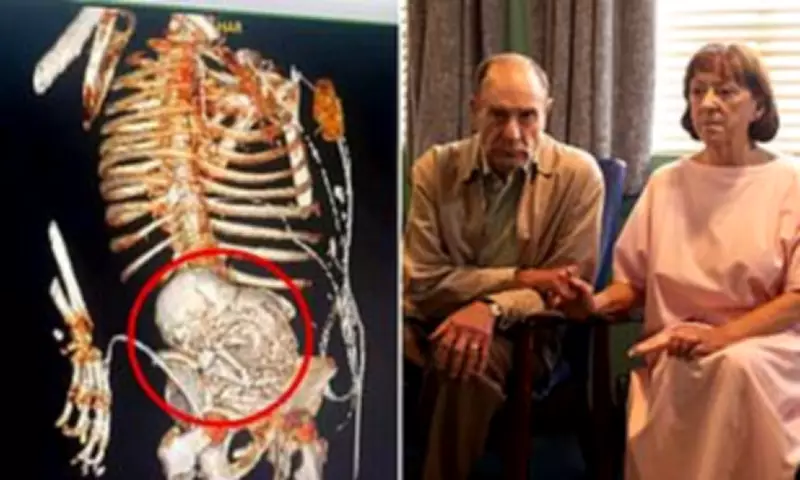
During a surgical procedure intended to remove what was initially thought to be an abdominal mass, the surgeon made a startling discovery. The woman had been carrying a calcified foetus for more than three decades, a classic case of lithopedion. This storyline is grounded in reality, drawing from a genuine medical phenomenon with approximately 300 documented cases worldwide. The term lithopedion originates from Greek, combining 'litho' meaning stone and 'pedion' meaning child, aptly describing the calcified nature of the condition.
Expert Insights into the Rarity and Causes of Lithopedion
Dr Deborah Lee, a specialist in sexual and reproductive health and menopause at Dr Fox Online Pharmacy, provided detailed explanations to the Daily Mail. She emphasised that lithopedions are incredibly rare due to the specific conditions required for their development. 'A lithopedion is sometimes called a 'stone baby' and is a very rare complication of an ectopic pregnancy, in which the dead foetus is located inside the abdomen, and over time, has become calcified,' Dr Lee stated. An ectopic pregnancy, where an embryo grows outside the uterus, occurs in about one per cent of pregnancies, but the likelihood of it developing into a lithopedion is even lower.

The uterus is uniquely designed to stretch and support a pregnancy, making survival outside it extremely rare. Approximately 90 per cent of ectopic pregnancies occur in the fallopian tubes, with the remaining 10 per cent potentially happening in other abdominal areas like the ovaries or cervix. When an ectopic pregnancy fails, the tissue is typically reabsorbed by the mother's body. However, if the foetus is beyond 12 weeks of gestation, its skeletal bones are too large for reabsorption, leading the immune system to encase it in calcium to prevent infection, a process akin to mummification.
Statistics and Historical Context of Lithopedion Cases
Only 1.5 to 1.8 per cent of ectopic pregnancies result in a lithopedion, with around 330 cases reported in global medical literature. The earliest known instance dates back to 1100 BC, discovered in an archaeological site in Texas. Dr Lee notes that while a lithopedion can remain asymptomatic for up to 60 years, it may cause symptoms such as chronic abdominal pain, urinary frequency, or constipation due to pressure on surrounding organs. In severe cases, it can lead to infections or pelvic abscesses.
Risk Factors and Modern Medical Advances
Research indicates that women from poorer socio-economic backgrounds, with limited access to prenatal care and health knowledge, are at higher risk. Cultural or religious beliefs may also deter early medical intervention. In some instances, pregnancies go entirely unnoticed, with cases often discovered post-mortem. For example, a 2023 case involved a woman from the Congo who died from malnutrition after carrying a lithopedion for nine years, which compressed her intestines and blocked nutrient absorption.
Another tragic case occurred in Brazil, where an 81-year-old woman died after surgery to remove a lithopedion she had carried for about 56 years. However, Dr Lee highlights that advances in prenatal care and imaging technology have made lithopedion even rarer today. Health professionals are now better equipped to diagnose and manage ectopic pregnancies early, often through medical or surgical treatments. Women are advised to attend all clinic appointments and follow medical advice closely to ensure positive outcomes.






