
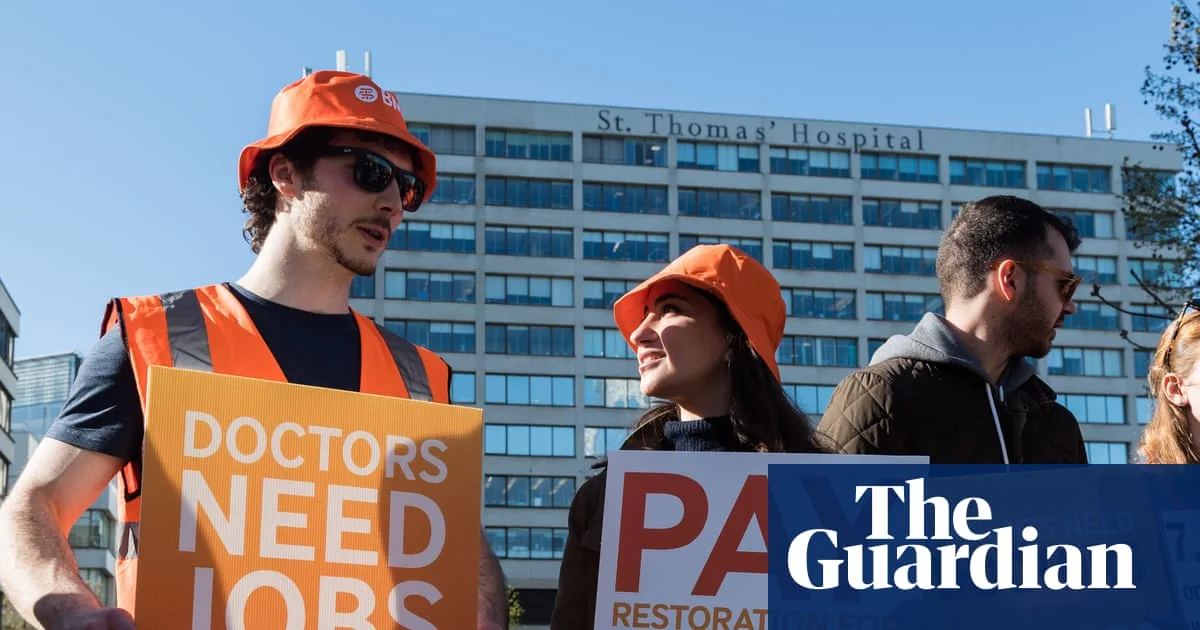
The British Medical Association has been accused of hypocrisy after offering its own staff a below-inflation pay rise of 2.75% while continuing to demand a 26% increase for resident doctors. The accusation came as hundreds of BMA staff began a 48-hour strike on Monday, the same week tens of thousands of medics walked out of NHS hospitals in England for the 15th time since March 2023.
Health Secretary Wes Streeting criticised the doctors' union, noting that the BMA had rejected a government offer of an average 4.9% pay rise for resident doctors this year, along with a minimum 6.2% boost for the lowest-paid and an overall 35.2% increase compared with four years ago. Streeting described the BMA's position as 'the height of hypocrisy', arguing that the union was unwilling to pay its own staff more than 2.75% on affordability grounds while demanding more from taxpayers.
Donna Thomas, a regional organiser for the GMB union representing BMA staff, said the BMA had failed to restore the pay of its own workers, whose wages had been eroded by nearly 17%. BMA staff affected include admin workers, policy experts, communication officers, IT specialists and negotiators who have been supporting the resident doctors committee in its dispute with the government.
Dr Jack Fletcher, chair of the BMA's resident doctors committee, said he was 'genuinely very sorry' about the strike but claimed doctors had no choice. He accused the government of using doctors' jobs as 'political pawns' amid an 'epidemic of corridor care' and long waiting lists. Meanwhile, a YouGov poll on Tuesday found that 55% of the public opposed the resident doctor strikes, with 37% supporting them.
On picket lines, some doctors acknowledged public frustration with the prolonged industrial action. Dr Sam Taylor-Smith said he apologised to patients for cancellations but argued he did so '365 days a year' due to inadequate staffing. The strike forced the NHS to draft in colleagues to provide cover, leading to cancelled treatments and appointments.




