

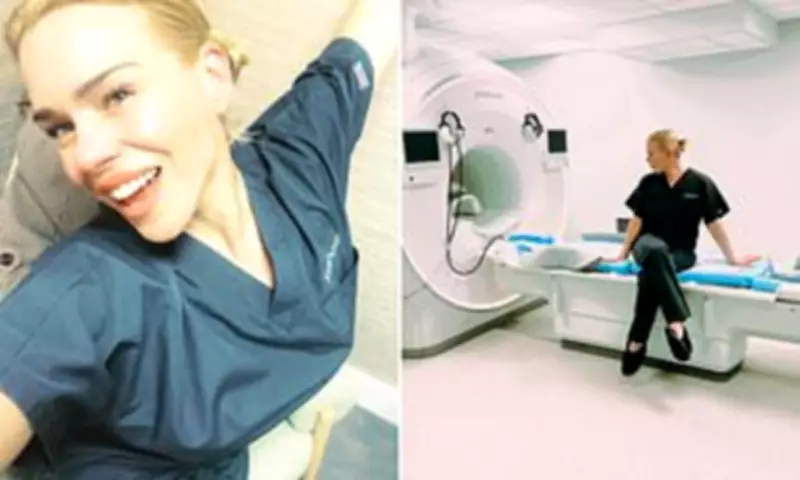
Actress Billie Piper has become the latest high-profile figure to receive a controversial private full-body 'medical MOT' scan, valued at £1,495, free of charge. The 43-year-old star shared promotional content for Prenuvo, a startup offering MRI scans that purport to detect cancer and chronic diseases years before symptoms manifest, through a pre-scan Instagram photoshoot on Thursday.
Celebrity Endorsements and Public Backlash
Piper's post, which she labelled as an advertisement, featured her in grey Prenuvo-branded medical scrubs, posing around the clinic and inside the MRI machine. She captioned the images with: 'I AM INFLAMMATION. So grateful to experience a full-body scan with Prenuvo. Taking charge of my health in the most proactive way through their early detection technologies. #ad'. Notably, Piper disabled comments on the post, a move that likely aimed to preempt the criticism that has plagued similar promotions by other celebrities.
Over recent months, social media outrage has erupted as figures like Kim Kardashian, Rita Ora, Kate Hudson, and Holly Willoughby have faced scrutiny for endorsing these costly scans and sharing discount codes. With a staggering £1,495 price tag—not covered by health insurance—the service is accessible only to a privileged few, sparking accusations of elitism and insensitivity toward broader healthcare affordability issues.

Expert Skepticism and Medical Concerns
Medical experts have raised significant doubts about the efficacy and appropriateness of such full-body MRI scans for asymptomatic individuals. Dr Ernest Hawk, a vice president at the University of Texas MD Anderson Cancer Center, cautioned that while MRIs are valuable for specific diagnostic purposes, their use in average-risk populations remains unproven. He stated, 'MRIs are great for what they're typically used for. But now you're moving them much earlier into an average risk population, and that's where you can run into these questions that haven't been answered.'
Dr Mina Makary, a radiologist at the Ohio State Wexner Medical Centre, highlighted the low likelihood of detecting serious issues in symptom-free individuals and warned of potential harms. 'You're going to end up finding a lot of incidental things,' she explained. 'That's going to create more psychological stress or trauma for the patient, including additional costs for tests and procedures that may have risks.'
Furthermore, concerns persist that people might forego essential routine exams, such as mammograms, in favour of these unvalidated scans. The American College of Radiology does not recommend MRI screening for asymptomatic persons, citing a lack of evidence for cost-efficiency or life-prolonging benefits. The FDA has not approved any MRI machines for preventive screening, though physicians retain discretion in their usage.
Legal Challenges and Ongoing Debates
Prenuvo is currently embroiled in a lawsuit in the United States, following a case involving Sean Clifford, a New York resident who underwent a scan and was informed of no apparent disease. Eight months later, Clifford suffered a catastrophic stroke, resulting in partial paralysis and brain damage. A subsequent reassessment by a radiologist revealed narrowed arteries in his brain—a condition that, if flagged by Prenuvo's AI software, might have prevented the stroke. The lawsuit alleges negligence and is ongoing.
Despite the controversy, Prenuvo continues to attract celebrity endorsements, with supermodel Cindy Crawford and her husband Rande Gerber also promoting the service. The company claims its scans screen for over 500 diseases and utilises artificial intelligence to identify subtle abnormalities. However, critics argue that the technology exploits health anxieties without substantiated clinical benefits.
Prenuvo has announced plans to conduct a long-term study involving 100,000 participants, with results not expected until at least 2034. Most enrollees are anticipated to pay substantial fees, though future research initiatives may offer no-cost participation. Dr Hawk advised, 'This is a great area in which to participate in a research study that might provide the information you're seeking, while also helping answer whether this is beneficial or not. But doing so outside of a study makes no sense.'

As the debate intensifies, the promotion of expensive, unproven health screenings by celebrities like Billie Piper underscores broader tensions between commercial health ventures and evidence-based medical practice, raising questions about accessibility, ethics, and public health messaging.





