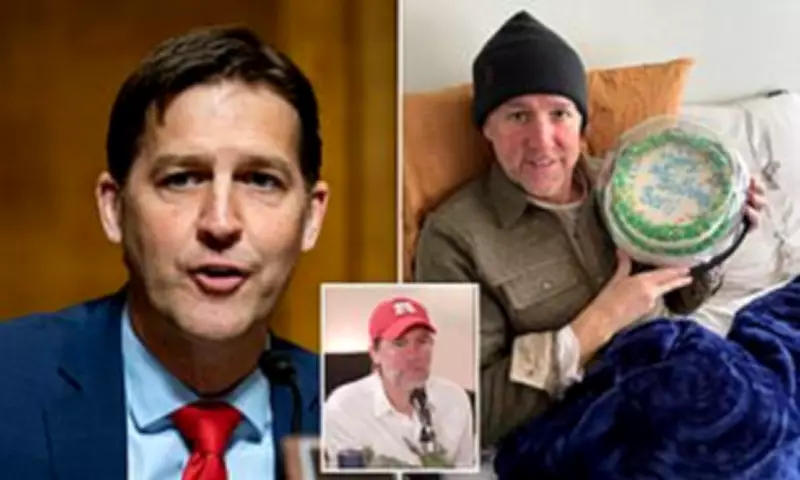
Former United States Senator Ben Sasse has revealed that his dramatically bloodied facial appearance, which has prompted public concern about possible acid attacks or electric shock injuries, actually stems from an experimental medical treatment he is undergoing for terminal pancreatic cancer. The 54-year-old father of three, who represented Nebraska from 2015 until 2023, received a devastating stage 4 pancreatic cancer diagnosis in mid-December with doctors initially giving him just three to four months to live.
A Grim Diagnosis and Experimental Hope
Pancreatic cancer ranks among the deadliest forms of the disease, with only thirteen percent of patients surviving beyond five years following diagnosis. For those like Sasse diagnosed at stage 4, the statistics become even more dire with barely three percent reaching the five-year survival mark. Now ninety-nine days since his diagnosis, Sasse acknowledges he never intended to "die in public" but feels he has unexpectedly received a "calling to die" through this public battle.
The Treatment and Its Dramatic Effects
As part of his aggressive fight against the disease, Sasse is participating in a clinical trial for daraxonrasib, an experimental drug designed to treat pancreatic cancer by disabling proteins that drive tumor growth. The medication has demonstrated remarkable effectiveness in shrinking his tumors by seventy-six percent thus far. However, Sasse realistically acknowledges that the treatment will probably not save his life, describing the cancer battle as similar to playing "Whac-a-mole" as tumors continue emerging in new locations throughout his body.

The drug comes with a particularly severe side effect that prevents his skin from properly regenerating, causing him to bleed from various locations across his body including his face. This explains the bloodied appearance that has drawn public attention and concern. In a comprehensive interview with the New York Times, Sasse reflected on his situation stating, "I did not decide to die in public. I obviously ended up with a calling to die."
Personal Reflections and Family Concerns
Sasse expressed profound concern about leaving his family, particularly his three children. "I didn't like the idea of my 14-year-old son not having a dad around at 16," he shared. "I didn’t like the idea of my daughters, who are 22 and 24, not having their dad there to walk them down the aisle. I felt a real heaviness about that." Despite these painful realities, he has found a measure of peace, stating, "I’ve continued to feel a peace about the fact that death is something that we should hate. We should call it a wicked thief. And yet, it’s pretty good that you pass through the vale of tears one time and then there will be no more tears, there will be no more cancer."
From Political Figure to Cancer Patient
Before his diagnosis, Sasse was known as an independent conservative voice within the Republican Party and served as a prominent critic of former President Donald Trump, being among the seven Republican senators who voted to impeach Trump following the January 6th Capitol attack. In 2023, he stepped away from politics to become president of the University of Florida, seeking what he described as a different model of civic reform. Health-conscious throughout his fifties, Sasse regularly participated in sprint triathlons, completing swimming, cycling, and running segments in under two hours.
The Path to Diagnosis
His health journey took a dramatic turn in October last year when he began experiencing significant back pain. Initially attributing the discomfort to his forty-five-pound weighted vest or a pulled muscle, Sasse sought medical attention when the pain intensified. Doctors ordered comprehensive tests including a full-body scan, which revealed his torso was "chock-full" of tumors just forty-five minutes after the procedure, leading to the stage 4 pancreatic cancer diagnosis.

Pancreatic cancer originates as abnormal cell growth in the pancreas, the organ positioned behind the lower stomach that produces digestive enzymes and blood sugar-regulating hormones. This particular cancer is especially feared because early symptoms—including dull headaches, intermittent indigestion, or unexplained fatigue—are often vague and easily dismissed. Consequently, the disease frequently goes undetected until it has advanced and spread, making treatment significantly more challenging and often rendering the diagnosis effectively terminal.
Multiple Cancer Battles
Upon diagnosis, doctors informed Sasse he actually had four additional cancers beyond pancreatic: lymphoma affecting white blood cells, vascular cancer impacting blood vessels, lung cancer, and liver cancer. Medical professionals explained these secondary cancers were triggered by the pancreatic cancer spreading throughout his body. The original spinal pain that prompted his doctor visit resulted from pancreatic tumors pressing against his spinal column.
"So, it was pretty clear that we were dealing with a short number of months," Sasse recalled. "I said, I believe we're all on the clock. We're all dying. So, this is not the scariest thing to me. [But] I have kids out of the house—our daughters are 24 and 22. But our providential surprise, our boy, is a decade younger. I was immediately thinking about Melissa [my wife], my best friend of 33 years."
Treatment Journey and Side Effects
Doctors initially offered conventional treatments including chemotherapy, radiation, and surgery but expressed limited confidence in their potential success. While Sasse hasn't specified whether he pursued these options, he revealed he began searching for clinical trials shortly after diagnosis. Within two weeks, he gained acceptance into MD Anderson Houston's trial for daraxonrasib, a drug specifically designed to treat certain forms of pancreatic, lung, and colon cancers.
In phase one trials, pancreatic cancer patients receiving daraxonrasib survived for 13.1 to 15.6 months on average—significantly longer than the 7.4-month average survival with standard medications. Sasse now travels to Houston up to two days weekly for treatment, receiving the drug orally while doctors monitor for adverse effects. Beyond the bleeding skin issues, he experiences constant pain and regular nausea that frequently leads to vomiting. He describes his face as typically feeling "nuclear" with burning sensations, requiring daily pharmacy visits for medications to manage these side effects.
Realistic Outlook and Philosophical Perspective
Although the drug has substantially reduced tumor size, doctors have cautioned that because cancer has spread so extensively throughout his body, daraxonrasib is unlikely to completely cure the disease and save his life. Sasse hasn't provided an updated prognosis but notes he has felt "better than I deserve" since beginning treatment. He maintains a philosophical perspective, stating, "Death is terrible. We should never sugarcoat it. It is not how things are meant to be. But it is great that death can be called the final enemy. It's an enemy, but a final enemy. And then, there will be no more tears."
Pancreatic cancer affects approximately 67,000 Americans annually, with over 52,000 dying from the disease each year. Once considered primarily a disease of older adults, particularly those over sixty-five with diabetes or obesity, medical professionals now report increasing incidence among younger populations. Sasse's public battle brings heightened awareness to both the devastating nature of pancreatic cancer and the potential of experimental treatments like daraxonrasib, even as he confronts the painful realities of terminal illness with remarkable transparency and courage.