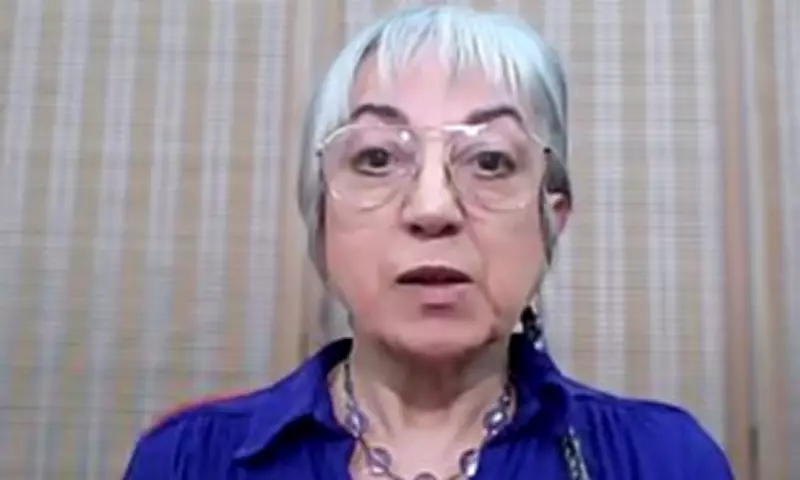
A woman who had her baby taken away after giving birth at just sixteen years old has spoken out about the devastating and lifelong impact of this traumatic experience, decades after the event. Diana Defries appeared on Friday's edition of BBC Breakfast, speaking candidly to presenters Naga Munchetty and Ben Thompson about her painful past.
The Painful Legacy of Forced Adoptions
Ahead of the emotional conversation, Ben Thompson explained how the Education Committee has declared that the former practice of forced adoptions inflicted unimaginable suffering on countless women. Diana, who now serves as the Chair of the Movement for an Adoption Apology, described hearing this official recognition as 'really powerful' and validating.
During the interview, Naga Munchetty noted how Diana had been 'forced to give up' her daughter. Diana responded with a poignant correction, stating: 'My baby was taken from me. I dislike the term give up. I think a lot of people are used to that because it's used in common parlance, but it's more honest to say most of these babies were taken from young mothers, including myself.'

A System of Shame and Secrecy
Diana elaborated on the circumstances that led to this heartbreaking separation. At the time, she was young, unmarried, and had been deserted by the baby's father, leaving her with no support system. She was sent away to a mother and baby home, where she gave birth in an NHS hospital.
'All of that was sullied by the way I was treated,' Diana revealed. 'The attitude of the staff at the home and the staff in the hospital was appalling, and I know this happened to many, many young women. We were treated as if we were pariahs, we were somehow lesser people and therefore deserved a sort of punishment, and it varied through the decades, but it was consistent in tone.'
Naga observed that in such cases, there was a public perception of a 'young woman being shrouded in shame' and asked how Diana navigated this overwhelming stigma.
'I coped by dissociating,' Diana explained. 'In addition to the shame, there is a secrecy because most of us were told, 'You can't talk about this because it's shameful, so you mustn't tell anyone.' You have the shame, you have the trauma, and you have the need to keep it to yourself so there's no way to process what has happened.'
She described the long-term effect as 'corrosive,' adding: 'It damages one in a very fundamental way. The further you go into life and you realise that other people are just having children and living normal lives, the more you realise this is a terrible thing that you're carrying.' Diana also noted that discussing it initially is 'very painful because of the shame and this feeling of being somehow at fault and damaged.'
A Mother's Grief Over Meningitis Loss
In a separate segment on the same programme, a heartbroken mother fought back tears as she opened up about the tragic loss of her son after he fell ill with meningitis B earlier this year. The current outbreak of the infection in Kent, identified between 13 and 16 March, has caused significant concern across the country.
Deniz Mills appeared on BBC Breakfast to raise awareness about the illness, following the death of her 18-year-old son, Aaron, in January after he contracted the infection. An emotional Deniz, who helps fundraise for the Meningitis Now charity, said: 'It was just devastating. You don't expect to lose your healthy 18-year-old to a disease that they could be vaccinated against. It's turned our life upside down.'
The Rapid Onset of Tragedy
Aaron, who was studying sports science and football at Liverpool John Moores University, woke up with a headache, which was quickly followed by a seizure. He was given antibiotics but was then rushed to Worcester Hospital and subsequently transferred to Coventry Hospital to drain fluid from his brain.
Recalling the harrowing events, Deniz said: 'I thought Aaron was getting better, the antibiotics had kicked in. I later found out by the time Aaron had got to Worcester Hospital, he had lost most of his basic brain functions. That's how quickly it took hold. We were told by the surgeon, after the operation, they did everything that they could. It was not likely that Aaron was going to survive because his brain was too swollen.'

She revealed the shocking speed of the tragedy: 'That was within 12 hours of me speaking to Aaron in the living room that morning, and Aaron was declared dead on Saturday 3rd of January. There was no sign of life. He was brain dead.'
A Call for Vaccination Awareness
The reporter noted that the cost for a full course of vaccines to protect against meningitis B is approximately £220. Deniz expressed her anguish, stating that she would have paid for it if she had known it existed.
'If it would have saved my son's life, I would have paid it. If I'd have known about it, he would have had it,' Deniz asserted. 'If your child was born before 2015, they haven't had this vaccine, it is out there. I know it's a lot of money, but I recommend you going to do it.'
BBC Breakfast airs daily on BBC One and iPlayer from 6am, providing a platform for such important and moving personal stories that highlight critical social and health issues.