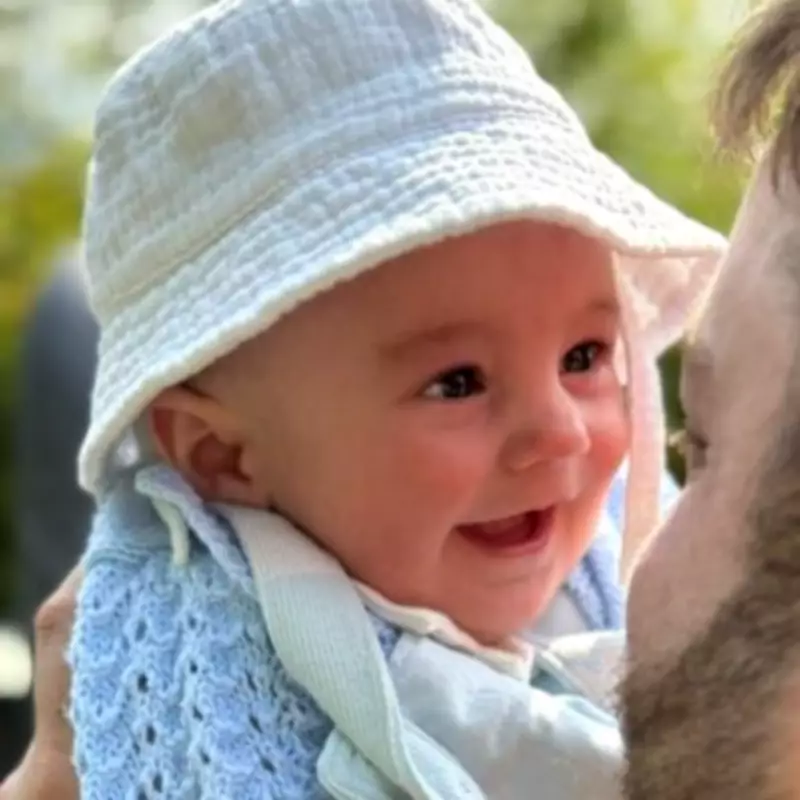
Baby Arthur Becomes UK's Youngest Blood Recipient After Womb Transfusion
In a remarkable medical breakthrough, an unborn baby the size of an apple has become Britain's youngest blood donor recipient after receiving a lifesaving transfusion while still in the womb. Little Arthur Ransom underwent this intricate procedure at just 16 weeks gestation when his organs began failing due to a severe viral infection.
The Critical Procedure That Saved Arthur's Life
Arthur's mother, Maisie Ransom from Cranleigh in Surrey, was only 16 weeks pregnant when doctors discovered her unborn son was battling parvovirus, commonly known as "slapped cheek syndrome." This typically mild childhood illness became life-threatening for Arthur because his underdeveloped immune system couldn't fight the infection, leading to severe anemia and dangerous fluid buildup around his heart.
The situation was dire - Arthur's organs were failing, his heart was completely enveloped in fluid and struggling to pump. Medical professionals at St George's Hospital in London performed an intrauterine transfusion (IUT), guiding a tiny needle with ultrasound precision to deliver oxygen-rich blood directly to the developing fetus.

"The experience was absolutely terrifying," Maisie recalled. "The doctor said it was 50/50 whether he would make it or not. He was so small the doctors were working within millimetres. Without that blood he would not have made it."
The Rare Blood That Made Recovery Possible
Intrauterine transfusions represent some of the rarest blood procedures performed within the NHS, requiring extremely specific donor blood that only a small percentage of the population can provide. Donors must be men with type O blood that is both "Kell negative" and negative for cytomegalovirus.
Dr Anne Kelly, paediatric transfusion expert at NHS Blood and Transplant, explained: "IUTs are very rare and are only done in specialised units when absolutely needed to help save a life." The NHS issues approximately 180 IUT units annually, with this specialized blood processed into small packs of highly concentrated red cells specifically designed for transfusion into anemic fetuses.
Maisie expressed profound gratitude for the anonymous donors whose blood saved her son: "I don't think there are words to describe how thankful I am to blood donors. To have the life I am now living, with my family, there are no words to express the gratitude I feel."
Donors React to Their Life-Saving Contributions
NHS Blood and Transplant has contacted some of the country's most prolific IUT donors to share how their contributions have saved lives. Paul Bickley, 45, from Richmond in southwest London, was deeply moved upon learning his blood had been used in Arthur's procedure.
"Hearing my blood was used in this way almost made me cry," Bickley said. "To think a very small act of kindness on my part could have such a massive impact. It was mind-blowing and miraculous."
Retired heating engineer David Smith, 64, from Westminster in London, has donated blood more than 80 times. He emphasized: "You can't not do it if you can help babies, you have to. It's always a pleasure to donate, whether it's used for babies or for anyone."
Arthur's Remarkable Recovery and Future
The transfusion successfully reduced the strain on Arthur's body and heart, allowing normal function to return. The fluid around his heart and organs was gradually reabsorbed, and he continued developing normally in the womb before being born healthy in January 2025.
"Arthur's doing great now," Maisie reported with evident joy. "He's a really chirpy little boy, reaching all the milestones. He keeps us on our toes. I think every day about how lucky I am."
Dr Luci Etheridge, consultant paediatrician and chief medical officer at St George's Hospital, highlighted the significance of such procedures: "For babies like Arthur, a blood transfusion while still in the womb can mean the difference between life and loss. We are deeply grateful to the donors whose generosity makes this possible."
This case comes as The Mirror has launched its "Give a Pint, Save a Life" campaign to help blood stocks recover following the COVID-19 pandemic amid ongoing shortages. Arthur's story serves as a powerful testament to how blood donations can transform outcomes for the most vulnerable patients.