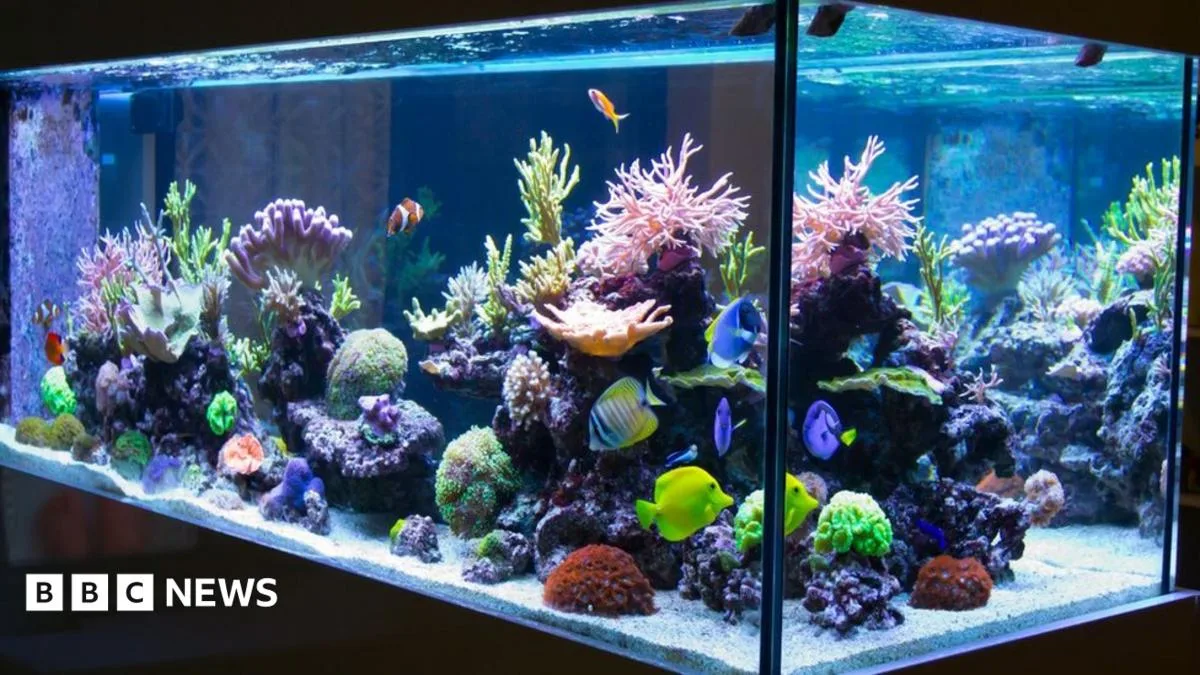
Aquarium Coral Releases World's Second Deadliest Poison in Oxfordshire Home
A father has recounted the terrifying incident where his domestic fish tank released one of the planet's most lethal poisons, resulting in his entire household and four firefighters requiring urgent hospital treatment. Chris Matthews is now advocating for increased awareness regarding the hidden dangers present in seemingly innocuous aquarium corals following the frightening 2018 ordeal.
Family and Emergency Responders Fall Ill After Toxic Exposure
The family of six began experiencing flu-like symptoms and eye irritation while relocating and cleaning coral from their home aquarium. Four firefighters rushed to the property in Steventon, Oxfordshire, but all ten individuals ultimately required hospitalisation after exposure to the toxic substance. Police subsequently sealed off the surrounding area as a precautionary measure.
Mr Matthews had no knowledge that palytoxin—ranked among Earth's most poisonous substances—had been released into the atmosphere. The then 27-year-old developed severe breathing difficulties, persistent coughing, and a high temperature that he described as "as bad as pneumonia."
Emergency Response and Hospitalisation
When every member of the household fell ill, including two family dogs, Mr Matthews dialled 999, though he acknowledges the situation could have proven catastrophic. "If we had spent another night in that bedroom our lives would have been in danger," he stated. "Certainly our dogs would have been in a very bad way according to the vet."
The source of the poisoning was traced to the couple transferring their aquarium contents between tanks in their bedroom the previous week. During this process, they removed a coral-encrusted rock and scrubbed it thoroughly, unknowingly discharging the toxic material into the air before compounding the situation by shutting the door and retiring for the night.
"We woke up the next morning feeling groggy but initially put it down to flu," Mr Matthews explained. "It was when we noticed our two dogs had similar symptoms that we knew something wasn't right."
Widespread Emergency Mobilisation
As his mother, sister, and her partner all developed varying degrees of sickness throughout the day, Mr Matthews identified the probable cause and contacted emergency services. Paramedics, firefighters from Abingdon and Didcot, and Thames Valley Police all responded at approximately 8.20pm on Monday, March 26, shutting down the road and establishing a security perimeter around the vicinity.
All six household members, including Mr Matthews' father Ian who had just returned from work, were transported to the John Radcliffe Hospital alongside the initial firefighters who arrived at the scene. While three relatives and the firefighters were discharged after several hours, the remaining individuals were detained until the following day for monitoring and blood analysis.
Specialist Cleanup and Ongoing Risks
The property was ventilated throughout the night as specialist chemical experts from Oxfordshire Fire and Rescue Service collaborated with Public Health England to extract the remaining coral. Mr Matthews noted that the most serious symptoms affected himself, his partner, and his mother, stating: "It was worse than flu, we couldn't concentrate on anything. We couldn't regulate our temperature, we were struggling to breathe and coughing."
He added: "I've seen the coral described as 'exotic' but it is actually one of the most common around. It's a pest coral called pulsing xenia that you grow in areas where you can't get anything else to thrive. It's not expensive and a lot of people have it."
Calls for Greater Awareness and Safety Measures
The engineer, who has kept predominantly tropical fish for approximately twelve years, insisted he was far from inexperienced and believed he understood potential hazards. "I knew about palytoxin, which can kill you if ingested, and that coral can cause things like rashes if you don't handle it carefully," he said. "But I had no idea taking the pulsing xenia out of the water could make the toxin airborne. The information is not readily available online in a way people can easily understand and more needs to be done when people are buying these corals."
Despite the gravity of the incident, he hasn't been deterred from maintaining his aquarium or even keeping certain types of coral. "We've put more safety precautions in place, making sure we properly ventilate the room," Mr Matthews explained. "But I love having fish and it's something that both sides of my family have always done. I'll be a lot more cautious in the future though."
Expert Commentary and Historical Context
Dr Mike Leahy, 51, who fronted the National Geographic programme Bite Me and lives in the village where the incident occurred, commented: "The strangest thing for me is I've been all over the world and then I come back home and this happens in an Oxfordshire village. Palytoxin is the second deadliest poison in the world, one gramme can kill 80 people, though it has to be ingested to be lethal."
Similar incidents involving home aquarium enthusiasts have been documented through anecdotal accounts globally. In 2005, an algae species called Ostreopsis ovata flourished in the Mediterranean Sea, resulting in hundreds falling ill in Genoa, Italy. A coastal wind carried a Palytoxin-like substance onto the shoreline, requiring approximately 200 holidaymakers to seek medical attention.