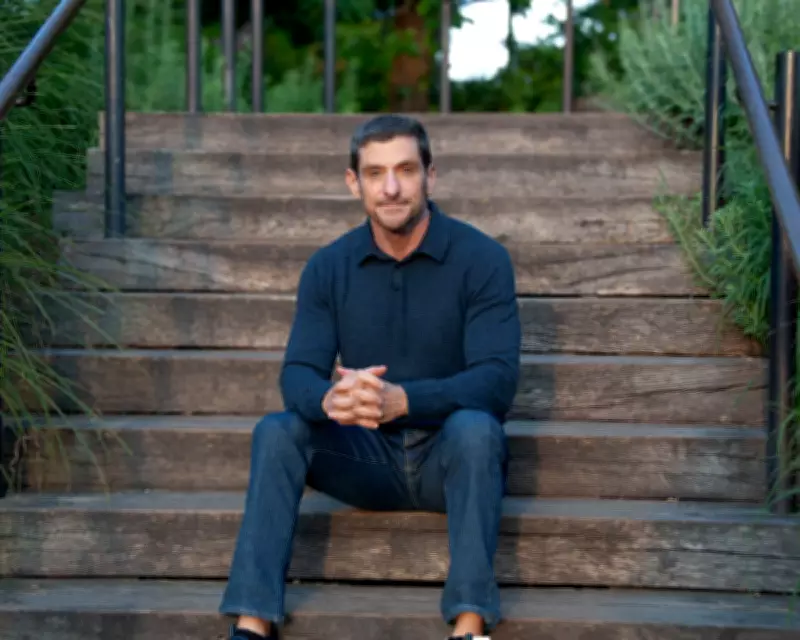
Amir Levine's 16-Year Journey to Unlock Emotional Security
Psychiatrist Amir Levine has spent 16 years developing the insights for his groundbreaking new book, following the phenomenal success of his 2010 publication 'Attached', which he co-wrote with Rachel Heller. That first book introduced attachment theory to mainstream audiences, categorising relationship behaviours into anxious, avoidant, fearful-avoidant, and secure styles. These classifications provided millions with tools for self-awareness and relationship improvement.
Since 'Attached' transformed public understanding of emotional dynamics, Levine has received countless emails from readers worldwide sharing how the book changed their lives. "I received an email from a woman in Iran," Levine recalls. "She realised she was with a very avoidant partner, ended that relationship, found someone secure, and for the first time experienced orgasm because she could communicate her needs effectively."
The Neuroscience of Secure Attachment
Drawing from these personal stories, extensive neuroscience research on attachment and neuroplasticity, and his clinical therapy practice, Levine has compiled practical tools in his new book 'Secure' to help anyone develop more secure attachment patterns. As an associate professor of clinical psychiatry at Columbia University in New York and a busy therapist, Levine views this ongoing engagement not as extra work but as "my longevity hack."

"Create what I call a secure village and facilitate secure bonds," Levine advises from his Miami base. "When researchers conducted a meta-analysis involving 300,000 people, they found this approach cuts mortality by 50%." Studies tracking participants from months to 58 years demonstrate that secure connections outperform any supplement or peptide regimen for longevity. This explains why centenarians consistently appear in tight-knit communities.
Health Benefits of Secure Attachment
Secure individuals experience significant health advantages, according to Levine's research. They tend to be healthier overall, experience fewer symptoms when ill, and demonstrate lower stress responses. "When we feel safe, our entire stress response diminishes, reducing inflammation and related issues," Levine explains. A 1997 study where participants were infected with a common cold virus found those with stronger social connections were less likely to develop symptoms.
Beyond physical health, secure types show greater resistance to consumerism, better ability to ignore online advertisements, and reduced negative impacts from social media. Research indicates that more connected individuals maintain better cognitive function and greater brain volume in old age. They also demonstrate increased effectiveness and resilience during job searches.
Attachment Styles in Professional Settings
Levine provides numerous examples of how attachment styles manifest in workplace scenarios. Consider Luke, 32, who receives a well-deserved promotion to team management. As someone with avoidant attachment—struggling with closeness and thriving on independence—Luke takes on complex tasks himself rather than delegating effectively. Despite working extra hours, his team's output declines and deadlines are missed.
Contrast this with an employee exhibiting anxious attachment who spends a week recovering from flu in emotional turmoil after receiving only a curt "OK" from their boss. A securely attached individual might interpret the same response as acknowledgement from a busy manager and focus on recovery. Levine emphasises that while secure attachment offers numerous benefits, anxious and avoidant traits can also function as superpowers in specific contexts.
Anxious and Avoidant Traits as Strengths
Anxious individuals possess heightened sensitivity to others' emotions and often serve as community lookouts, quickly identifying danger. Similarly, avoidant individuals frequently excel under workplace pressure, make tough decisions independently, and execute them with precision. "[Avoidants] often function well under pressure at work, are capable of making tough decisions on their own and executing them with precision," Levine writes.

The psychiatrist identifies multiple pathways to developing secure attachment. Through years of "secure priming therapy" with clients, his book addresses every potential question and nuance that emerges. Two crucial insights have developed within attachment theory: first, attachment styles aren't permanently fixed by childhood parenting; second, individuals can exhibit different attachment styles with different people.
Identifying Your Attachment Topography
Levine's website features questionnaires to identify general attachment styles and attachment patterns within specific relationships—including with pets. "People think: oh, cats are really aloof," says Levine. "Some cats really love closeness." This assessment creates what he calls "your attachment topography," providing liberating awareness that attachment styles respond to others' behaviour rather than remaining static.
Insecurity can develop at any age, as illustrated by Levine's "sad story" of a woman in her 80s who met a partner after years of independence. Initially wonderful, the relationship turned difficult when her partner became easily hurt and jealous, ignoring her for weeks when upset. "It really did a number on her," Levine says. "She died from heart disease. I personally think that it exacerbated her heart condition."
The Five Pillars of Secure Connection
Levine introduces the acronym CARRP—consistent, available, responsive, reliable, predictable—as the five pillars of secure connection. Colleagues have already begun using it as a verb. By practising CARRP behaviour toward others and structuring life to maximise exposure to CARRP interactions, individuals can transition toward secure attachment.
The story of Eric demonstrates this transformation. Constantly undermined by his father and encouraged by his mother to avoid confrontation, this socially active, sporty, academically successful teenager gradually withdrew from friends and activities. After a university friend recommended a therapist with CARRP qualities—who encouraged contact whenever needed and even jogged with him during sessions—Eric gradually silenced his internalised critical voice and rewired his brain toward security.
The Power of Seemingly Insignificant Interactions
Levine introduces another acronym: SIMIs, or seemingly insignificant minor interactions. These everyday exchanges, even with strangers, can strengthen existing neural pathways or create new ones. "When I was in London, people always liked to talk about the weather," Levine recalls. "I now have a new appreciation for it. It's actually really important, because it's a joint experience that we both can relate to."
Neuroscience demonstrates that positive SIMIs can help heal past adversity as new experiences overwrite old patterns. One of Levine's most liberating concepts challenges the assumption that attachment styles are permanently determined by problematic parenting. "We can't be fixed by something that happened to us at the age of three; that doesn't make sense," he argues, noting the complex interplay between genetics, life experiences, and epigenetic factors.
Moving Beyond Nature Versus Nurture
Levine aims to break the anxious cycle of parents worrying they've inflicted anxious attachment on their children—often a chicken-and-egg situation. "Think about how much more challenging it is to raise a child that has this heightened sensitivity. It's just harder." Causal inferences aren't necessary for change and can become "a form of internal gaslighting" that diminishes legitimate emotional responses.
While slightly nervous about how 'Secure' will be received, Levine emphasises he isn't dismissing trauma therapy or conventional methods. Rather, he presents approaches that work effectively in his neuroscience research and clinical practice. "I don't know how people are going to respond to it," he admits. "I'm a little bit scared of it."