
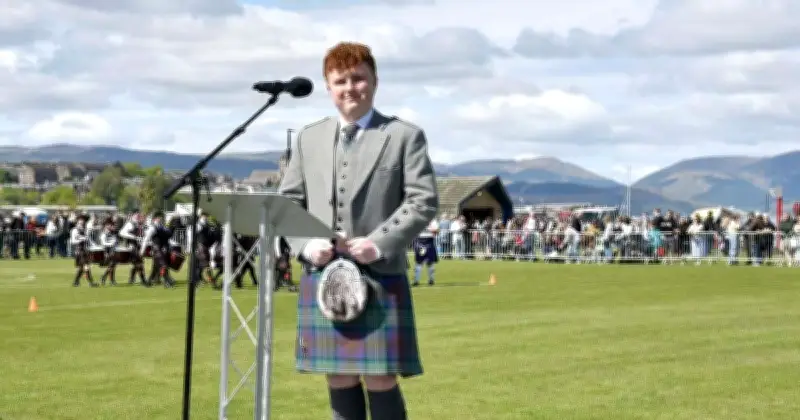
Cameron McGerr, 16, lost both of his parents to heart disease and is now teaching schoolchildren how to perform CPR. He realised something was wrong when he went to wake his father one morning and found he was not breathing.
"I came in to wake him up because he was kind of sleeping in," Cameron said. "I realised that he was in his bed, not breathing."
He called 999, and an operator guided him through what to do while an ambulance was sent to the house. "It was definitely a panic," he told the Express. "I was more just thinking on instinct rather than properly thinking on strategy."
A 10-minute wait that felt much longer
Although the ambulance arrived within around 10 minutes, Cameron said the wait felt much longer, as if "time itself is slowed down". His father had suffered a cardiac arrest and was pronounced dead in his room around 45 minutes after the ambulance arrived.
Cameron tragically lost both of his parents to heart conditions. His experiences made him realise how important it is to know what to do in an emergency. Although he knew what CPR was, nobody had ever taught him how to perform it.
"You get kind of made aware of it on TV," he said. "But the CPR shown on medical dramas isn't always accurate, or doesn't show proper form."
Pulse of Life campaign
He added: "If I had the knowledge before, I could have put [the phone] on loudspeaker and started to perform CPR while I was explaining what was happening."
The 16-year-old Scot went on to found the Pulse of Life campaign, which pushes for more CPR education in schools and encourages young people to learn the lifesaving skill through hands-on training. Cameron says an important thing is to practise CPR regularly so that people are more confident about what to do when faced with a real emergency.
One way to remember the correct rhythm for chest compressions is through music. Songs with a suitable beat include the Bee Gees' Stayin' Alive, ABBA's Dancing Queen and Eye of the Tiger by Survivor. "There's loads of songs, so just anything that's kind of in the range of 100 to 110 beats per minute," Cameron explained. "I think it makes it easier to remember."
His main message: trying to help is better than standing back
"The worst thing you can do is nothing at all. If you don't do anything, there's nothing you can do to save the person, whereas if you at least try, there's a chance."
Cardiovascular disease remains the world's biggest killer, claiming more than 20 million lives every year, according to the World Heart Federation. It adds 80% of cardiovascular deaths are linked to risk factors that can be prevented or managed, while some heart problems can develop without obvious warning signs.
Symptoms associated with a heart attack can include chest pain or discomfort, pain spreading to the arms, jaw, neck, back or stomach, shortness of breath, sweating, nausea or feeling light-headed. World Heart Day takes place each year on September 29, raising awareness of cardiovascular disease and the steps people can take to protect their heart health.




