
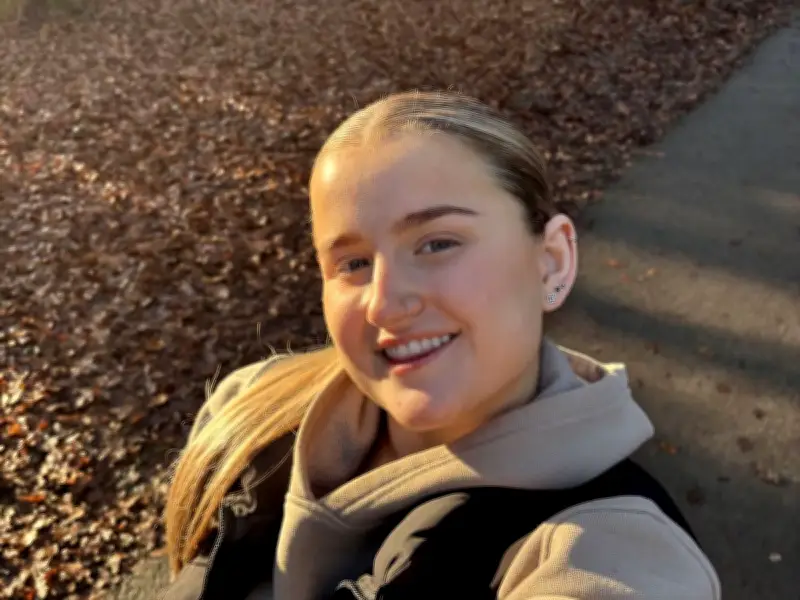
Sophia Forrester, 24, stopped going out with friends and to the gym when intrusive thoughts left her fearing she would cheat on her boyfriend. The waitress from Leeds, West Yorkshire, was diagnosed with OCD in December 2025 after getting into what she describes as the only healthy relationship she has ever had.
Sophia says her previous relationships had her “overthinking everything” and the stress left her needing to retake a full year of education. Yet despite meeting her current partner in February 2025, her mental state “completely flipped” once the relationship turned serious.
Intrusive thoughts and isolation
She experienced intrusive thoughts such as “what if I cheat?” or “do I actually love my boyfriend or am I lying to myself?” and questioned if she was a bad person while her brain created worst-case scenarios. The thoughts caused her to isolate herself for at least four months, avoiding nights out with friends because she feared she had done something wrong or cheated “even if I just looked at someone”.
During this period she lost focus at work, lost weight and would spend hours on ChatGPT seeking reassurance about her intrusive thoughts.
Therapy, diagnosis and recovery
In April 2025, Sophia began therapy and started taking the SSRI citalopram. She received her OCD diagnosis in December 2025. Now in recovery, she began sharing her experience on social media in November 2025 to help others.
“I know deep down I would never cheat, as someone who has been cheated on it’s the worst thing I’ve ever experienced,” she said. “My brain is convincing me of these worst case scenarios.”
“I would analyse everything”
Sophia says nights out made her anxiety worse. “Sometimes I’d go on a night out with friends drinking and the next day would be even worse,” she said. “I would analyse everything – even if I looked at someone I’d think ‘I’ve just cheated on my boyfriend I shouldn’t have looked at that person’.”
“Relationship OCD has been acknowledged as a sub-type of OCD for many years now, it’s just that recently there’s been more awareness about it,” she said. She now feels “a lot better” and says the thoughts are “not as believable anymore”.
Childhood OCD and contamination fears
Sophia says she had OCD as a child, with thoughts about bad things happening to her family, and would pray at night to relieve the anxiety. From age 20 onwards, she experienced contamination OCD, which she has received therapy for.
“I still wash my hands a lot now and I used to have different towels for different body parts because I was scared I’d get a horrible disease,” she said.
Meeting her partner and the shift
Sophia first met her current partner in February 2025 and says she “knew it was real”, staying up all night chatting with him. An early intrusive thought was about something bad happening to him, leaving her crying and not wanting to go to work.
After meeting his parents, she says everything changed. “I was in a really great mental state when I met my boyfriend, but my mental state completely flipped when it became serious,” she said. “Ever since I met his parents it was like something in me, like a switch flicked and genuinely my body freaked out.”
She and her partner researched the signs and found they pointed to relationship OCD (ROCD). “Basically I looked it up and when you get into your first healthy relationship all the trauma from the past resurfaces because it’s a safe time to heal it,” she said.
Recovery and sharing her story
Sophia had private therapy from April 2025, including exposure exercises to challenge her thoughts, and reduced her use of ChatGPT for reassurance. She also took citalopram, which she says gave her “more mental space” to do therapy.
Sharing her experience online, she says the vast majority of comments have been positive, but some have been abusive. “People have been calling me horrible names like a whore and a slag,” she said. “The thoughts are so against my values but my brain is trying to make sure they never ever happen.”
“OCD isn’t just about being neat, that’s a stereotype learned at school about being organised and neat or fearing germs. But OCD can be a lot deeper and can latch onto your deepest fears and worries,” she said. “The key thing is it attaches to what matters most to you – the more you care about something the worse it can feel.”
Sophia shares her experience on TikTok at @ocdwithsophia.




