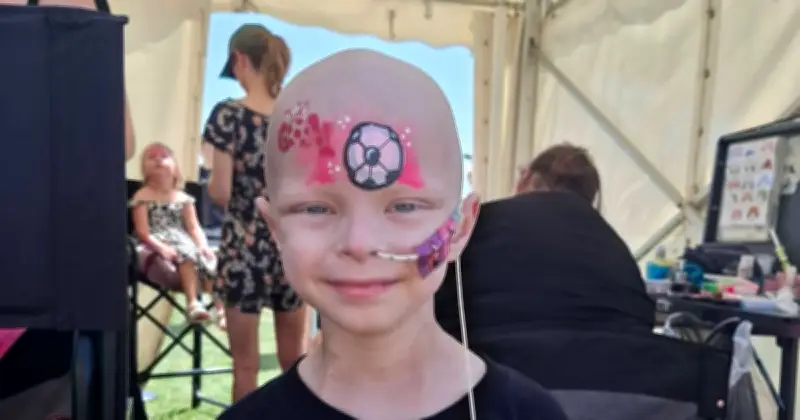
Teddy Hemms, a five-year-old boy with an aggressive brain tumour, needs £200,000 to access potentially life-saving treatment in the United States. His family is in a race against time, as he must start the trial by September 12.
There are no further treatment options for Teddy in the UK, but he has been accepted onto a trial in the US. He is currently at Addenbrookes Hospital in Cambridge, battling severe headaches and vomiting.
Family's desperate appeal
Teddy's father, Ian Hemms, a sergeant in the RAF, said: "We have been through the most unimaginable year, but we are not prepared to give up on Teddy. He has fought through surgery, chemotherapy and radiotherapy and we now have this opportunity in America which could well be life-changing. The medication is free, but everything else comes at a huge cost. We desperately need help to get Teddy onto the trial."

Teddy's hopes rest on a trial investigating therapies for children with cancers, using a drug called DFMO (difluoromethylornithine). It is used as maintenance therapy to reduce the risk of relapse in patients with high-risk neuroblastoma. The drug works by irreversibly blocking ornithine decarboxylase, an enzyme critical for polyamine production and cancer cell growth.
Treatment details and costs
DFMO has been approved by the U.S. Food and Drug Administration under the brand name Iwilfin but is not routinely licensed or funded on standard NHS pathways in the UK. It is being administered at Pennsylvania State Children's Hospital. The family faces covering the costs of getting Teddy to America, insurance, tests, scans, and accommodation for two years.
Ian, based at RAF Wyton in Cambridgeshire, said: "Teddy is coping really well and being on a ward with other children I see just how brave and strong they are. A lot of adults would struggle, but they all take it in their stride. He's such a character, very astute and extremely switched on. Teddy is so sassy - he loves fast cars, music (especially Taylor Swift), dancing, and colourful clothes - one of his favourite items is a bright pink wig. He calls one of his tumours 'Tilly' and he often says no to Tilly when they spot something he would like in a shop."
Discovery and diagnosis
Teddy was born premature and underwent treatment for multicystic dysplastic kidney, a birth defect where an infant's organ fails to form correctly in the womb. His cancer was spotted during a routine eye examination last year when an optician at Specsavers noticed inflamed nerves in his eyes. Images were sent to a paediatric consultant, and the following day Teddy was taken to hospital for further investigations. An MRI scan revealed a tumour at the base of his brain stem, with growths and lesions on the lining of his brain and down his spine.
He underwent surgery to remove the primary tumour in October. Days later, he was diagnosed with metastatic medulloblastoma, a hostile form of childhood brain cancer that had spread through his cerebrospinal fluid and along his spine. Since diagnosis, Teddy has undergone four rounds of chemotherapy involving three different types of drugs and six weeks of radiotherapy. While the radiotherapy had the greatest impact in shrinking and preventing tumours from spreading, the final two rounds have had little effect. Earlier this month, Ian was told there are currently no further treatment options in the UK.
Fundraising progress
Trials are running in 24 locations across the US to see if Iwilfin, a prescription oral medicine, can target different types of active cancer. It is already used to help slash the risk of tumour relapse in adults and children with high-risk neuroblastoma who have responded to prior treatments and has a 95% success rate.
Ian said: "The optician saved Teddy's life. If his condition had not been identified when it was, we were told his life expectancy could have been as little as 12 weeks. If you can donate, no matter how small the amount, we would be incredibly grateful. And if you cannot donate, please share Teddy's story. Every share could help us reach someone who can make a difference. We have been overwhelmed by the kindness of family, friends and complete strangers who have organised fundraising events."

Teddy finished his final round of chemotherapy on July 14, with medics setting a condition that he must start the US trial within 60 days - and only if a scan shows his condition remains stable. His fundraiser has already raised more than £60,000, but more is needed.