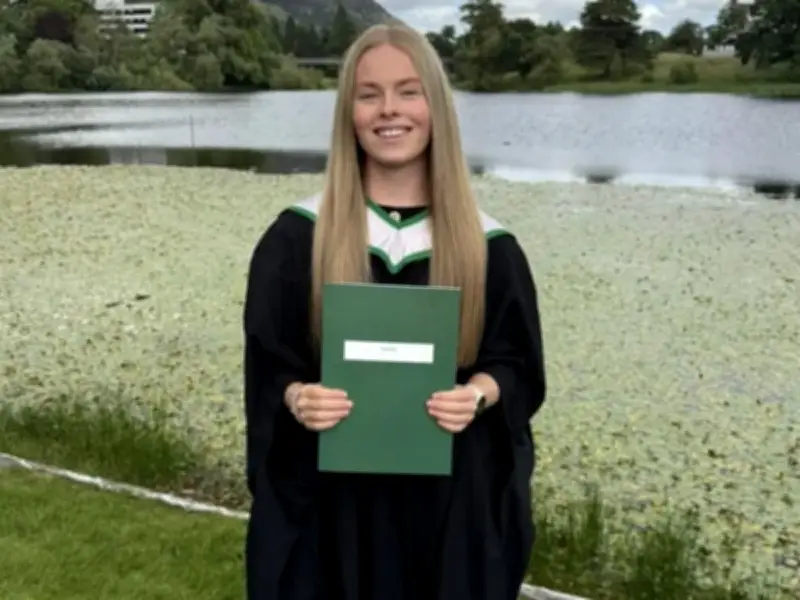
A PE teacher who suffered years of unexplained bleeding was repeatedly told her symptoms were due to stress and her high fitness levels before being diagnosed with a rare blood-clotting disorder.
Paige Brodie, 23, from Aberdeen, was diagnosed with Type 1 Von Willebrand Disease (VWD) after enduring heavy periods, frequent nosebleeds and bruising since childhood. At one stage, she bled continuously for 10 months and became so severely anaemic that she passed out.
Symptoms dismissed as stress and fitness
Brodie first visited her GP after six months of continuous heavy bleeding and was told it could be linked to the pressure of university, studying and her placement workload. When she returned after eight months, she said she was told her fitness routine could be responsible because she was a runner who spent a lot of time at the gym.
She said: "The biggest impact has been upon my periods as a young woman. For around two and a half years, I experienced extremely heavy and prolonged bleeding, eventually reaching a point where I was bleeding continuously for months at a time. At one stage, I had been bleeding for ten months continuously."
Diagnosis after 20 months
She eventually saw a GP specialising in women's health who began exploring different ways to control the bleeding. Brodie tried three types of hormonal contraception over the following year, alongside other measures, but said nothing worked. She also tried treatments for her nosebleeds, including Naseptin cream and several cauterisations, but continued to experience bleeding problems.
The ongoing blood loss left her severely anaemic. She said: "I was exhausted, struggled with fatigue and, on some occasions, became so unwell that I passed out. This had a significant impact on my confidence and day-to-day life. It was uncomfortable, frightening and incredibly difficult emotionally."
After around 20 months of bleeding, her GP suggested testing for haemophilia and mentioned Von Willebrand Disease. Three months later, the results showed she had VWD.
Managing the condition
Brodie said: "Although finally having an explanation was a huge relief, being told that I had a lifelong bleeding disorder was also incredibly difficult to process. VWD isn't curable, but there are treatment options that can help manage the symptoms and make life much more manageable."
She now manages the condition with treatment and continues to experience periods of heavy fatigue and bleeding, although she said they are more manageable since receiving a diagnosis. She also faced a six-month process of transferring her care to a new local health board after moving, including appointments and blood tests before being officially registered on the Blood Disorder database.
She has been trialling further treatment options so she has a plan in place should she experience a significant bleed. She said her experience with her haematology and gynaecology teams has since been "incredibly positive". She added: "They work exceptionally well together to understand my needs, and that has helped me start to rebuild trust in my own body."
Symptoms of VWD can include easy bruising, prolonged bleeding from minor cuts, excessive bleeding after dental treatment, heavy periods, joint and muscle pain caused by internal bleeding and tiny red pin-pricks under the skin caused by capillary leaks. The condition is inherited and can be treated with medication in tablet or injection form.
Haemophilia Scotland warns that heavy bleeding can cause serious complications, including haemorrhaging after childbirth, while some women have undergone unnecessary hysterectomies.
Brodie said she now wanted other women to trust their instincts when something did not feel right. She said: "My biggest message to women is that you know your own body. If something doesn't feel right, don't be afraid to go back and ask questions. Heavy or prolonged bleeding can have a massive impact on every part of your life – your physical health, your energy, your confidence, your studies, your work and your relationships. For a long time, I thought I just had to put up with it. I thought maybe I was stressed, too busy or that my symptoms were somehow normal. They weren't."
She also urged young people to register with a GP when moving away to university. She said: "Registering with a GP might seem like a small thing when you arrive at university, but it can make such a huge difference. Having a local GP means there is someone who knows your medical history, can monitor changes in your health and investigate symptoms when something doesn't feel right."
She said receiving the correct diagnosis had given her "answers, treatment options and most importantly, the confidence to understand and advocate for my own health".