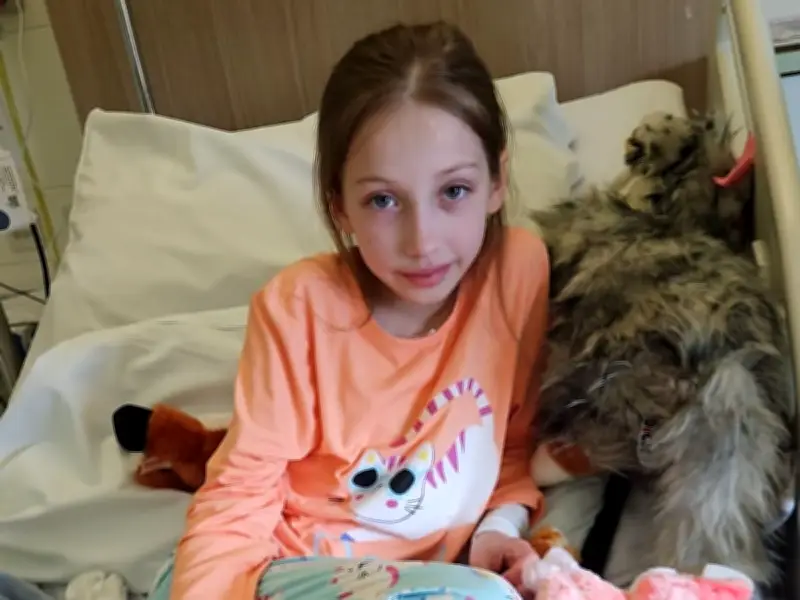
The family of a nine-year-old girl diagnosed with diabetes is in a race against time as they hope to salvage her struggling immune system. Victoria Przekop's parents thought she was coming down with the flu when she started falling asleep the minute she got home from school.
But a visit to their GP revealed the true cause of their daughter's illness. Her blood glucose levels had soared to more than 300mg, more than double the healthy range of 70-140mg. Blood glucose is the body's primary source of energy, derived from food.
When glucose is released into the bloodstream, it typically causes the pancreas to release insulin, allowing the glucose to be absorbed. Diabetes occurs when the body does not produce enough insulin, leading to an overload of glucose in the blood and serious health problems such as hyperglycaemia.

Victoria, from Norris Green, was rushed to Alder Hey Children's Hospital for further tests. By this point, her father Robert said they already suspected diabetes. He stated: "By now I was expecting diabetes because there was no other reason her glucose could be that high. But we were hoping it was not going to be that. Then after a few hours in the hospital, they told us it was most likely type 1 diabetes."
At first, Victoria was extremely ill and tired. She had no energy and would sleep all the time. Robert explained: "The last two days she spent at school, she would come home and fall asleep straight away, which never happened before. She simply could not absorb the glucose in the cells."
What followed was an endless cycle of painful finger-pricks, constant blood sugar alarms, and permanent insulin injections as Victoria received treatment for hypoglycaemia. The family hopes to save what remains of her insulin-producing beta cells by undergoing advanced cellular therapy in Poland. If successful, this would mean Victoria's body would continue producing a small amount of its own insulin, making the disease less severe and reducing the long-term risks of blindness, kidney failure, and heart issues.
The treatment, which is not available in the UK, costs £100,000. Robert and his wife Karolina are now in a race against time as they try to gather the funds before the last of their daughter's beta cells are eliminated.
Robert, 37, said: "We are hoping she may still have up to 30% of her beta cells left in the pancreas. She is now in the honeymoon period, because she was given insulin her beta cells have a little bit of rest. But her immune system will continue killing them until they are all gone. We are trying to fight for this treatment to stop her immune system attacking the pancreas."
Victoria is a very bright child and understands her condition. The family is trying not to burden her too much. Robert added: "We have told her that everything is going to be OK, we will take care of her food and glucose monitoring. But she is worried about going back to school and having school meals. Her biggest concern was whether she would manage in school with the insulin."
Right now, her diabetes is attacking her own organs and killing the cells that produce insulin. Without producing insulin, the body does not absorb glucose, which can lead to a life-or-death situation. Robert emphasised: "That is why we need to constantly keep on top of her insulin. If you keep your levels right it is OK, but if it gets too high then it can slowly affect the nervous system, the eyes, and so on."
This is the only window in her life to stop the progression. Robert said: "Another four weeks, and that is it. We know it is not possible to be cured. I started looking everywhere to find any treatment that could increase her time, because once those cells are dead, that is it."
Currently, whatever Victoria does, she has to be monitored constantly. Every night is a sleepless night due to the fear of hypoglycaemia. Robert concluded: "We can manage it. I know we can manage it. But it is something she will have to live with for the rest of her days unless we do something about it now. It is really hard. Our world collapsed a bit, but we cannot give up for her. Like every parent, we want to do what is best for our daughter. You hear about these things and think it would never happen to my kid, but then it does."
The family's online fundraiser can be found on GoFundMe.