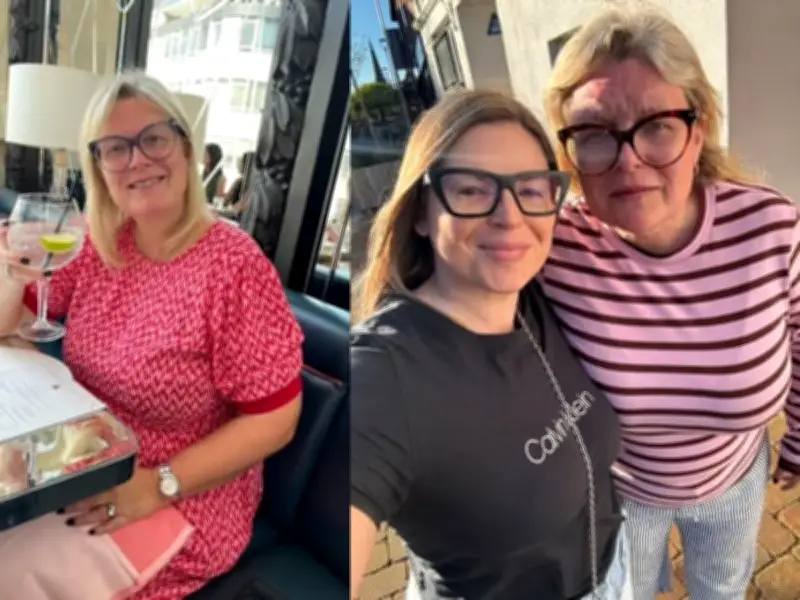
Emily Harris, a 31-year-old mother from Droitwich, Worcestershire, is awaiting genetic test results to see if she will inherit a rare form of dementia after her mother Andrea, 57, was diagnosed with frontotemporal dementia, a condition that typically occurs in middle age.
Andrea's diagnosis came after five years of subtle cognitive decline, beginning with forgetfulness and progressing to incoherent 'drunken' texts and minor car accidents. Emily, a commercial manager for the family's aluminium recycling business, said: "I have two small children, and that is the part that weighs most heavily on me. Knowing there is a possibility that this mutation could affect them in the future is incredibly difficult to process."
Five Years of Unexplained Changes
Andrea, a nurse for three decades, first showed signs of cognitive deterioration five years before her diagnosis in 2025. Emily, mum to seven-year-old Amelia and one-year-old Charlie, said: "The changes were subtle at first – she began forgetting names, places and numbers, but they were the sort of things you could easily explain away."

By 2024, Andrea was sending nonsensical text messages that appeared as though she was drunk, despite not being under the influence. Her spatial awareness deteriorated, leading to frequent car bumps and scrapes, and she became obsessed with making online orders, repeatedly buying the same items and ordering clothes in random sizes.
Seeking Answers and the Diagnosis
In November, after welcoming her son, Emily booked Andrea an appointment at a private menopause clinic, hoping the symptoms could be explained by menopause. Blood tests found low oestrogen and testosterone levels, and Andrea started hormone replacement therapy. Three months later, a follow-up showed her memory had continued to deteriorate.
A memory assessment led to an MRI scan revealing advanced brain atrophy. In July 2025, Andrea was diagnosed with Alzheimer's disease. Emily said: "Most assume the answer is simply devastation, but that wasn't my first emotion – [which was] the overwhelming feeling of relief. Not because Mum had Alzheimer's, but because I finally had an answer."
Genetic Testing and the Future
The family later received a letter inviting them to genetic counselling to investigate a possible genetic cause for Andrea's early-onset Alzheimer's. They decided to proceed, and in March, Emily received a phone call revealing Andrea's genetic testing had identified an inherited alteration in the MAPT gene associated with frontotemporal dementia.
Emily, due to receive her results this month, said: "Whatever the result brings, I know that having the information will allow me to move forward. The uncertainty has been one of the hardest parts, and for me, knowledge feels like a way of taking back some control."
Andrea has recently moved into a care home after her needs exceeded what family and private care could offer. She can still recognise her closest family members but can no longer communicate verbally or say names. Emily said: "Before FTD, Mum was the glue that held our family together. She was one of the kindest people you could ever meet and would do absolutely anything for anyone."
Emily hopes sharing her mother's story will change perceptions that dementia only affects the elderly, adding: "I also want people to trust their instincts. If you feel that something has changed in someone you love, keep asking questions and keep pushing for answers."