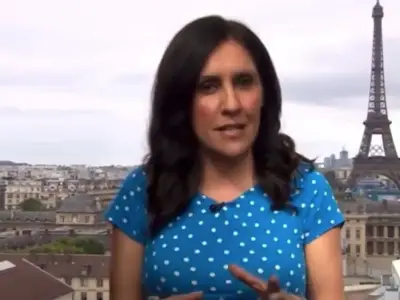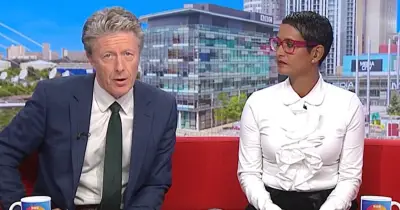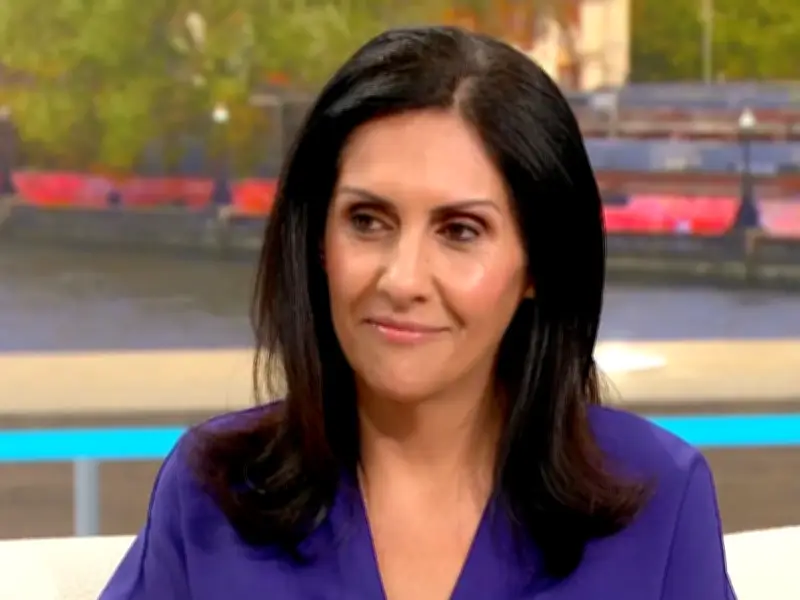
BBC News presenter Maryam Moshiri has spoken about her symptoms and current health after revealing she is living with incurable blood cancer. The 49-year-old was diagnosed with polycythaemia vera (PV) in November 2024, a rare condition that cannot be cured but is treatable.
Speaking over the weekend, Moshiri said: "When I was first told to have blood tests, I wasn’t worried because I didn’t really have any symptoms. I thought: It can’t happen to me. Even after I was told I had PV, I didn’t really understand what it meant. It was a cruel blow to realise that while I could have treatment, this was a cancer that was incurable."
What is polycythaemia vera?
PV affects about 8,000 people in the UK and usually develops slowly. The body produces too many red blood cells, making the blood thicker than normal, which raises the risk of blood clots that can lead to stroke, heart attack or deep vein thrombosis. Symptoms include headaches, blurred vision, fatigue, night sweats and burning pain in the hands and feet.

After sharing her diagnosis, Moshiri appeared on Good Morning Britain on Wednesday (September 9) and explained that her symptoms were not obvious at first. She said: "I had, it wasn't so much symptoms, it was more life. At that age, as a 46/47-year-old woman, as I was at the time, I didn't know whether I was a bit tired because I was peri-menopausal or if I was a bit tired because I had three children under the age of 10."
Diagnosis and symptoms
Moshiri recalled suffering from ocular migraines, which she knew was a symptom of PV, but she initially went to the doctor for routine menopause checks. After two blood tests, her GP became concerned and referred her to specialists "extremely quickly". She added: "Within about eight weeks, I was diagnosed."
Hoping to raise awareness of the rare condition alongside Blood Cancer UK, Moshiri described the "horrible" symptoms she experienced. She told the ITV programme: "I had headaches, I had itching so bad that I was bleeding into my clothes, bleeding through to my clothes at work."
As pictures of her in her BBC role appeared on screen, she told hosts Ed Balls and Susanna Reid that she was ill at the time. She explained: "I would be in places like Doha covering the Iran war, I went to the Vatican to cover the Papal Conclave, I was in Greenland, I did an 18-hour day in Greenland. I think we know as journalists that we work hard, we do shifts, we wake up early, we do night, and there's that sense that's been instilled in me over the last 25 years as a broadcaster, 'just get on with it'."
She continued: "I felt to myself that this is my job, I love it, and wanted to do broadcast news since I was a child. This is my dream job to be a TV news presenter, and I now have that job, so I'm not going to say, if someone calls me and says, 'We want to send you to Doha tomorrow, can you do it?' I'm just not going to say no, I'm going to say yes and work it out when I get there. That's how I lived."
Living with the disease
On living with PV, Moshiri admitted that some days she feels "really not well". She said: "You feel really not very well, very tired, like someone's taken your battery out. And at that point, I think you hunker down, and you just think to yourself, 'This day will be over soon, and I'll feel better again.' Because it's very much a disease where you'll have good times, bad times, periods where you're feeling well and periods where you are extremely unwell. And I think everyone's journey is different."