
John Stiles, son of 1966 World Cup winner Nobby Stiles, is calling for a fund to cover the costs of Chronic Traumatic Encephalopathy (CTE) for retired footballers. The 62-year-old from Doncaster, South Yorkshire, has warned that the future impact on players could be unprecedented.
Keegan's final message
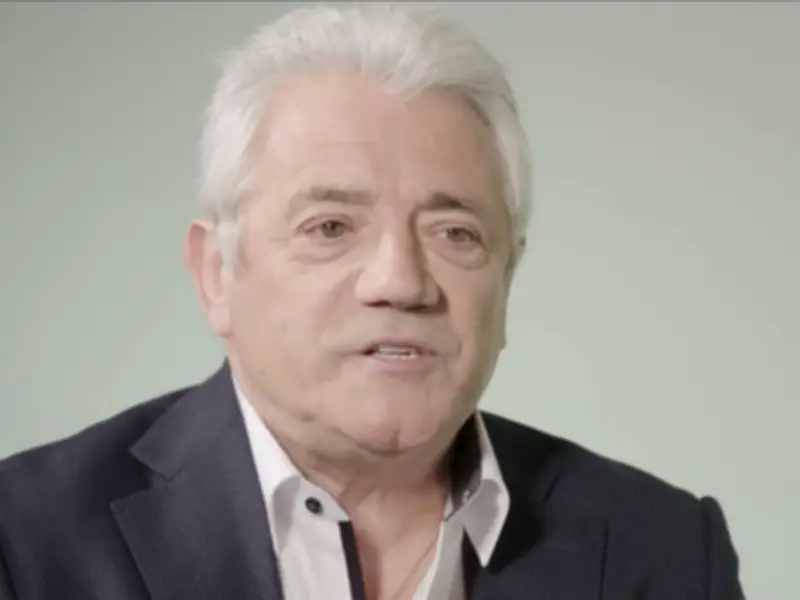
Kevin Keegan, who played 63 times for England, sent John a message of support shortly before his death from cancer. In the message, Keegan told him: "Keep fighting, John." John said Keegan was one of the key voices highlighting CTE.
Epidemic levels
Campaigners warn that retired footballers face being struck down with brain disease at epidemic levels. The disease has already claimed the lives of John's father and other players, including Scotland legend Gordon McQueen, former England and West Brom striker Jeff Astle, and ex-Aston Villa and Northern Ireland player Chris Nicholl.
A coroner ruled that Nobby Stiles died as a result of repeatedly heading the ball, which he did around 136,000 times in his career. John's grandson George, aged 12, recently apologised for heading the ball to stop a goal in a junior game, showing awareness of CTE.
'A proper fund'
John said: "We need a proper fund like the one in America, which had $1.5billion; the £1million fund set up by the FA and PL (Premier League) is just a stunt. It’s an insult. At the moment, the families are funding the treatment of ex-pros, and the taxpayer is covering costs through the benefits system, which is wrong.
"There are at least 55,000 ex-footballers in England. Research suggests there could be 16,500 to 27,500 footballers withdementia. That is as scandal. The boom in the women’s game is a real concern for me."
Nobby's legacy
Norbert "Nobby" Stiles died in 2020, aged 78. His family had to sell his medals to help pay for his care. Born in Collyhurst, Manchester, in 1942, he made 395 appearances for United between 1960 and 1971 and earned 28 England caps. He played every minute of the legendary 1966 World Cup campaign, despite concerns he would be dropped after the Argentina game.
FA response
An FA spokesperson said: "While the link between heading in football and long-term brain health remains the subject of ongoing scientific and medical research, we have consistently been at the forefront of efforts to help improve the safety of our game.
"We have led the way in this area to proactively review and strengthen player welfare across every level of English football, working closely with our domestic and international stakeholders.
"We were the first governing body to introduce comprehensive heading guidelines across both professional and grassroots football, and we continue to review and enhance our game-wide concussion protocols in line with worldwide best practice.
"We have also invested in and actively supported multiple independent research projects, often resulting in groundbreaking and valuable insight, in order to gain a greater understanding of this complex area through objective, robust and thorough analysis."




