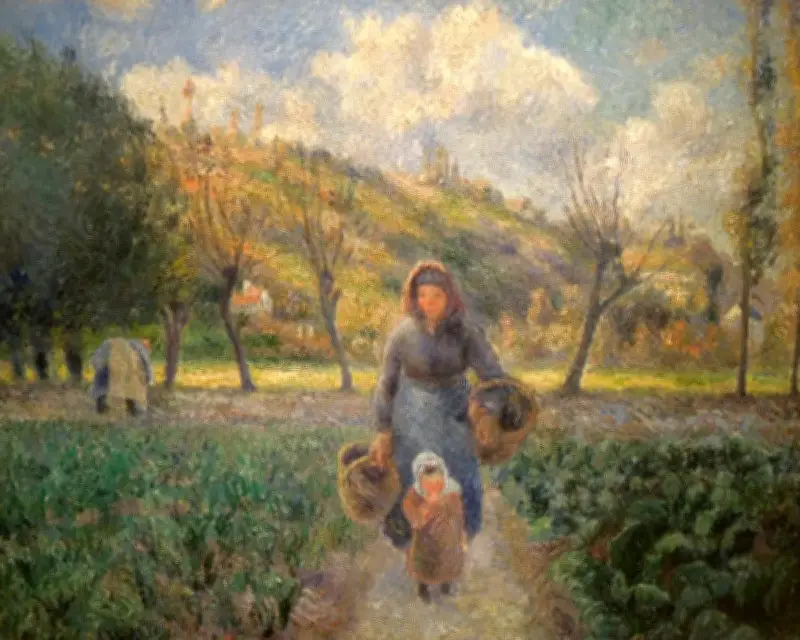
A mother who grew up as the child of first-generation immigrants is seeking advice on how to model joyful living for her own children, after a childhood focused on survival and academic achievement. In response, advice columnist Eleanor Gordon-Smith suggests starting with feelings rather than activities and warns against letting the means become the end.
Struggling to Find Joy in Leisure
The reader explains that her parents were part of a “lost generation” who sacrificed a lot to put their children through university. She followed a defined path for success in some ways but not others, marrying outside her race and making work choices for financial stability. She admits she does not know how to enjoy things that others seem to, such as hobbies, travelling, and home renovations, and often asks “what is the point?”
She attributes this to an upbringing without leisure activities, where her parents only allowed focus on academic topics. Now as a mother, she wonders how to role model “living well for its own sake” for her children, finding it hard to make simple joys feel genuinely joyful. “Growing up, everything needed to be ‘applied’ towards something, and it feels that mentality is informing everything I do,” she writes.
The Means Can Become the End
Gordon-Smith responds by describing how means can take over the end, like a strangler fig. What starts as a way to achieve something valued can become so dominant that it crowds out the things we actually value, until the means become the end itself. She applies this to money and hard work, noting that immigrant families make sacrifices so that life will be better for the next generation, not as an end in itself.
“Your parents decided to sacrifice, work hard, give things up. The original reason to do that was as a means to a better life,” she writes. She cautions that over time, the organising myth can become working hard for its own sake, which strangles the real value. She asks the reader: “Couldn’t your quality of life, and your child’s, be what you were all working towards? Wasn’t a better life the point?”
Start with the Feeling, Not the Activities
To break free, Gordon-Smith advises starting with the feeling rather than the activities. She suggests not approaching leisure as if it needs a defined path, and asking what ignites a feeling of joy, even if it takes time to detect the answer. She recommends an exploratory approach, treating it like fieldwork: “How does this make me feel? What can I detect in myself?”
She notes that joys can be specific to each person, citing examples like feeding crows, dancing disco, or preserving weeds. Making room for enjoyment, she says, is also making room for your actual self. “When you’re slow and still enough to ask what you truthfully feel about something, you’re already living more in the moment,” she writes.
Gordon-Smith concludes by affirming the reader’s efforts: “Your parents sacrificed a lot for you, and you’ve worked hard to honour that. You can cash in some of the hard-earned chips – be the person for whom life could be better – without feeling like it’s wrong. The point wasn’t to accumulate chips for the chips’ sake. Don’t let the means become the end.”