
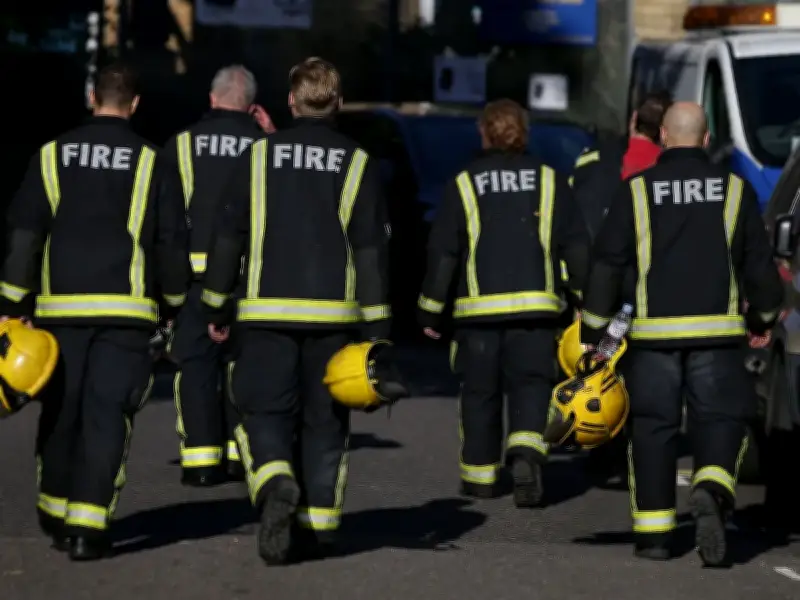
Thirty London Fire Brigade staff – 27 firefighters and three 999 control operators – have been diagnosed with post-traumatic stress disorder (PTSD) since the Grenfell Tower fire in 2017, according to figures obtained under the Freedom of Information Act.
The same figures show that firefighters have taken 8,218 sick days due to PTSD, with a further 446 days lost by 999 control room staff. In the last year alone, firefighters took 445 sick days because of the psychological trauma.
Impact on Staff and Community
The devastating fallout from the disaster also affected those living near the scene in West London, with locals saying they suffered PTSD. A London Fire Brigade spokesman said: “Our thoughts remain with the families and loved ones of the 72 people who lost their lives, as well as the survivors, their families, and the Grenfell communities.”
The spokesman added: “The Grenfell Tower tragedy profoundly affected London and changed the lives of many. It was one of the biggest challenges faced by the Brigade in living memory.”
Ex-Firefighter's Story
Ex-firefighter Ricky Nuttall, 45, tells how his life was torn apart after he fought 550C heat to save a resident on the 15th floor before making the decision he could not help. Two days after the fire, he was sent back into the charred remains of the 24-storey tower to help recover bodies.
Ricky said: “You could very easily piece together a picture of their final moments and that makes it all very real. You start to think about how scared people would have been. It’s just unimaginable, the fear and the pain that those poor people would have gone through. Seeing that and then having those images on your brain, that destroyed me.”
At his lowest, Ricky fell into drug and alcohol abuse and harboured thoughts of suicide. Due to his lifestyle, he suffered serious internal bleeding on New Year’s Eve in 2022 and was in the back of an ambulance when he realised he needed to take control of his life. Ricky, who served with the fire service for 16 years, said it was his chats with his father Kevin, who died in February aged 66, that saved his life.
He added: “It got to the point where it just hurt too much to keep breathing. And that’s a scary, scary place to be. This is about just being in too much pain to continue living. And I guess I probably didn’t see a realistic way that I would ever feel any different.”
Ongoing Support and Inquiry Findings
More than 900 firefighters battled the North Kensington fire that started in a faulty fridge-freezer before spreading to flammable cladding. All those who attended later got a psychological health check. London Fire Brigade says 16 staff – 15 firefighters and one member of the 999 control room staff – have been retired because of their psychological damage.
Some call handlers had to deal with harrowing pleas for help from people trapped in flats as the blaze raged. Ricky, now a mental health advocate and published poet, said: “Call operators who deal with people trapped in buildings make ‘fire survival calls’. If you cannot self-rescue, you will be told, ‘Stay where you are, stay on the phone, I will stay on the phone with you until the firefighter rescues you’.”
“The control staff’s job is to remain on the phone until the line goes dead or they’re rescued. Control staff on the night of Grenfell had to deal with 156 fire survival calls. I think there were 11 control staff team on that night. Some would have picked up the phone, listened to someone die, put the phone down, it rings, pick it up again, and listen to someone die. That’s why there’s such a PTSD rate. They had a horrifically difficult job.”
London Fire Brigade said staff who attended the fire, as well as other emergency crews, showed courage in dreadful circumstances. A spokesman added: “In the immediate aftermath of the fire, all those involved were contacted individually by a counsellor and offered support. This is still available to all who worked on Grenfell. We have taken several steps to improve staff wellbeing and mental health support across our workforce, including the introduction of mental health first aiders, a Counselling and Trauma Service available to all staff; enhanced support for trainee firefighters, and dedicated officers to support operational staff who have attended a traumatic incident.”
On June 14, firefighters joined local residents on a silent march to mark the ninth anniversary of the tragedy. In 2024, the Grenfell Tower Inquiry found all 72 deaths had been avoidable and spelled out preventable failings that led to the blaze. The long-awaited report also laid bare the horror inside the burning flats, as terrified residents were told to stay inside and wait for rescuers.
Report author Sir Martin Moore-Bick blamed the disaster on successive governments that had pushed for less red tape in building regulations, construction companies behind highly flammable cladding and the local council that let down survivors. He said victims, the bereaved and survivors were badly failed through incompetence, dishonesty and greed. The victims included 18 kids and ranged in age from a baby stillborn after the disaster, to a woman aged 84.
Ricky is an ambassador for the Gratitude Games, a UK multi-sport event celebrating NHS staff and emergency responders while raising funds for vital mental health support.




