
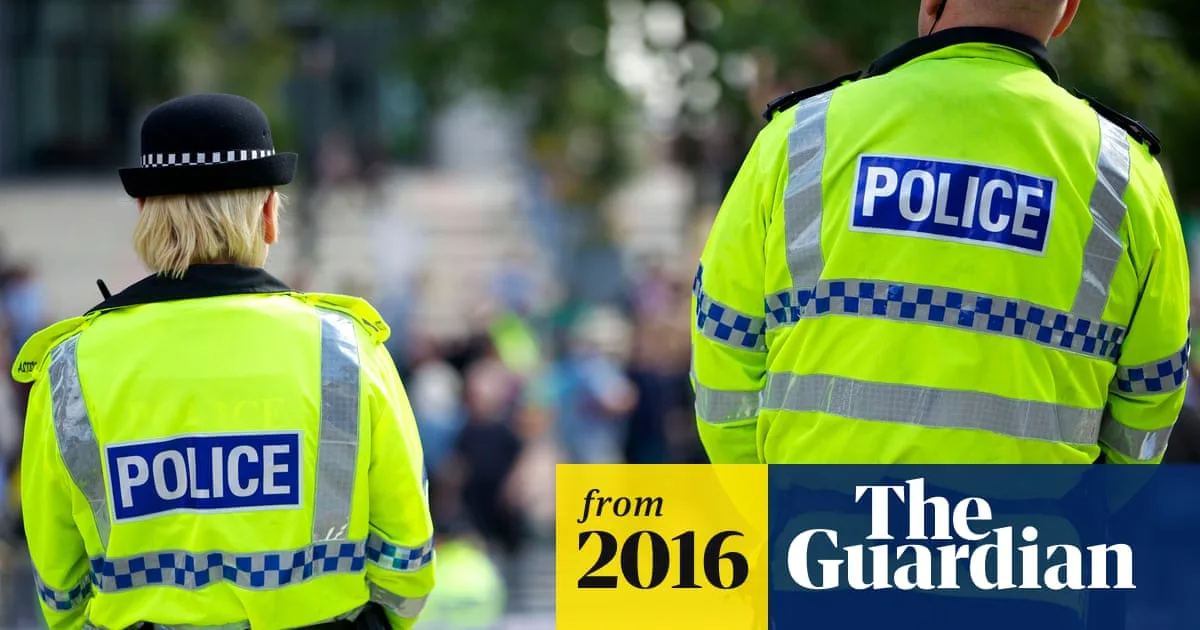
Police forces in England, Wales and Northern Ireland are spending up to 40% of their time responding to incidents involving mental health issues, according to research that reveals a sharp rise in such cases over three years. The Guardian's analysis of data obtained under the Freedom of Information Act found that the number of incidents recorded by police as having a mental health aspect rose by 33% between 2011 and 2014, despite an overall 10% fall in recorded incidents across the same period.
The findings come amid warnings that severe cuts to health and social services are leaving police to act as a 'last resort' in dealing with vulnerable people. The College of Policing estimates that mental health-related incidents account for between 20% and 40% of police time, with Metropolitan Police officers previously suggesting the figure is at least 20%.
Joanne McCartney, chair of the London Assembly's police and crime committee, said local authorities and health services had reduced capacity to deal with mental health issues because of cuts. 'As a measure of last resort the police are going to have to be the ones to respond to incidents,' she said. 'They will do their best and do now have training in how to deal with vulnerable people, but they are not best placed to do that. They are not mental health professionals.'
Particularly sharp increases in mental health-related incidents were recorded by South Wales and North Wales police between 2011 and 2014. In Suffolk, a month-long analysis found that 37% of officers' time was spent dealing with incidents involving some mental health aspect. Ch Supt David Skevington of Suffolk police said officers were often the first to encounter people at crisis point, adding: 'We have to look at these people being at a point of crisis in their lives, not being criminals.'
Michael Brown, a West Midlands police officer and expert in policing and mental health, highlighted the deaths of Seni Lewis and Kingsley Burrell, who died after NHS staff called police to restrain them in psychiatric units. 'In both of these cases police officers were asked to attend a psychiatric inpatient unit in order to restrain a patient, and in both cases it ended in death,' he said. Some forces are now trialling schemes that place mental health nurses alongside police officers in patrol cars to improve first response, with Louissa Friend, one of two such nurses in Norfolk and Suffolk, explaining: 'The officers aren't trained in mental health – they can't be experts in everything.'




