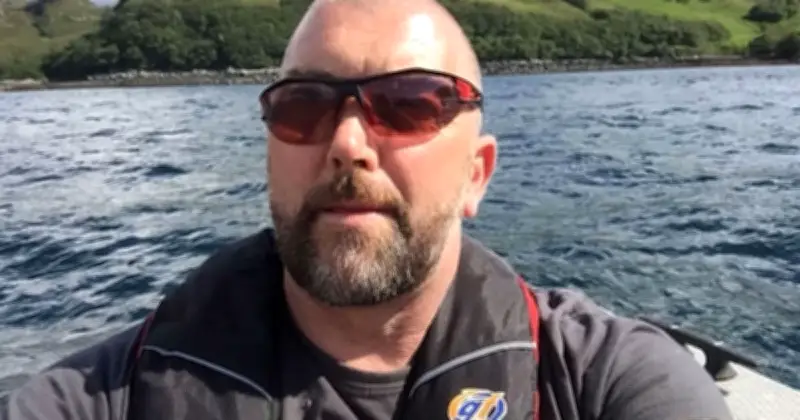
Chris Clarke, a 53-year-old former Army medic who spent 25 years in the service, says prescribed medical cannabis has transformed his life after years of battling complex PTSD.
Clarke, who joined the Army at 16, served as a medic with the Grenadier Guards, reaching the rank of colour sergeant. His deployments included the first Gulf War, Northern Ireland, Iraq, Afghanistan and the Baltics. After leaving the Army, he spent nearly 14 years with a specialist offshore team responding to traumatic incidents worldwide.
Trauma and Early Symptoms
“Basically, trauma is what I dealt with,” he said. “I dealt with traumas once a week – death quite a lot.”
Clarke believes his symptoms first started in the 1990s, but says attitudes to mental health in the forces were very different then. “Not to have a go at the military, but the nature of the military in those days wasn't like it is today,” he said. He also says growing up in care left him with trauma that became “intermingled” with what he experienced on duty.
Living with Flashbacks
Now retired, Clarke works as a manager at a supermarket in Warrington, but his flashbacks can still be set off by the smallest things. “It could be anything – it could be a smell,” he said. “The other week, the baler door shutting at work reminded me of the back of an armoured personnel carrier shutting, and I just had one.”
He says conventional medication left him feeling unable to function normally, prompting him to explore alternative treatment options. “I really suffered a lot with PTSD and only discovered three or four years ago that I have ADHD,” Clarke said. “I had terrible anxiety, awful sleeping problems, and my whole circadian rhythm was all over the place.”
Turning to Medical Cannabis
Clarke says he was prescribed benzodiazepines, which he felt inhibited his life. “They ended up prescribing me benzodiazepines, and at that point I thought, 'that's enough, I need to find another form of treatment. Something that actually helps me', because those drugs were really inhibiting my whole life. There were certain things I just didn't feel safe doing on drugs that powerful, so I knew I needed a change.”
After a therapist suggested exploring prescribed medical cannabis, Clarke underwent a consultation and decided to try it. “I'm not a big fan of taking pharmaceutical medication, but I got in contact and went through the channels, and it changed my life. My day-to-day anxieties, I'm not saying they're completely cured, but they're noticeably different,” he said.
“People say I'm a lot more outgoing and confident, back to somebody they knew 20-odd years ago. It's started to get me out and about,” he added. “I've just come back from the Cotswolds; I'd been down visiting Clarkson's Farm. It's given me a lot more confidence to do things on my own and tackle them. And having more than two hours' sleep is amazing.”
Impact and Stigma
Clarke says he is now close to coming off some of his other medication under medical supervision. “My GP has been asking how it's working, because they've noticed I'm coming off a lot of the medication without having any problems. You do get some medical professionals who are very for it, and some still a bit against it, but that'll take time,” he said.
He believes misconceptions about cannabis continue to prevent people from speaking openly about it. “There's this massive stigma and labelling. To be blunt, a lot of people think you're going to be walking down the street with a joint in your mouth. You still must be a law-abiding citizen. You've also got to be mindful that if you're going out drinking, the two can interact,” he said.
Clarke is sharing his experience as new research involving patients at Releaf Medical Clinic suggests more than one in three conceal their medical cannabis use from others. The survey of 5,276 Releaf patients comes as Boots launches its own medical cannabis prescribing service.
Graham Woodward, Chief Medical Officer at Releaf, called the Boots launch a “step in the right direction” for tackling stigma. “The Boots launch helps normalise it all and gets more people talking. We need to remove the stigma attached to it. People think cannabis is only for people who want to get stoned,” he said. He added that Releaf saw around 250 new patients on the day Boots made its announcement.
Around half of Releaf's 40,000 patients are treated for pain-related conditions, and 45% for psychiatric conditions such as PTSD and ADHD. Woodward said: “We spend millions on opioids, painkillers and antidepressants every year, but we don't look at a natural plant. This could be life-changing for so many people across the UK.”