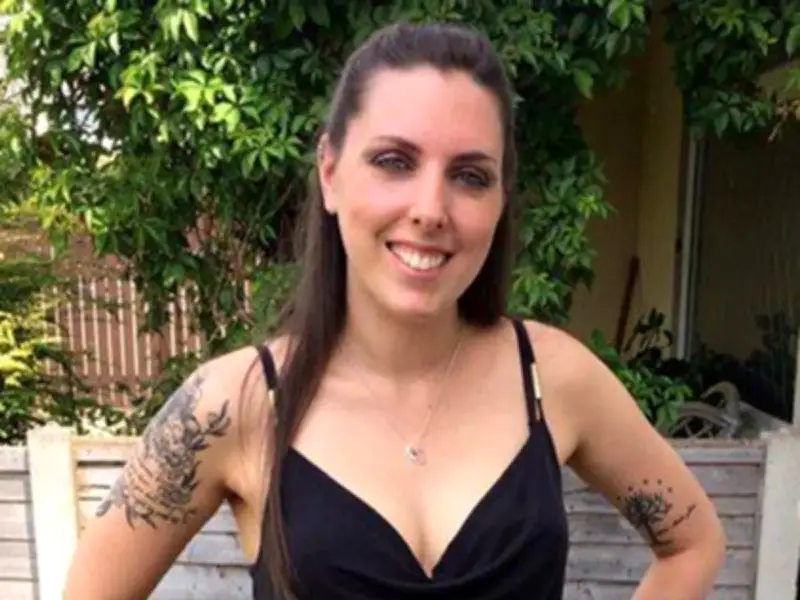
Isobel Stewart, 35, from Leeds, says she was left feeling like she had been "boiled alive" with a "coating of concrete" on her skin after suffering topical steroid withdrawal (TSW), following eight years of using steroid creams for eczema. The customer service adviser became housebound for five months and lost her job during her recovery.
Eczema returns and spreads
Stewart initially developed eczema as an infant before it vanished and resurfaced during her mid-teens. At first, the condition was manageable, presenting as itchy areas on her calves, behind her knees, wrists, and inner elbows. However, after eight years of applying steroid creams, her eczema started behaving unusually, and she claims every part of her body was impacted.
"It was just a patchy, blotchy rash all over my body, but eventually all the patches joined up and my entire skin was a uniform beetroot-red, like I'd been boiled in hot water," Stewart told creatorzine.com. "Every inch of my skin itched, and clothes felt rough and uncomfortable against it. My skin didn't feel real, like it had a coating of concrete over the top of it and, it was painful just to touch it."

Steroid withdrawal diagnosis
Stewart believed she was suffering from topical steroid withdrawal, a serious reaction that can occur after ceasing long-term, frequent, or incorrect use of steroid creams. Her ordeal began after moving to Edinburgh with her husband, Glenn, 41, who was serving in the Armed Forces. A GP refused to keep prescribing the cream, believing she had been using more than required. Within days, the redness started spreading across her body.
"I turned to the internet to see if there were any other natural treatments or explanations for this sudden explosion of eczema. I saw websites warning me of the dangers of steroids," she said. "I thought it was ridiculous. I'd been using them for years and had never once been warned of any side effects. I knew they could thin your skin from reading the patient leaflet, but it felt like a small price to pay to get rid of my eczema. I'd never heard of it before and was absolutely shocked that something I'd relied upon for so long, that I considered as something that was helping me, could actually be making things worse. It terrified me, and I had a 'what have I done?' moment."
Physical and mental toll
At the peak of her condition, Stewart says her skin was so severely damaged that even the slightest movement could cause it to tear. "It was hell. It's literal physical and mental torture. I woke up with my eyes stuck together," she said. "Taking the scabs off just to open my eyes was like peeling your skin off. I had open wounds all over my body, and the skin was constantly cracked, tearing and bleeding. Just moving and stretching was unbelievably painful and would cause the skin to split open. I had thick elephant skin on my knees that was so dry, it felt like being burned when I moved. Any small movement would have me crying in agony. My skin would ooze a yellow fluid that smelled vile. I would wake up stuck to my bedding with dried ooze from the night, have to peel myself off and leave most of my skin behind on the bed. The itching is on a different level. It's like a living thing inside of you, moving and changing and growing, and the more you scratch, the deeper it gets. It's insatiable and never-ending. I wondered if eventually I'd have no skin left. It was all over my clothes, in my hair, all over my house. It fell off me in thick clumps."

Stewart lost her job and relied entirely on her husband's income throughout her recovery, remaining housebound for five months. Showering was out of the question, as water triggered excruciating pain. Instead, she washed herself with a flannel whenever she could bear it, while her husband washed her hair over the edge of the bath. "I'd wake up at around 11am, peel myself off the bed. I could hoover up all my skin from the bed and floor," she said. "On a bad day, I'd spend the first two hours crying and screaming in front of the fan. When I sweated, it felt like acid running down my back because the sweat stung all the open wounds, and the sweat drying caused my skin to dry so severely, it felt like being turned to stone. My husband would come home for lunch and hear me screaming from the end of the street. He didn't rush home to see what was wrong, even though it sounded like I was being attacked, because he knew there was nothing he could do and I had to ride it out. He'd hoover for me and help me get changed, as I couldn't bend to do it myself. I couldn't sit down as my skin would split open so I'd spend the afternoon standing at my ironing board doing things to occupy myself, or I'd be laid in the middle of the floor scratching and crying. When he got home, he'd make our tea and I'd eat standing up. Every second of every day was pain, itching, trying to find ways to make myself more comfortable."
Recovery and advocacy
At her lowest points, Stewart avoided looking in mirrors altogether. "I developed a phobia of my own skin. I couldn't bear to look at it, touch it, feel it. If my hand grazed a patch of skin while I was getting changed, I would retch, feeling physically sick," she said. She now considers herself physically healed following two years of withdrawal, save for a small patch on the inside of her foot that never fully cleared up. Yet the mental toll lingered long after her skin started to recover, and she has sought therapy and continues to battle anxiety.
Stewart chronicled her ordeal in a personal diary, which she has since published as a book entitled The Trauma Diaries: A Journey to Healing, in a bid to shed light on TSW. "The only thing that kept me going was knowing it was temporary," she said. "I knew it could take years to heal, and I was prepared for that, but I didn't for one moment lose hope that I would heal eventually. I don't think my original eczema required steroids, and I feel this could have been prevented if things were handled differently. My skin is the best it's ever been in my life. I can do anything I want, go wherever I want, and use anything on it without having to worry about a reaction."
She added: "For anyone suffering with TSW, try to find the cause of your eczema, reduce your exposure to allergens, try natural remedies like moisturisers and a clean diet before resorting to potent medication. Read the patient leaflet, always, before putting anything in or on your body. I wouldn't wish this condition on anyone and it was hell to endure, but I'm actually glad it happened to me and I wouldn't change a thing. I wouldn't be the person I am today if I hadn't gone through it. The only thing I want to change is to stop it from happening to others."