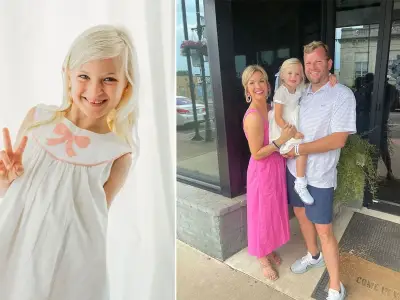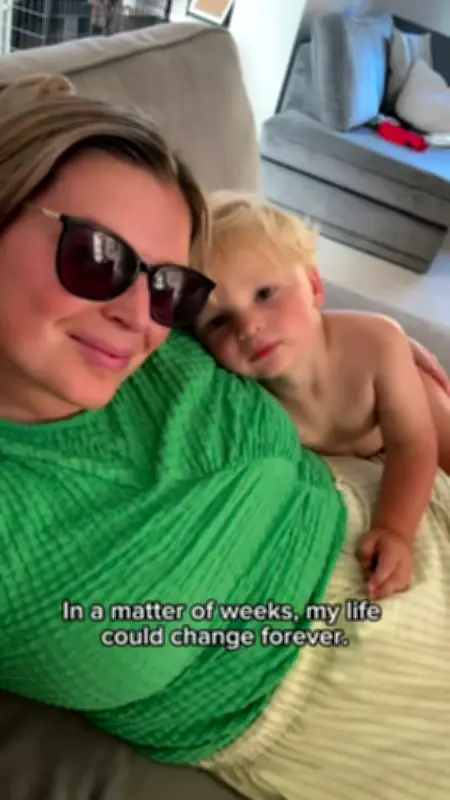
A 31-year-old woman is facing an uncertain future after her mother received a heartbreaking diagnosis – which could have been passed genetically to her. Emily Harris was devastated when her mum Andrea, 57, was diagnosed with frontotemporal dementia – a rare form of the disease that occurs in middle age.
It came following five years of subtle changes and cognitive decline, starting with seemingly innocent things like forgetting names and numbers, and progressing to red flags such as her texts reading as incoherent and ‘drunk’, and minor car accidents. Just days after giving birth to her son, Emily and her family began actively seeking answers, hoping it could be explained away by something like the menopause.
Instead, they learned the truth – and later discovered that her daughter could be affected too.

A rare diagnosis and a genetic concern
“I have two small children, and that is the part that weighs most heavily on me,” Emily, who works as a commercial manager for the family’s aluminium recycling business, told NeedToKnow. “Knowing there is a possibility that this mutation could affect them in the future is incredibly difficult to process. I need to either rule out the possibility for my children or, if the result is positive, to face it head-on and be able to plan, prepare, and make informed decisions for the future.”
The family, from Droitwich, Worcestershire, were living a happy, ordinary life before Andrea’s diagnosis. A nurse for three decades, the busy working mum first started showing signs of cognitive deterioration five years before her diagnosis in 2025.
Emily, who is mum to seven-year-old Amelia and one-year-old Charlie, said: “The changes were subtle at first – she began forgetting names, places and numbers, but they were the sort of things you could easily explain away. Initially, we put it down to the demands of a very stressful career.
“She worked long hours as a nurse while also raising her children, so it was easy to attribute her forgetfulness to stress and exhaustion. But as time went on, it became impossible to ignore.
Warning signs and seeking answers
“By 2024, she was sending text messages to me and other family members that didn't make sense and often read as though she was drunk, despite not being under the influence. Her spatial awareness also deteriorated, and she frequently bumped or scraped her car. She also became obsessed with making online orders from her phone – she would repeatedly buy the same items, and order clothes in completely random sizes.
“At the time, it was difficult to know whether to laugh, worry, or intervene, because it was such a visible sign that her ability to make decisions and judge situations was changing.”
That November, just after welcoming her son, Emily booked Andrea an appointment at a private menopause clinic. She said: “I desperately hoped that everything could be explained by the menopause and that treatment would help her get back to herself.”
Blood tests found low oestrogen and testosterone levels, and Andrea was started on hormone replacement therapy – but deep down, Emily knew there was something more serious at play. She added: “I could see that this wasn't just brain fog or hormonal changes; this was something much bigger.”
Three months later, they returned for a follow-up appointment, during which time Andrea’s memory had continued to deteriorate, despite the treatment. This time, a memory assessment was carried out, and Andrea was referred for a full MRI scan of her brain, which showed advanced atrophy.
Diagnosis and genetic testing
More testing followed, and in July 2025, Andrea was diagnosed with Alzheimer’s disease. Emily said: “Most assume the answer is simply devastation, but that wasn't my first emotion – [which was] the overwhelming feeling of relief.
“Not because Mum had Alzheimer's, but because I finally had an answer. For months, I had known that something wasn't right. I knew my mum better than anyone else, and I had watched her change in ways that couldn't be explained away by stress, anxiety, or menopause.

“Time and time again, I had questioned what was happening, and finally someone had confirmed what I had suspected all along. After months of uncertainty, second-guessing myself, and desperately searching for answers, I finally knew what we were facing.”
But the psychiatrist couldn’t offer an idea of how this may continue to affect her moving forward, or at what speed she may decline. The family later received a letter inviting them to take part in genetic counselling to investigate whether there could be a genetic cause for Andrea’s early-onset Alzheimer’s.
They debated taking part, knowing hard discussions could follow if there was a genetic cause. Emily said: “By this point, I realised these discussions were no longer really for Mum. Her diagnosis had already been confirmed, and her illness was progressing. The counselling had become more about preparing me for the possibility that what had happened to Mum wasn't simply bad luck, but something that could have implications for my own future and for future generations of our family.”
They decided to proceed, and in March of this year, Emily received a phone call that “changed everything”. Andrea’s genetic testing had identified an inherited alteration in the MAPT gene associated with frontotemporal dementia (FTD). Emily said: “I knew almost immediately that I wanted to be tested myself. It was a completely personal decision, and not one that I took lightly.
“Genetic testing isn't simply a case of saying yes and having a blood test – the decision carries a huge emotional weight, and I had to carefully consider whether knowing the result was something I was ready to face.”
Awaiting results and facing the future
Emily is due to get her results this month. She said: “Whatever the result brings, I know that having the information will allow me to move forward. The uncertainty has been one of the hardest parts, and for me, knowledge feels like a way of taking back some control.”
Andrea was recently moved into a care home, after her needs became greater than her family and private care could offer. While she can currently still recognise her closest family members, she is no longer able to communicate verbally as well as she once could, and isn’t able to say names. She also often says the opposite of what she means, making communication increasingly difficult.
Emily said: “Before FTD, Mum was the glue that held our family together. She was one of the kindest people you could ever meet and would do absolutely anything for anyone.
“She had a way of making people feel cared for and she was always the person others turned to when they needed help. Her career was a huge part of who she was – it gave her purpose, confidence, and a sense of identity outside of being a mum and a wife, and it kept her grounded.
“It was something she was incredibly proud of. But to me, Mum was so much more than that – she was my best friend. I want people to see her for who she was before FTD took hold.
“She was not just a diagnosis or a genetic mutation – she was a mum, a wife, a friend, a colleague, and the person who held our family together. I [also] want people to understand that early-onset dementia can happen to people who are young, active, working, and living full lives.
“Before Mum's diagnosis, I never imagined dementia could happen at 56. I think many people still associate dementia with old age, and I hope sharing her story helps change that perception. I also want people to trust their instincts.
“I knew something wasn't right with Mum. I knew the changes I was seeing were not just normal ageing or stress. If you feel that something has changed in someone you love, keep asking questions and keep pushing for answers.”