
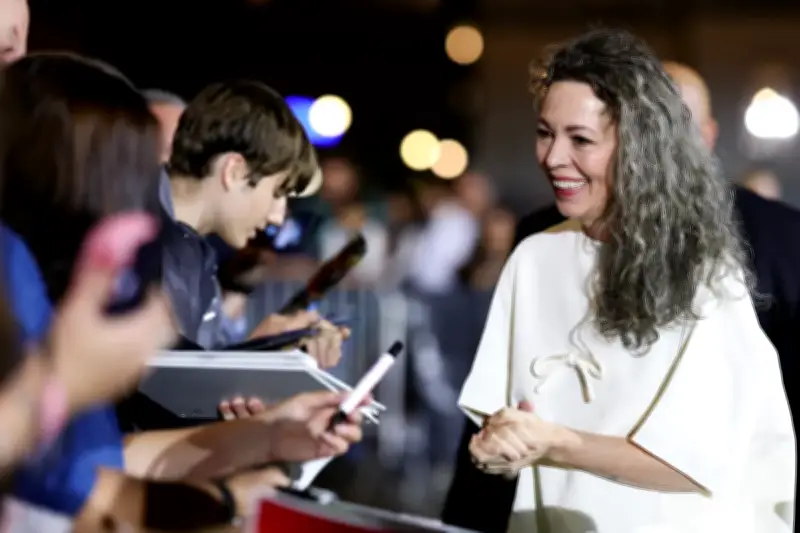
Olivia Colman debuted a silver grey hairstyle at the Zurich film festival, joining a growing number of celebrities embracing natural grey hair. The 52-year-old actress swapped her dark pixie cut for a grey, curly mane, drawing praise online, with Vogue calling her a “silver hair muse”.
Celebrities and the grey hair movement
Colman joins fellow actors including Andie MacDowell and Lisa Bonet, who have long embraced salt-and-pepper or fully silver looks. However, for women outside Hollywood, the decision to stop dyeing hair is not always straightforward.
Stacey Duguid, a former fashion editor, says, “Being able to embrace your grey hair proudly is a privilege.” In June, Duguid began documenting her struggles to find a job at 52 despite decades of experience, receiving thousands of messages from other middle-aged women facing similar challenges.
Workplace ageism and grey hair
Duguid notes, “There is a reluctance for women who are trying to get back into the workplace to go grey. To do it, you are most likely already in a senior position in the workplace. As an unemployed, broke, single parent it wasn’t an option for me.”
Grey hairs typically emerge in the mid-30s for white and Asian people and around the mid-40s for Black people, according to the article. Louise Chunn, founder of therapist-finding platform Welldoing, first stopped dyeing her hair as editor of InStyle magazine, but resumed in her 50s due to concerns about looking older, before stopping again in her 60s.
Professional perspectives on going grey
Sarah Bower, a grey-blending specialist at Larry King salon in London, says clients are most concerned about looking older. She explains that growing out grey hair can take up to three years, and much of her work involves blending the demarcation line between natural and dyed hair.
Research by Ian Burn, an economics professor at the University of Liverpool, found that age discrimination in recruitment against women in the UK starts at least 10 years earlier than for men. Once a woman hits 40, her chances of being called for interview begin to decline, while for men the decline starts in their 50s.
Changing perceptions and personal stories
Recent fashion shows have been more age inclusive, with 50-year-old model Stephanie Cavalli opening the Chanel couture show in January with grey-streaked hair. However, most older models continue to dye their hair, and Duguid has heard from women using filters during video interviews to mask their age.
Alyson Walsh, founder of style platform That’s Not My Age, stopped dyeing her hair in 2015. She says, “Despite the fact that older women have lots of experience and knowledge, there’s still the stereotype that you’re not allowed to look old. I feel empowered. It saves me money. There is less maintenance and it’s in better condition. I don’t look older. I just look my age.”
In a personal account, journalist Donna Carton describes how going grey during the Covid lockdowns was liberating, and despite initial doubts about a new job, she found that “no one I work with seems to care.” She concludes, “My grey hair – along with the lines on my face – tells my story. Both are, I have decided, life affirming.”




