
Cancer has emerged as the top issue for Iowa voters in the 2026 midterm elections, surpassing even the cost of living, according to a survey. The state has the second-highest cancer rate in the nation, and it is one of only three states where incidence is rising, based on data from the National Institute on Minority Health and Health Disparities.
Political consensus and division
Across the political spectrum, candidates agree that something must be done about the state's rising cancer rates. However, they differ on the extent to which Iowa's powerful farm economy has contributed to the problem and how to address it. Sarah Green, executive director of the Iowa Environmental Council, a nonpartisan group, said, "I think state leadership and industrial agriculture are very hesitant to have those conversations, but I think the Iowa public is calling and demanding action and conversation and answers in a way that both parties are needing to respond, and [that's] why it has become the campaign issue of this upcoming election."
In the U.S. Senate race, Democrat Josh Turek, who attributes his spina bifida to his father's exposure to Agent Orange, has highlighted his sister's breast cancer struggle. His opponent, Republican Ashley Hinson, has emphasized her health policy reform efforts in Washington. In the governor's race, Republican Zach Lahn and Democrat Rob Sand have both unveiled plans to curb cancer rates. Lahn's platform focuses on incentivizing farmers to prevent water pollution, while Sand proposes measures to manage manure use, test for radon, and enroll farms in conservation programs.
Agriculture's impact on health
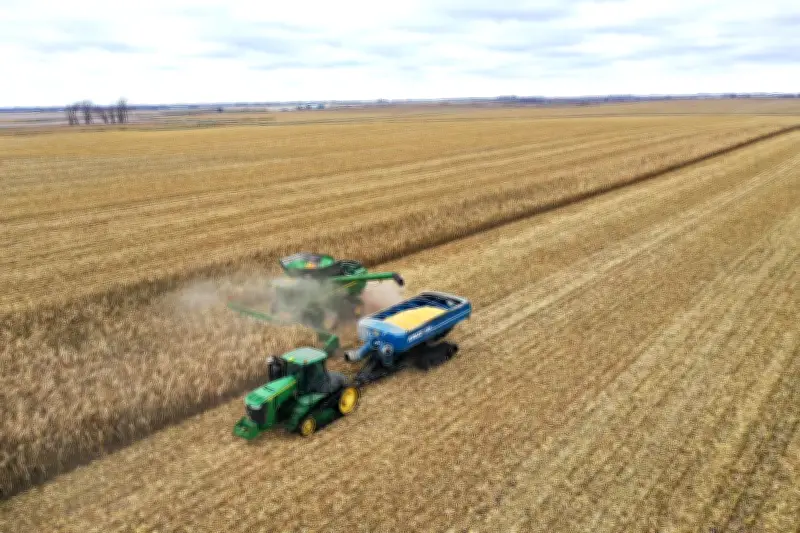
Iowa leads the nation in corn and pork production and is a top soybean grower, with agriculture generating a third of the state's economic output and a fifth of its jobs. However, this productivity comes at a cost: Iowa uses more fertilizer than any other state and leads in concentrated animal feeding operations (CAFOs), which generate runoff. Green noted that Iowa has relatively few regulations to keep pesticides and farm runoff, often heavy with cancer-linked nitrates, away from people and water supplies.
In 2022, Iowa's cancer rate was approximately 506 cases per 100,000 people, compared to the national average of 442, according to National Institutes of Health data. The state also has elevated rates of non-Hodgkin lymphoma and acute myeloid leukemia, cancers some studies link to glyphosate, the herbicide marketed as Roundup. Iowa's waterways are among the most polluted by nitrates in the U.S., leading Des Moines' water utility to impose its first-ever lawn watering ban last year due to near-record nitrate levels; rationing was ordered again this summer.
Farmers and advocates respond
Some farmers are not waiting for election results. In March, three north-central Iowa farmers formed "the Lobe Rangers," a group promoting profitable farming without harming health or the environment. Zack Smith, a corn and soybean farmer and one of the rangers, said, "This has been boiling underneath the surface for me for 15 years, and the reason I think we launched is that we just kind of had enough. We saw the inaction of the political class and the ag lobbying leadership class of putting up the same nonsense." The group follows the state's voluntary nutrient-reduction strategy, which they say works.
Seth Watkins, a longtime farmer in south-west Iowa, has downsized his 4,000-acre farm to help younger farmers grow diversified crops. He said, "I feel like we're mining instead of practicing agriculture. And, you know, show me an area, whether it's the oil industry or mining or any of that, where when the resources are gone, the people are better off." Smith acknowledged that no single election will reverse Iowa's health trajectory but said it could be a step in the right direction: "We'll maybe start making some steps in the right direction, but this is going to be something that is going to take a lot of change at a lot of different levels."




