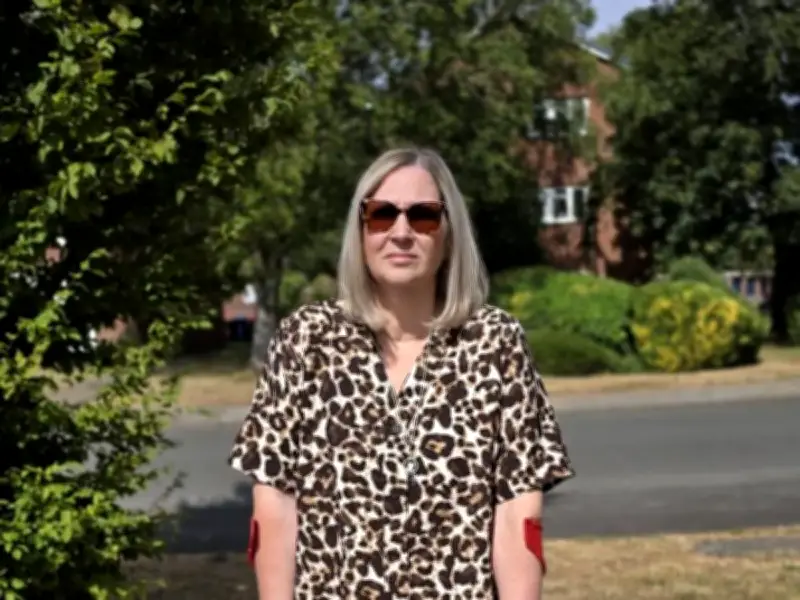
A woman from Cardiff says she is now permanently disabled after NHS doctors dismissed her condition. Sarah Stevens, 46, had lived with back pain for years before being diagnosed with cauda equina syndrome, a rare and serious condition affecting the nerves at the base of the spinal cord.
Between December 2021 and July 2022, Sarah returned to A&E several times with worsening symptoms, including occasional problems going to the toilet. She says she felt she was not being taken seriously. It was only after she was eventually given an MRI scan that doctors discovered the cause of her symptoms.
Emergency surgery and recovery plateau
Cauda equina syndrome is a compression of the nerves at the base of the spinal cord that can lead to life-changing spinal cord injury. This can cause paralysis, chronic nerve pain, and loss of bladder, bowel, and sexual function. Sarah was sent for emergency surgery, which successfully relieved some of her symptoms.

“I cried when I was able to go to the toilet for the first time and I was able to control it,” she said. But the surgery did not mean Sarah could simply return to her old life. By December 2022, she realised her recovery had plateaued and her pain was beginning to increase again.
Further prolapse and permanent disability
Further examinations showed that a disc had prolapsed further and was wrapped around her sciatic nerve. “I really thought I was going to bounce back after that surgery, but unfortunately I didn’t,” Sarah said. “I now need to use a wheelchair if I go out of the house and my life has changed so much, it’s unbelievable.”
She says she was unaware that she had suffered a spinal cord injury until a nurse discharging her from hospital told her that her name had been added to the spinal cord injury register. Sarah now lives with reduced mobility and chronic nerve pain, which limits how much she can do.
Calls for better education and awareness
“I used to be very outgoing, and that’s just all gone. It’s changed every aspect of our lives. Not just mine, my children’s, my husband’s, it’s changed everything... I’m no longer confident,” she said. Sarah says she had previously heard cauda equina syndrome mentioned, but did not realise that the symptoms she was experiencing could represent a medical emergency.
“I didn’t understand how serious cauda equina was. I’d read up on it because it had been queried before, but I didn’t know that it was time critical.”
A spokesperson for the Spinal Injuries Association said: “People showing serious signs of cauda equina syndrome are too often dismissed by healthcare professionals, leading to more complex and permanent disability.” The organisation says an MRI scan should be carried out within four hours of someone with suspected cauda equina syndrome arriving at A&E, because delays can increase the risk of permanent disability.
A national interactive pathway has now been developed by NHS England’s Getting It Right First Time (GIRFT) team, alongside more than 60 healthcare professionals, to help clinicians diagnose and treat the condition without delay. Sarah believes more needs to be done to ensure both healthcare professionals and patients understand the warning signs.
“There definitely needs to be more education about cauda equina syndrome. Patients need to be taken more seriously when they go in and all the checks need to be done. If someone has gone in with red flags, they need to be taken seriously because it is time critical. I only wish that I knew back then what I know now and how time critical it was because I might not be in the state I’m in now,” she said.