
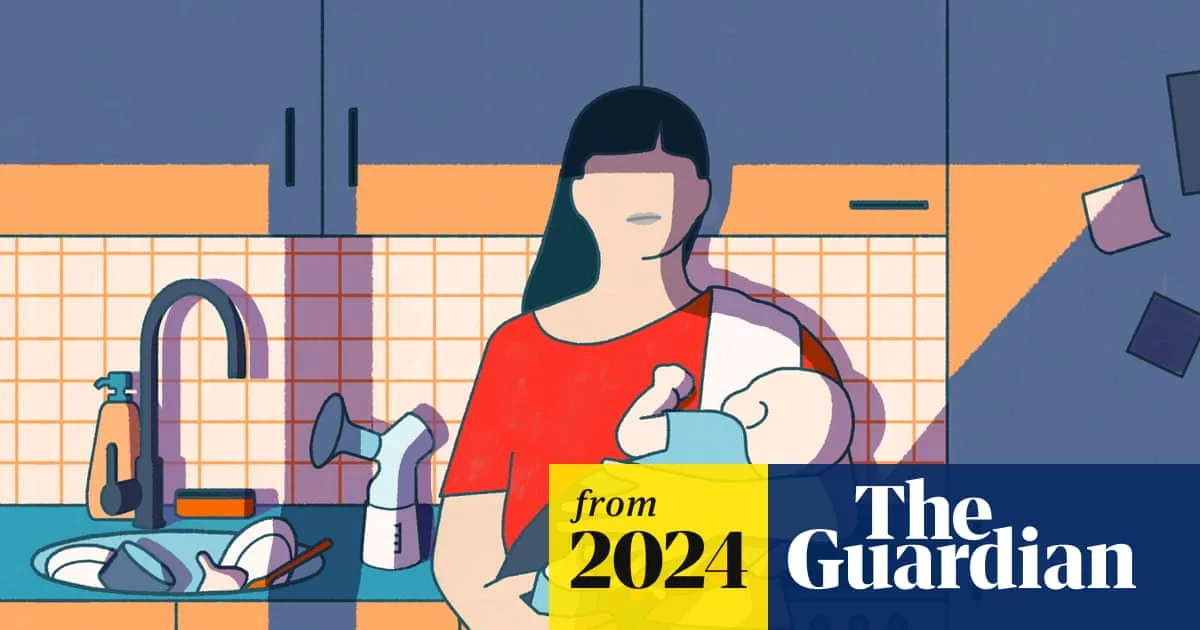
One of the weirdest experiences for me in early motherhood was a recurrent image or sense, when I was walking down the street, pushing the baby in the pram, that a slight breeze could disintegrate me, dissolve me into fragments or dust. I imagine some of this was due to the startling metamorphosis of becoming a mother, psychologically, physically and socially. But looking back, I’m sure it was also to do with loneliness.
It feels shameful to admit, but new motherhood was the loneliest time of my life. While I had a supportive partner and co-parent, family and friends, access to a library and baby groups, and a tendency towards introversion, the isolated arrangement of modern motherhood was a shock. One study found that more than a third of new mothers in the UK spend eight hours a day alone with their babies, and this was often the case for me.
My baby was spectacular, as they all are, but not talking to adults for hours at a time, most days of the week, was a peculiar experience. It gnawed at me. I lost social skills and confidence. I fell silent and, for a while, withdrew. I struggled to ask for, or accept, help. I didn’t know how to talk about the chaos of childbirth, the effect on my body and mind – which I’m sure contributed to periods of depression and anxiety. I thought there was something wrong with me. Wasn’t this supposed to be the happiest time in my life?
We have known about the dangers of loneliness for health for a while. Its impact is compared to the effect of smoking 15 cigarettes a day. But until recently, little was known about perinatal loneliness. In fact, what I was feeling was not unusual at all. Some research suggests 80 to 90% of new mothers feel lonely. One study found that 43% of mothers under the age of 30 in the UK felt lonely all the time. Loneliness is more prevalent in new parenthood than in the general population, and it is more common among certain at-risk groups, such as young parents, immigrant and refugee mothers, mothers without supportive partners, mothers looking after a child with significant health problems, and transgender and non-binary parents.
Loneliness, unsurprisingly, can lead to mental illness. In 2023, a review of evidence carried out at University College London found that loneliness was a key risk factor for perinatal depression. The study’s lead author, Dr Katherine Adlington, said: “We found that loneliness was central to the experiences of expectant and new mothers with depression. Chronic loneliness – feeling lonely often or always – is now experienced by around a third of new parents.”
This level of loneliness and isolation doesn’t seem at all ideal for a species that relies on social contact for health, wellbeing, survival, and learning. So why are mothers in our society so lonely? Some existential loneliness in new motherhood might be inevitable. But much of the isolation felt by new parents is a consequence of how some contemporary societies are structured. In most cultures across the world, including in China, Japan, India and South America, new mothers follow similar practices or rituals after giving birth that acknowledge the emotional heft that becoming a mother brings, as well as what a body goes through in pregnancy and childbirth. These often involve some combination of nutrient-rich meals, massages, drinks and herbal baths prepared by close female relatives, women in the community, or hired postnatal assistants who will care for the mother and baby for about 40 days. In western societies, a new mother is mostly left to her own devices after birth.




