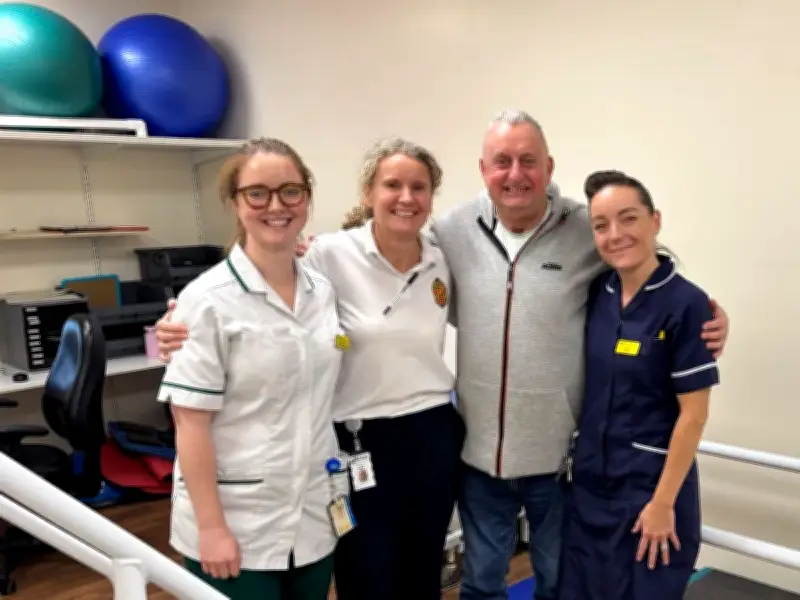
A Durham man who was left "in a mess" after breaking his pelvis, spine, ankle and shoulder in a road traffic collision abroad has paid tribute to the rehabilitation team at the Royal Victoria Infirmary (RVI) in Newcastle who helped him recover. The RVI's major trauma rehabilitation unit, where Nigel Curry spent three months recovering from his injuries in 2022, is now celebrating its tenth anniversary.
Learning to walk again
For retiree Nigel, the service helped him learn to walk again after months barely able to move due to his injuries. He said: "I was in a mess, put it that way."
"I spent three months lying in a hospital bed because I could not move with the fixator attached to my pelvis. I remember asking a nurse if I could sit up. They warned me that I would probably pass out because I had been lying down for so long. I tried to sit up and, yes, I passed out."
The fixator, a device used to stabilise fractures while they heal, was removed, at which stage he could neither walk nor stand up independently.
Nigel said: "My rehabilitation started very gradually. At first, I used a transfer board to move into a chair for a couple of hours each day. We then worked on standing with a frame before progressing to crutches. Eventually, I was able to walk to the bathroom for a shower for the first time in three months."
Focus on getting home
However, getting home would require ensuring Nigel could make it up and down the stairs. He added: "Every day I was focused on getting home. I probably pushed myself hard, but after spending so long in hospital, that was my goal. The team worked with me every step of the way and helped me build up the strength and confidence to manage the stairs safely."
Nigel is now retired, but is happy swimming and enjoys travel, thanks to the support he received during his recovery. He paid tribute to the service and staff which helped him.
Nigel said: "Every year, I take a box of chocolates to the ward to thank the staff for looking after me. They were fantastic. They helped me through some of the toughest months of my life."
Service milestones and patient outcomes
The service has now assessed more than 13,400 patients and provided specialist "therapeutic care and rehabilitation prescriptions" for 6,800 patients, including Nigel. That prescription is a personalised recovery plan for patients who have experienced "life-threatening or life-changing injuries" which sets out their needs and the support they will need.
The unit has 10 beds and provides a range of physical, psychological and cognitive support. Newcastle Hospitals NHS Trust major trauma rehabilitation lead, Sinead Savory said: "When patients arrive, they often cannot get out of bed, walk, dress themselves, prepare meals or manage everyday activities at home. They may have been through surgery and be medically stable, but the impact of their injuries is significant, and they require more intensive therapeutic support.
"Our job is to help them regain their independence and achieve their main goals of getting home and returning to their usual activities."
Each patient receives tailored recovery plans. Those receiving support range from those who have had sports injuries or been involved in collisions to people who may have fallen in icy weather.
Sinead added: "We work with patients until we can help them achieve basic independence, whether that is being able to get out of bed, get to the toilet, stand or walk with a mobility aid. Their support continues through referrals for follow-up care in the community."
There is then, once someone can leave hospital, a follow-up clinic which sees someone's recovery monitored and, if necessary, further support offered. Data from the unit shows that 57% of patients who were employed at the time of their accident returned to work following their rehabilitation.
Staff reflect on a decade of care
Dr Laura Graham, consultant in rehabilitation medicine, said: "It's been my pleasure and privilege to work in such an amazing, highly skilled and caring team since the start, providing rehabilitation to so many people after traumatic injuries and helping them get home sooner and return to the activities they enjoy.
"It's been so rewarding to work in such a great set-up, with talented and experienced staff, allowing us to support people to get their lives back, which wasn't always possible before this service started. Having time to discuss people's goals and support them in their recovery is a central part of rehabilitation, and I think we achieve this for people after trauma."
Senior sister Clare Ridley said: "I have worked on ward 23 since the rehabilitation unit opened. I can remember the very first patient and many more since then. I have watched the major trauma rehabilitation unit grow and adapt to support every patient who comes through the doors.
"Some of our patients have immense gratitude for this unit. They often come back to visit us, show us their progress and celebrate what they have achieved with us. It is really rewarding to see."